
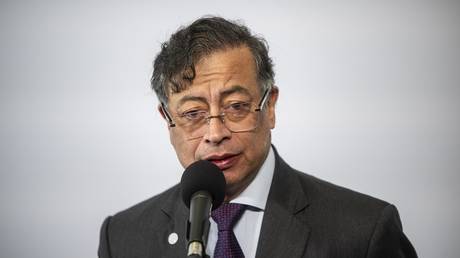
Colombian President Condemns Mercenary Involvement in Ukraine Conflict
Coveragetap to expand ▾Spectrum: Mixed🌍Europe: 1 · Other: 1
- President Gustavo Petro stated that mercenary activity is illegal under Colombian law (per rt.com).
- A Ukrainian media report claimed that 7,000 Colombians are involved in the conflict with Russia (per rt.com).
- Colombia ratified the UN Mercenary Convention in late March amid increased recruitment of Colombians for foreign conflicts (per rt.com).
- Colombia has a history of internal armed conflict and counterinsurgency, contributing to its role as a source of foreign fighters (per rt.com).
Colombian President Gustavo Petro has publicly condemned the involvement of Colombian mercenaries in the ongoing conflict in Ukraine, asserting that such activities are illegal under Colombian law. His remarks came in response to a Ukrainian media report that praised the participation of approximately 7,000 Colombian fighters in the conflict against Russia. Petro expressed his disapproval on social media, emphasizing that these individuals are 'dying for nothing' and that Colombia does not wish to 'export death.'
The issue of Colombian mercenaries participating in foreign conflicts has gained attention as Colombia recently ratified the UN Mercenary Convention. This move comes amid reports of increased recruitment efforts that have allegedly drawn around 10,000 Colombians into various international conflicts. Colombia's long history of internal armed conflict and counterinsurgency operations has made it a notable source of trained fighters for foreign engagements. Petro's comments highlight the legal and ethical concerns surrounding the use of mercenaries, particularly in conflicts where national interests are not directly at stake. The president's stance underscores Colombia's commitment to adhering to international norms and preventing its citizens from becoming involved in wars abroad. The Ukrainian media's portrayal of Colombian fighters as valuable assets in the conflict with Russia contrasts sharply with Petro's condemnation. This divergence in perspectives reflects broader geopolitical tensions and the complex dynamics of international military engagements. As the situation in Ukraine continues to evolve, the role of foreign fighters remains a contentious issue. The involvement of Colombians in the conflict raises questions about the motivations and consequences of such participation, both for the individuals involved and for Colombia as a nation. Petro's firm stance against mercenary activity serves as a reminder of the legal and moral responsibilities that countries have in regulating the actions of their citizens abroad. It also highlights the challenges faced by nations with a history of conflict in managing the international implications of their citizens' involvement in foreign wars.
- Colombian citizens involved in the Ukraine conflict face legal repercussions at home due to the illegality of mercenary activity under Colombian law.
- The Colombian government seeks to prevent its citizens from participating in foreign conflicts, emphasizing national and international legal standards.
- The presence of Colombian fighters in Ukraine highlights the global reach of the conflict and the diverse international involvement in the war against Russia.
- Colombia's ratification of the UN Mercenary Convention reflects its commitment to international norms and efforts to curb mercenary activities.
- Whether the Colombian government takes legal action against citizens involved in the Ukraine conflict.
- The impact of Colombia's ratification of the UN Mercenary Convention on future recruitment efforts.
- Any response from Ukrainian authorities regarding the involvement of foreign fighters in the conflict.
Left- and right-leaning outlets are covering this story differently — in which facts to emphasize, which context to include, and how to frame causes and consequences.
7 specific areas where coverage diverges — see below.
- rt.com emphasizes Petro's condemnation of mercenary activity, while Ukrainian media reportedly praised the involvement of Colombian fighters.
- The exact number of Colombian mercenaries involved in Ukraine is unclear, with reports suggesting 7,000.
- No source mentions the specific legal consequences faced by Colombian mercenaries upon returning home.
- rt.com reports 7,000 Colombian fighters in Ukraine, but this figure is not independently verified.
- There is no detailed explanation of how Colombian fighters became involved in the Ukraine conflict.
- rt.com attributes the statement about Colombians 'dying for nothing' directly to President Petro.