
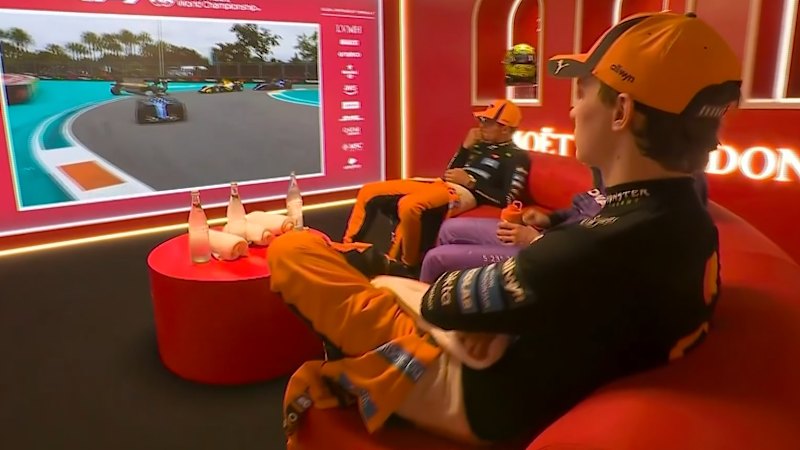
Piastri frustrated with overtaking challenge in Miami debrief
Coveragetap to expand ▾Spectrum: Left Only🌍Asia: 1
- Piastri's comments were made during a hot mic moment, indicating they were not initially intended for public release (per smh.com.au).
- The Miami Grand Prix has been a focal point for discussions about the performance of the new F1 car designs (per smh.com.au).
- Piastri's critique adds to the ongoing debate about whether the new regulations have achieved their intended goals (per smh.com.au).
- The Miami Grand Prix is one of the newer additions to the F1 calendar, aiming to expand the sport's presence in the United States (per smh.com.au).
Oscar Piastri, a prominent figure in Formula 1 racing, has voiced his dissatisfaction with the current state of overtaking opportunities in the sport.
During a debrief session at the Miami Grand Prix, Piastri's candid remarks about the challenges posed by the new F1 car designs were inadvertently captured by a hot mic, bringing attention to a topic of significant concern among drivers.
The new car designs, introduced with the aim of enhancing the competitive nature of races by facilitating closer racing, have been met with mixed reviews from the drivers. Piastri's comments underscore the ongoing debate within the F1 community regarding the effectiveness of these changes.
The Miami Grand Prix, a relatively new event on the F1 calendar, has become a key venue for assessing the impact of these design changes. The race is part of Formula 1's broader strategy to increase its footprint in the United States, a market that has shown growing interest in the sport.
However, the feedback from drivers like Piastri suggests that the intended benefits of the new car designs may not be fully realized, as overtaking remains a significant challenge. Piastri's critique is not an isolated incident but rather part of a larger conversation about the direction of Formula 1's technical regulations.
The changes were implemented with the goal of making races more exciting and competitive, but the reality on the track has been more complex. Drivers have reported that while the new designs allow for closer following, the actual act of overtaking has not become significantly easier, leading to frustration among competitors.
The Miami Grand Prix itself has been a spectacle, drawing in fans and media attention, but the technical discussions behind the scenes highlight the ongoing challenges faced by the sport.
As Formula 1 continues to evolve, the feedback from drivers will play a crucial role in shaping future regulations and ensuring that the sport remains engaging for both participants and spectators. Piastri's remarks have sparked discussions among teams and officials about potential adjustments to the regulations.
The balance between maintaining the sport's competitive integrity and ensuring that races are entertaining is a delicate one, and the input from drivers is invaluable in achieving this balance. As the season progresses, the effectiveness of the new car designs will continue to be scrutinized, with the Miami Grand Prix serving as a pivotal point in this ongoing evaluation.
The insights gained from races like Miami will inform future decisions about the technical direction of Formula 1, as the sport seeks to maintain its status as a premier global racing series.
- Formula 1 drivers, including Oscar Piastri, face challenges with overtaking due to new car designs, impacting race dynamics and competitiveness.
- The Miami Grand Prix serves as a critical testing ground for the new F1 regulations, influencing future design and regulatory decisions.
- The feedback from drivers like Piastri could lead to adjustments in F1 car design regulations, affecting teams and manufacturers involved in the sport.
- Whether Formula 1 officials will consider adjustments to car design regulations based on driver feedback.
- The impact of the Miami Grand Prix results on the evaluation of new F1 car designs.
- Future statements or actions from Oscar Piastri regarding the overtaking challenges in upcoming races.
- smh.com.au focuses on Piastri's frustration with overtaking challenges, while other outlets may not emphasize this aspect.
- No source mentions the specific technical changes in the new F1 car designs that are causing overtaking challenges.
- The economic impact of the new regulations on teams and manufacturers is not discussed in the sources.