
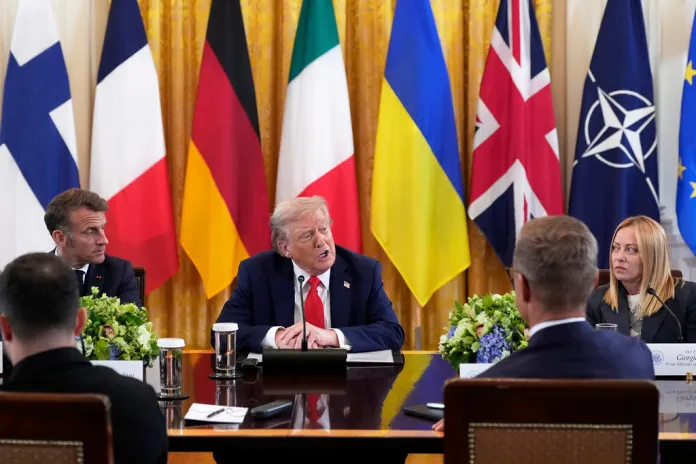
President Donald Trump is now signaling that this era of dependence is over.
Coveragetap to expand ▾Spectrum: Right Only🌍US: 1
- The era of European dependence is over Ever since World War II, Europe has been reliant on the United States for everything from its defense to its healthcare.
- Trump has been telegraphing this since his very first presidential campaign, when he declared that other countries need to stop ripping off the U.S.
- But Trump has often had bigger fish to fry, and while he’s put plenty of verbal pressure on Europe to stand on its own two feet, the intervening Ukraine war has only deepened European dependence.
President Donald Trump is signaling a significant shift in U.S. foreign policy, declaring that the era of European dependence on American support is over.
This announcement underscores a long-standing critique from Trump, who has consistently pressured European nations to assume greater responsibility for their own defense and security, particularly in light of the ongoing Ukraine conflict.
Since World War II, Europe has relied heavily on the United States for military and healthcare support, a dynamic that Trump argues must change. He has emphasized this point since his first presidential campaign, where he accused European nations of taking advantage of U.S. security guarantees through NATO.
The current geopolitical landscape, marked by the war in Ukraine, has only intensified this reliance, with the U.S. providing significantly more aid to Ukraine than any single European nation, including Germany.
This shift in rhetoric and policy reflects Trump's broader strategy to recalibrate international alliances and expectations, pushing European countries to bolster their own defense capabilities and reduce their reliance on American resources. As this narrative unfolds,
- The shift away from European dependence on the United States could significantly alter the geopolitical landscape, compelling European nations to bolster their own defense capabilities and seek alternative alliances.
- This change directly impacts European citizens, who may face increased military spending and a reevaluation of social services as countries prioritize self-sufficiency.
- Additionally, as Europe navigates this transition, the ongoing conflict in Ukraine may force nations to reassess their energy strategies, potentially leading to higher costs for consumers and businesses alike.
- Watch for President Trump to announce specific policy changes aimed at reducing reliance on foreign imports within the next 72 hours.
- Expect the U.S. Trade Representative to release a report detailing new tariffs or trade agreements by the end of the week.
- Keep an eye on Congressional responses, as key lawmakers may propose legislation to support domestic industries before the upcoming budget discussions.
- Monitor statements from major U.S. corporations regarding their supply chain adjustments, with several expected to provide updates during their earnings calls next month.
- Anticipate reactions from international trade partners, particularly China, as they may respond with countermeasures within the next two weeks.