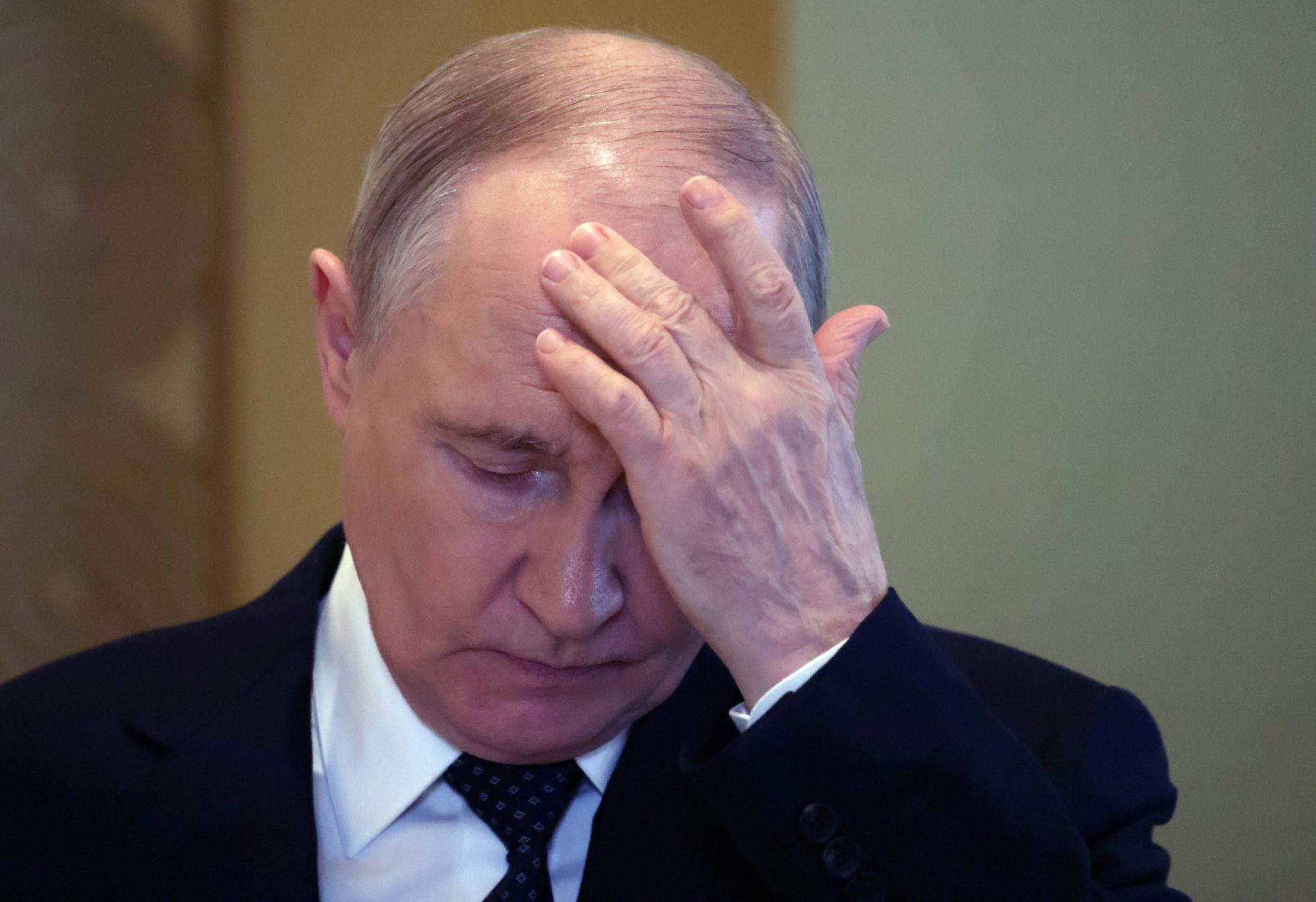
Russians face severe fuel shortages and rationing as President Vladimir Putin insists the war against Ukraine will continue. Despite the setbacks, Putin claims the situation is 'not critical' and believes his government can maintain support for the war effort (per Fortune).
Russians live with fuel shortages and rationing as Putin insists the war against Ukraine will go on
Putin has described the attacks on Russian energy as an effort by Ukraine to distract attention from its losses on the battlefield, although analysts say the advance of Russian forces has been stymied in recent months.
The Russian leader appears to believe his government can keep the fuel crisis from eroding his authority and support for the war he launched more than four years ago.
HISTORICAL CONTEXT
The ongoing war between Russia and Ukraine has reached a critical juncture, particularly as of early 2026. Since the Russian invasion of Ukraine began on February 24, 2022, the conflict has escalated into a protracted and devastating war. In recent months, the situation has intensified, with Ukraine launching counteroffensives aimed at reclaiming territories occupied by Russian forces. This has led to significant military engagements, resulting in heavy casualties on both sides and a deepening humanitarian crisis. As of mid-2026, the war has not only caused widespread destruction in Ukraine but has also led to severe economic repercussions in Russia, including fuel shortages that have begun to impact daily life for Russian citizens. The roots of the current conflict can be traced back to a series of geopolitical tensions and decisions made in the years leading up to the invasion. One of the key structural factors was the 2014 annexation of Crimea by Russia, which followed Ukraine's Euromaidan protests and the ousting of pro-Russian President Viktor Yanukovych. This event marked a significant deterioration in relations between Russia and the West, leading to the imposition of sanctions against Russia by the United States and the European Union. These sanctions aimed to cripple the Russian economy and deter further aggression, but they also contributed to a growing sense of isolation for Russia on the global stage. In response to the annexation, NATO reinforced its presence in Eastern Europe, conducting military exercises and increasing support for Ukraine. The 2019 NATO Summit in London further solidified the alliance's commitment to collective defense, which heightened tensions with Russia. The ongoing military support provided to Ukraine by Western nations, including arms and training, has been a critical factor in enabling Ukraine to resist Russian advances and has contributed to the escalation of hostilities. The structural conditions leading to the current fuel shortages in Russia can be linked to the economic consequences of the war and the sanctions imposed by Western nations. The sanctions have targeted key sectors of the Russian economy, including energy, which is vital for Russia's revenue. The European Union's decision to phase out Russian oil imports, formalized in a series of sanctions beginning in 2022, has severely impacted Russia's ability to export fuel. The EU's commitment to reducing dependency on Russian energy sources has been a significant blow to the Russian economy, leading to a decline in production capacity and increased domestic fuel shortages. In the months leading up to 2026, Russia's military operations in Ukraine have further strained its resources. The Kremlin's decision to mobilize additional troops in September 2022, in response to mounting losses, has placed an additional burden on the economy. The increased military expenditures have diverted funds away from domestic needs, exacerbating the fuel crisis. By early 2026, reports indicated that Russians were facing significant fuel rationing, a situation that President Vladimir Putin has publicly downplayed, insisting that the crisis is "not critical."
As the war continues, Putin has rejected calls for a ceasefire, asserting that the conflict will persist until Russia achieves its strategic objectives in Ukraine. This determination has led to ongoing military operations, including attacks on Ukrainian infrastructure, which Putin claims are necessary to counter what he describes as Ukrainian attempts to undermine Russian energy capabilities. The cycle of aggression and retaliation has entrenched the conflict, making any resolution increasingly elusive. In summary, the current fuel shortages in Russia are a direct consequence of the ongoing war with Ukraine, rooted in the geopolitical tensions that have developed since 2014. The combination of international sanctions, military mobilization, and the economic strain of prolonged conflict has created a precarious situation for the Russian populace, while Putin's steadfast refusal to consider a ceasefire indicates that the war will continue to shape the region's future for the foreseeable future.
Brief
Russians are currently grappling with significant fuel shortages and rationing, a situation that has arisen amid ongoing military operations in Ukraine. President Vladimir Putin has characterized these shortages as 'not critical,' asserting that they will not undermine his government's authority or the public's support for the war effort.
He has dismissed calls for a ceasefire, insisting that military operations will persist until Russia achieves its objectives. Analysts have pointed out that the Russian military's advances have been hindered in recent months, complicating the situation further.
The fuel crisis is exacerbated by the fact that approximately one-third of Russia's refining capacity has been cut off, leading to increased hardship for the population. Putin contends that Ukraine's attacks on Russian energy infrastructure are strategic moves to divert attention from its own losses on the battlefield.
As the conflict continues, the Russian government is attempting to manage public perception and maintain support for its military actions, despite the evident challenges posed by the fuel shortages.