
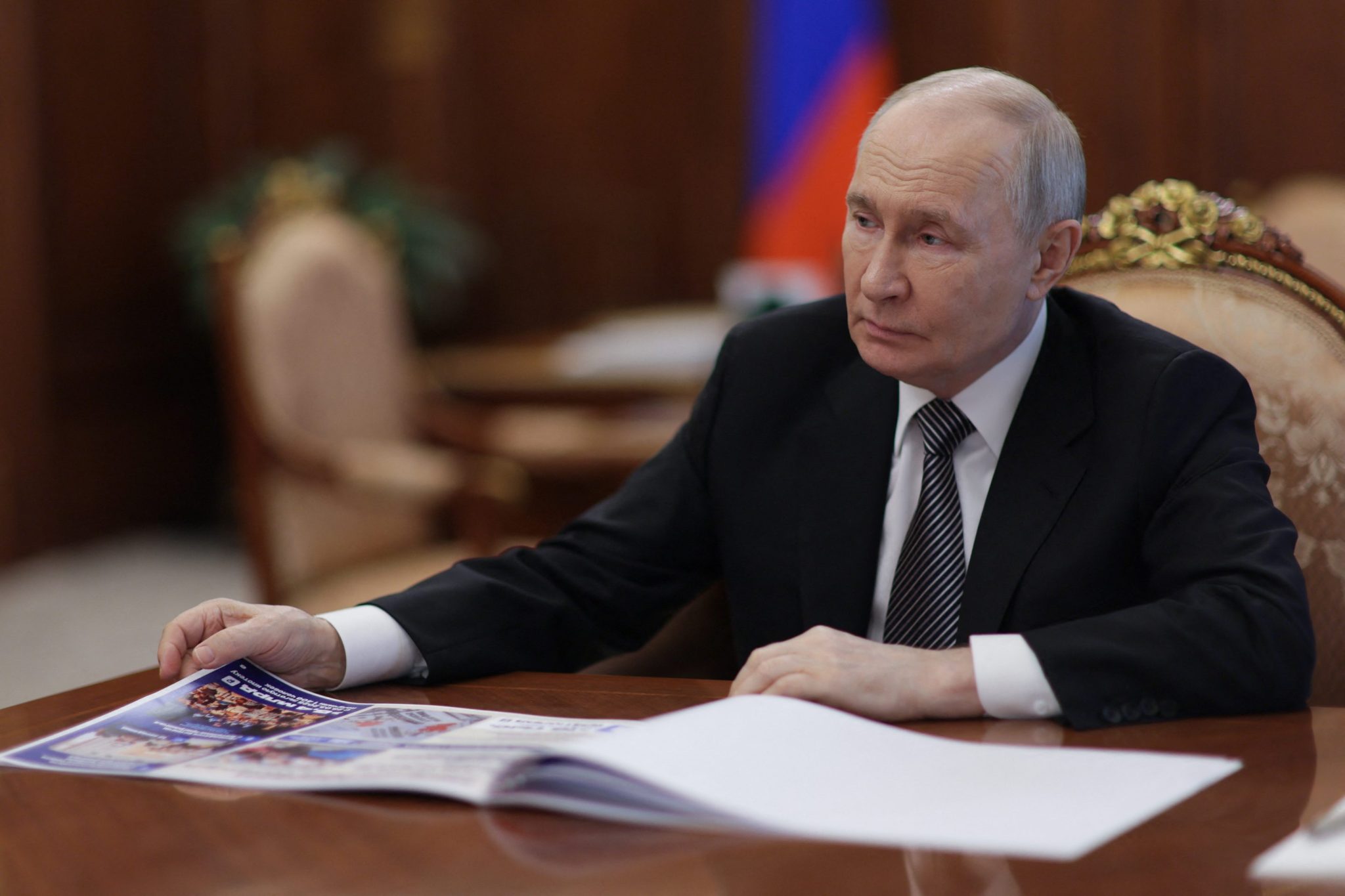
Putin's Wartime Spending Model Drives Russia Toward Economic Abyss
Topic: defense & securityRegion: EuropeUpdated: i2 outletsSources: 5Spectrum: Center Only⏱ 4 min read
Story Summary
SITUATION
Russia's wartime spending model, driven by the costly invasion of Ukraine, is pushing the economy towards collapse, exacerbated by severe Western sanctions that target critical sectors. This unsustainable approach threatens not only Russia's economic stability but also its long-term geopolitical influence.
Coveragetap to expand ▾Spectrum: Center Only🌍Other: 5
Political Spectrum
Position is inferred from coverage mix.
i2 outlets · Center
Left
Center
Right
Left: 0
Center: 5
Right: 0
Geography Coverage
Distribution of where coverage is coming from.
i2 unique outlets · Dominant: Global
KEY FACTS
- In the four years since Russia invaded Ukraine, GDP has stayed mostly in the green, its unemployment rate has declined, and average wages have skyrocketed.
- But Putin’s success story is starting to show cracks.
- Russia’s economy has become dominated by the war effort, with the country’s industrial and technological base increasingly dedicated to serving needs on the front lines.
- Russia is still able to count on a vast pool of human labor and its “shadow fleet” array of oil tankers evading sanctions to bring in revenue from fuel sales, according to the researchers.
- But the costs of maintaining the status quo are mounting for Putin, as the wartime economy he built grows increasingly strained.
HISTORICAL CONTEXT
The ongoing conflict between Russia and Ukraine, which began with Russia's invasion on February 24, 2022, has significantly shaped the current economic landscape in Russia. This invasion was preceded by years of escalating tensions, particularly following the 2014 annexation of Crimea by Russia, which led to widespread condemnation and sanctions from Western nations.
In response to the invasion in 2022, the United States, the European Union, and other allies imposed a series of severe economic sanctions aimed at crippling the Russian economy. These sanctions targeted key sectors, including finance, energy, and defense, intending to limit Russia's ability to fund its military operations and exert influence in the region.
Brief
Russia's economy is currently facing significant challenges, described as 'sputtering' under the weight of Vladimir Putin's wartime spending model.
This model has led the country into what analysts are calling an 'economic, political, and military abyss.' Over the past four years since the invasion of Ukraine, Russia's GDP has largely remained in positive territory, and the unemployment rate has seen a decline. Average wages have reportedly increased, and inflation has moderated after a peak in 2023.
However, these indicators of economic stability are beginning to show signs of strain as the war effort increasingly dominates the country's industrial and technological sectors. The focus on military needs has diverted resources away from other critical areas of the economy, raising concerns about long-term sustainability.
Furthermore, Russia's ability to generate revenue through its 'shadow fleet' of oil tankers, which evade sanctions, highlights the ongoing complexities of its economic situation. While the government has managed to maintain some economic metrics, the overarching reliance on wartime spending poses serious risks for the future of the Russian economy.
Why it matters
- Putin's wartime spending model is pushing Russia toward an economic crisis that could have dire consequences for ordinary citizens, particularly as the strain on the economy leads to rising inflation and potential shortages of essential goods.
- As the government reallocates resources to sustain the war effort, industries that once provided stable employment may falter, threatening job security for millions.
- This shift not only jeopardizes the livelihoods of Russian workers but also risks increasing public discontent, which could challenge Putin's grip on power and lead to further instability within the country.
What to watch next
- Monitor the Kremlin's upcoming budget announcement scheduled for next week, which will reveal potential shifts in military spending priorities amid economic pressures.
- Watch for statements from the U.S. Department of Defense within the next 72 hours regarding any changes in military aid or support to Ukraine, which could impact Russia's strategic calculations.
- Keep an eye on the European Union's discussions on sanctions against Russia, particularly any decisions made during the upcoming foreign ministers' meeting next month.
- Anticipate potential reactions from Russian oligarchs in the next quarter, especially regarding their investments in defense industries, as they may signal shifts in economic confidence.
- Observe the upcoming G20 summit in November for any commitments from member countries regarding collective security measures that could affect Russia's military strategy.
Sources
5 of 5 linked articles
Even inflation has moderated sharply, after soaring to double digits in 2023.
fortune.com10h agoLeft
↗
Russia Has Now Lost More Troops in Ukraine Than in Every War Since World War II Combined, New Analysis Finds
thedebrief.org15h agoLeft
↗
Putin's economic shield crumbles as military spending drains Russia's liquid assets — Politico
english.nv.ua18h agoLeft
↗
Ukraine deepens strikes as Russian elite calls for war's end
msn.com18h agoLeft
↗
The End of Russia’s Wartime Economic “Miracle” - UNITED24 Media
united24media.comJun 30Left
↗