
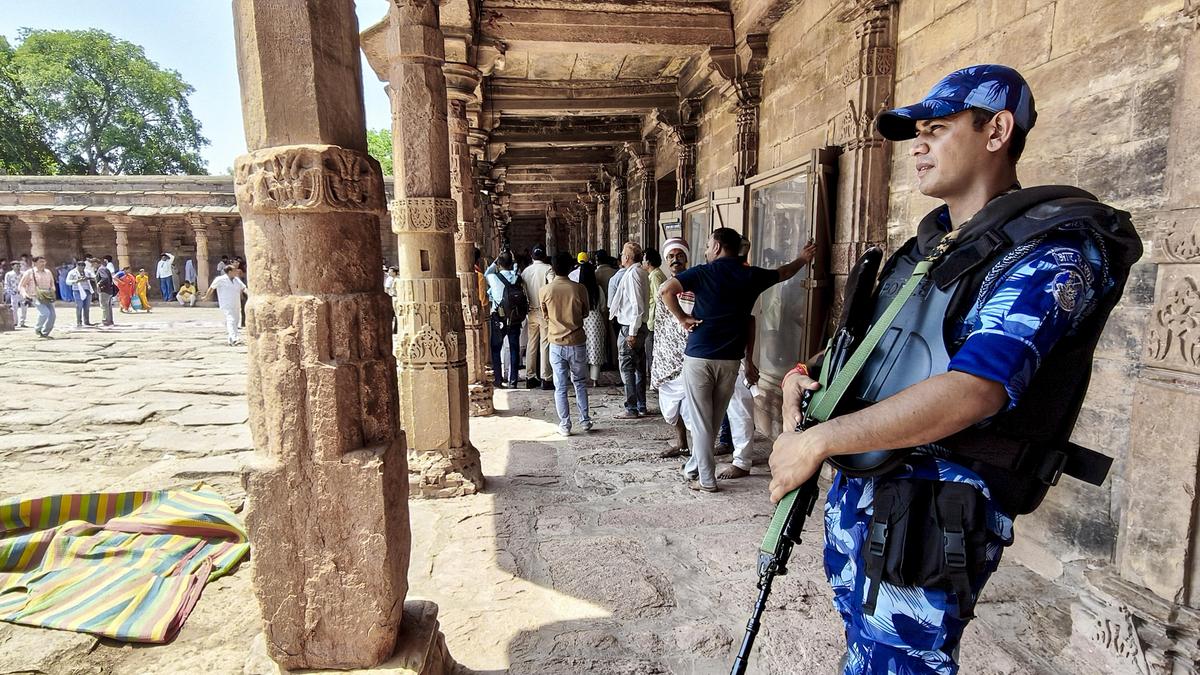
Muslim Side Moves Supreme Court Challenging Madhya Pradesh HC Order In Bhojshala Complex Dispute
Topic: politicsRegion: North AmericaUpdated: i3 outletsSources: 26Spectrum: Center OnlyFiltered: Global (0/23)· Clear⏱ 4 min read📡 Wire pickup⚠ 3d+ old
Story Summary
SITUATION
The Supreme Court concluded a 16-day hearing on the Sabarimala case and reserved its judgment. The court's discussions included significant concerns about questioning religious practices and their implications for society (per news.google.com).
Coveragetap to expand ▾Spectrum: Center Only🌍Asia: 12 · Other: 11
Political Spectrum
Position is inferred from coverage mix.
i3 outlets · Center
Left
Center
Right
Left: 0
Center: 23
Right: 0
Geography Coverage
Distribution of where coverage is coming from.
i3 unique outlets · Dominant: Asia
KEY FACTS
- The Muslim side is contesting a Madhya Pradesh High Court ruling that designated Bhojshala as a Hindu temple (per thehindu.com).
- The Supreme Court challenge was filed by the Muslim side in response to the High Court's verdict (per news.google.com).
- The Bhojshala complex is a site of religious significance for both Hindus and Muslims, leading to ongoing disputes over its status (per organiser.org).
- The High Court's ruling has intensified tensions surrounding the site, which has historical claims from both communities (per thehindu.com).
- The Supreme Court's decision on this matter could set a precedent for similar disputes in India (per news.google.com).
- Legal experts suggest that the Supreme Court's ruling may influence future cases involving religious sites and their ownership (per thehindu.com).
HISTORICAL CONTEXT
The Supreme Court of India's recent remarks in the Dawoodi Bohras case on May 7, 2026, highlight a critical juncture in the ongoing legal discourse surrounding religious practices and constitutional scrutiny in India.
This discourse is deeply rooted in the country's complex socio-religious fabric, where the judiciary often finds itself at the intersection of religious autonomy and individual rights.
Brief
The Muslim side has initiated a legal challenge in the Supreme Court against a recent ruling by the Madhya Pradesh High Court, which declared the Bhojshala complex a Hindu temple. This complex, located in Dhar, Madhya Pradesh, holds significant religious importance for both Hindus and Muslims, leading to a contentious dispute over its rightful status.
The High Court's decision has been met with strong reactions from the Muslim community, who argue that the ruling undermines their historical claims to the site. They contend that Bhojshala has been a place of worship for Muslims for centuries, and the designation as a Hindu temple disregards this history.
The Supreme Court's involvement is seen as crucial, as its ruling could set a significant precedent for similar disputes across India, where religious sites often become flashpoints for broader communal tensions.
Legal analysts note that the outcome of this case may influence how future claims regarding religious heritage are adjudicated, particularly in a country where such issues are deeply intertwined with identity politics.
As the Supreme Court prepares to hear the case, the implications of its decision could resonate far beyond the Bhojshala complex, affecting the legal landscape surrounding religious sites nationwide.
Why it matters
- The outcome of the Supreme Court case could redefine the legal status of religious sites in India, impacting both Hindu and Muslim communities.
- A ruling in favor of the Muslim side may bolster claims to other disputed religious sites, potentially leading to further legal challenges.
- The case highlights ongoing tensions between Hindu and Muslim communities in India, which could escalate if the ruling is perceived as unjust by either side.
What to watch next
- Whether the Supreme Court schedules a hearing for the Bhojshala case in the coming weeks.
- The potential for public demonstrations or unrest in response to the Supreme Court's ruling on the matter.
- Any statements from religious leaders or community representatives regarding the implications of the Supreme Court's decision.
Where sources differ
2 dimensionsFraming differences
?- Thehindu.com emphasizes the historical significance of Bhojshala for both communities, while organiser.org focuses on the legal implications of the High Court's ruling.
Omitted context
?- No source mentions the specific historical claims made by both communities regarding Bhojshala, which are crucial for understanding the dispute.
Sources
0 of 23 linked articles · Filter: Global