
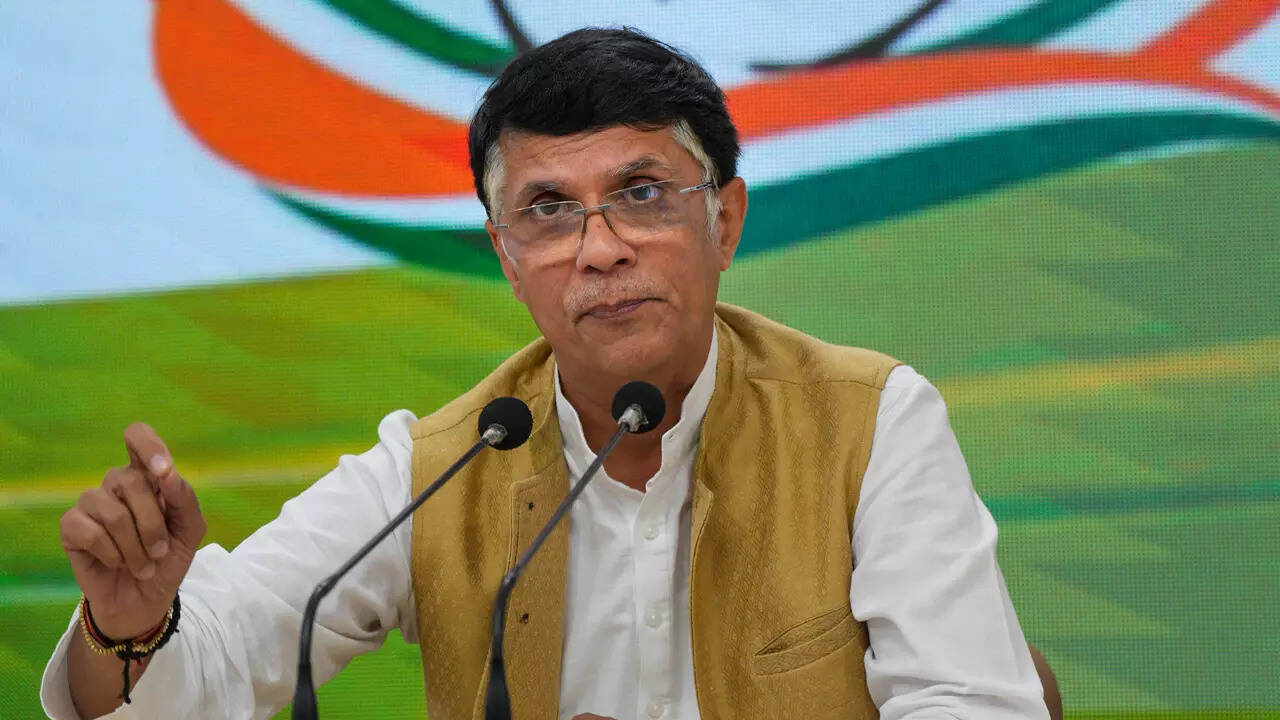
Pawan Khera Hails Supreme Court's Anticipatory Bail as a Check on State Power
Coveragetap to expand ▾Spectrum: Center Only🌍Other: 2 · Asia: 1
- Khera hailed the Supreme Court's decision to grant anticipatory bail, asserting that truth will prevail (per timesofindia.indiatimes.com).
- The Supreme Court's decision is seen as a significant legal relief for Khera, providing protection against arrest (per timesofindia.indiatimes.com).
- The anticipatory bail granted by the Supreme Court is a legal mechanism that prevents arrest before trial (per timesofindia.indiatimes.com).
- The Supreme Court's intervention is viewed as a check on executive overreach and a reinforcement of judicial independence (per timesofindia.indiatimes.com).
Pawan Khera, a prominent political figure, has expressed his approval of the Supreme Court's recent decision to grant him anticipatory bail. This legal relief, which prevents arrest before trial, is seen by Khera as a critical reminder against the misuse of state power. His comments underscore a broader concern about the potential for executive overreach in legal matters.
The Supreme Court's decision is significant as it provides Khera with protection against arrest, a move he believes reinforces the importance of truth prevailing in judicial proceedings. This development comes amid ongoing political tensions in India, where the use of state power in legal contexts has been a contentious issue.
Khera's remarks highlight the role of the judiciary as a check on executive power, emphasizing the need for judicial independence in the face of potential state overreach. The anticipatory bail serves as a safeguard for individuals facing legal challenges, ensuring that they are not subjected to arrest without due process.
The decision by the Supreme Court is being interpreted as a reaffirmation of the judiciary's role in upholding the rule of law and protecting individual rights. Khera's case has drawn attention to the broader implications of state power in legal proceedings, with his statement resonating with those concerned about the balance of power between the judiciary and the executive.
This legal development is part of a larger narrative about the use of state mechanisms in political contexts, where the judiciary's independence is seen as crucial to maintaining democratic principles. Khera's case serves as a reminder of the ongoing debates about the limits of state power and the importance of judicial oversight.
As the situation unfolds, the Supreme Court's decision may have broader implications for similar cases, potentially influencing how state power is exercised in legal contexts. The outcome of Khera's case could set a precedent for future legal challenges, reinforcing the judiciary's role as a guardian of individual rights and a check on state authority.
- The Supreme Court's decision to grant anticipatory bail to Pawan Khera protects individuals from potential misuse of state power, ensuring legal proceedings are fair and just.
- The judiciary's role as a check on executive power is reinforced, highlighting the importance of maintaining judicial independence in democratic societies.
- Khera's case underscores ongoing political tensions in India regarding the balance of power between the judiciary and the executive, affecting public trust in legal institutions.
- Whether the Supreme Court's decision in Khera's case influences similar legal challenges in India.
- Potential reactions from political parties regarding the use of state power in legal contexts.
- Any further statements or legal actions by Pawan Khera following the Supreme Court's decision.
- news.google.com emphasizes the reminder against misuse of state power, while timesofindia.indiatimes.com highlights the anticipatory bail as a victory for truth.
- No source mentions specific past instances where state power was allegedly misused in similar legal contexts.
- The broader political implications of the Supreme Court's decision on future legal proceedings are not detailed.
- Pawan Khera: 'Reminder to those who misuse state power' (per news.google.com).