
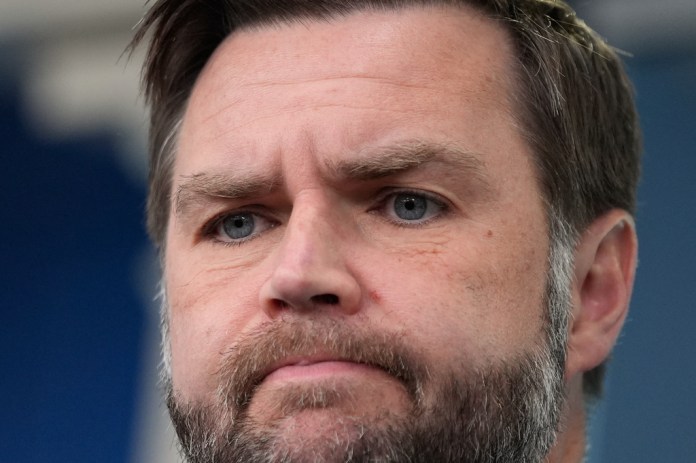
Republicans Shift Blame to JD Vance Over Iran Deal Criticism
Topic: geopoliticsRegion: Middle EastUpdated: i2 outletsSources: 4⚠ Bias gap — sources divergeSpectrum: Mostly Center⏱ 4 min read📡 Wire pickup: 2
Story Summary
SITUATION
Republicans are redirecting criticism of the Iran deal towards JD Vance, highlighting internal party divisions as the U.S. and Israel face escalating military tensions with Iran.
Coveragetap to expand ▾Spectrum: Mostly Center🌍US: 4
Political Spectrum
Position is inferred from coverage mix.
i2 outlets · Center
Left
Center
Right
Left: 0
Center: 3
Right: 1
Geography Coverage
Distribution of where coverage is coming from.
i2 unique outlets · Dominant: US/Canada
KEY FACTS
- For US Vice President JD Vance, Iran talks could shape political rise
- Rather than attack Trump directly, they are laying blame at the feet of Vance.
- President Donald Trump may have been “joking” when he said Vice President JD Vance can be the fall guy if the Iran deal falls through, but Republicans are not waiting to criticize him for its perceived shortcomings.
- Lindsey Graham (R-SC), a close Trump ally, has similarly named Vance in expressing his reservations, although he has softened his criticism since demanding that he brief Congress on the contents of a final deal.
- The flak is due, in part, to Vance’s central role in winding down the Iran conflict.
- On top of embarking on a media blitz to defend the White House, he was also part of the negotiating team that reached a ceasefire with Iran.
- Mitch McConnell (R-KY) to Thom Tillis (R-NC) vaguely blame the president’s advisers and suggest that their advice is misguided, rather than the decisions Trump makes with it.
HISTORICAL CONTEXT
The ongoing military conflict between the United States and Israel against Iran, which began with coordinated strikes in March 2026, has intensified tensions in the region.
This military campaign was initiated following a series of escalating confrontations, including Iranian missile strikes that were direct responses to previous Israeli airstrikes targeting Iranian military infrastructure and assets.
Brief
In a notable shift within Republican ranks, Vice President JD Vance has become the focal point of criticism regarding the ongoing negotiations of the Iran deal. This criticism comes as Republicans, including prominent figures like Lindsey Graham, express their reservations about the deal's perceived shortcomings, particularly its economic concessions to Iran.
President Donald Trump, while possibly joking, suggested that Vance could take the blame if the negotiations fail, indicating a strategic distancing from direct accountability for the administration's policies.
Vance, who has taken on a public role in defending the White House's approach, is also part of the negotiating team that reached a ceasefire with Iran, which has further complicated his position within the party. Critics argue that the memorandum of understanding he supports gives too much economic relief to Iran without sufficient guarantees on curbing its nuclear program.
Meanwhile, figures like Mitch McConnell and Thom Tillis have chosen to criticize the president's advisers rather than Trump himself, reflecting a broader strategy to protect the president while targeting Vance.
This internal party dynamic highlights the complexities of the Iran negotiations and the political risks that Vance faces as he navigates his role in these high-stakes discussions.
Why it matters
- The criticism directed at Vice President JD Vance highlights the precarious position of U.S. leadership in the ongoing Iran conflict, which could have significant implications for his political future and the administration's credibility.
- As Vance navigates the fallout from the Iran deal, American military personnel and their families are directly affected, facing uncertainty about their safety and the potential for renewed hostilities.
- If the deal collapses, it could lead to an escalation of military actions, further endangering lives and straining U.S. resources, while also complicating diplomatic relations with allies in the region.
What to watch next
- Watch for JD Vance's response to the criticism from fellow Republicans, expected within 72 hours, as he may clarify his stance on the Iran deal.
- Anticipate a statement from Senate Minority Leader Mitch McConnell regarding party unity and strategy on foreign policy, likely to be released before the upcoming congressional recess.
- Look for a potential vote in the House on a resolution addressing the Iran deal, which could be scheduled for next week, influencing party dynamics.
- Monitor the reactions from key Republican donors and interest groups, as they may issue public statements or position papers within the next month, shaping the party's approach to foreign policy.
- Expect discussions among Republican presidential candidates about their positions on the Iran deal during the upcoming debate scheduled for next month, which could impact voter sentiment.
Where sources differ
Bias gap0.50 / 2.0
Left- and right-leaning outlets are covering this story differently — in which facts to emphasize, which context to include, and how to frame causes and consequences.
Center (3)
reuters.comcnbc.comapnews.com
Right-leaning (1)
washington_examiner+0.70
Rather than attack Trump directly, they are laying blame at the feet of Vance. GOP Iran critics pin blame on Vance, sidestepping Trump criticism President Donald Trump may have bee…
Sources
4 of 4 linked articles
For US Vice President JD Vance, Iran talks could shape political rise
reuters.comJun 19Left
↗
Rather than attack Trump directly, they are laying blame at the feet of Vance.
washingtonexaminer.comJun 19Center
↗
Vance says U.S. isn’t giving Iran ‘a cent’ as he defends Trump peace deal
cnbc.comJun 18Left
↗
Vance, skeptical of foreign wars, becomes the face of Trump's tentative deal to end war with Iran
apnews.comJun 18Left
↗