
GOP Confident in Flipping Five Democratic Districts with New Polling Data
Coveragetap to expand ▾Spectrum: Mixed🌍US: 2
- The National Republican Congressional Committee (NRCC) released its first internal polling of the 2026 election cycle (per washingtonexaminer.com).
- The polling shows Republicans are competitive in five Democratic-held districts that Donald Trump won in 2024 (per washingtonexaminer.com).
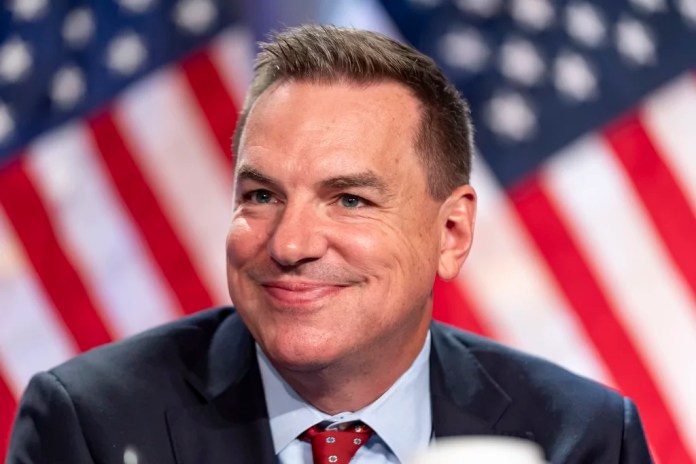
- NRCC Chairman Richard Hudson stated that House Democrats face significant challenges in districts that previously rejected their party at the presidential level (per washingtonexaminer.com).
- Joe Baldacci and state Auditor Matt Dunlap are engaged in a competitive primary within the Democratic Party (per washingtonexaminer.com).
The National Republican Congressional Committee (NRCC) has released internal polling data that suggests a favorable outlook for Republicans in the upcoming 2026 midterm elections. According to the NRCC, the GOP is competitive in five Democratic-held districts that were won by Donald Trump in the 2024 presidential election.
This polling is the first released by the NRCC for this election cycle and indicates a strategic push by Republicans to expand their influence in traditionally Democratic areas. NRCC Chairman Richard Hudson emphasized the challenges facing House Democrats, noting that these districts have already shown a preference for Republican leadership at the presidential level.
Hudson's statement highlights the GOP's strategy to not only defend their current seats but also to actively pursue gains in areas where Democrats have previously held sway. The NRCC's approach involves targeting districts that have demonstrated a willingness to support Republican candidates, leveraging the momentum from Trump's 2024 victory.
This strategy is part of a broader effort to shift the balance of power in the House of Representatives by capitalizing on perceived vulnerabilities within the Democratic Party.
In the Democratic camp, candidates like Joe Baldacci and state Auditor Matt Dunlap are preparing for a competitive primary, reflecting the internal challenges and strategic recalibrations necessary to maintain their party's hold on these contested districts.
The outcome of these primaries will be crucial in determining the Democratic Party's ability to counter the Republican offensive. The GOP's confidence, as reflected in the NRCC's polling, underscores a concerted effort to reshape the political landscape in their favor.
By focusing on districts with a history of supporting Trump, Republicans aim to consolidate their gains and potentially secure a majority in the House.
As the 2026 midterms approach, both parties are gearing up for a contentious battle, with the NRCC's polling serving as a rallying point for Republican efforts to challenge Democratic incumbents and expand their legislative influence.
- House Democrats in five districts face potential losses, impacting their legislative agenda and influence in Congress.
- Republicans stand to gain increased power and legislative control if they successfully flip these districts, affecting policy decisions.
- The competitive primary between Joe Baldacci and Matt Dunlap highlights internal Democratic challenges that could influence election outcomes.
- Whether the NRCC releases additional polling data to further bolster Republican strategies.
- The outcome of the Democratic primary between Joe Baldacci and Matt Dunlap and its impact on the general election.
- Any shifts in campaign strategies by Democrats in response to the NRCC's polling data.
Left- and right-leaning outlets are covering this story differently — in which facts to emphasize, which context to include, and how to frame causes and consequences.
7 specific areas where coverage diverges — see below.
- The washingtonexaminer.com emphasizes the GOP's confidence and strategic offensive, while potential Democratic responses are less detailed.
- No disputes or unclear facts are noted in the source provided.
- No source mentions the specific historical voting patterns or demographic changes in the five districts targeted by the GOP.
- No differing figures are presented in the source provided.
- The source does not discuss what specific factors led to the GOP's confidence beyond Trump's 2024 win.
- The source attributes the polling data and strategic statements to the NRCC and Richard Hudson.