
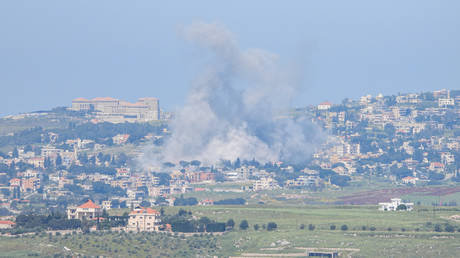
Netanyahu orders Israeli military to intensify Lebanon attacks
Topic: geopoliticsRegion: Middle EastUpdated: i3 outletsSources: 7⚠ Bias gap — sources divergeSpectrum: Mostly Center⏱ 2 min read⚠ 3d+ old
Story Summary
SITUATION
As Israel intensifies military operations in southern Lebanon, families are fleeing Beirut's southern suburbs. Israeli Prime Minister Benjamin Netanyahu has signaled further escalation, raising fears among residents of a broader conflict (per Middle East Eye).
Coveragetap to expand ▾Spectrum: Mostly Center🌍Other: 3 · Europe: 1 · ME: 1 · Asia: 1
Political Spectrum
Position is inferred from coverage mix.
i3 outlets · Center
Left
Center
Right
Left: 1
Center: 4
Right: 1
Geography Coverage
Distribution of where coverage is coming from.
i3 unique outlets · Dominant: Global
KEY FACTS
- Hezbollah is “attacking us with drones… but what this requires of us now is to intensify the blows, increase the force,” Netanyahu stressed.
- Shortly afterward, the Israeli military announced more strikes against Hezbollah targets in the Beqaa Valley in eastern Lebanon, as well as other parts of the country.
- Netanyahu’s order came despite the ongoing ceasefire between the Jewish state and the Lebanese government in Beirut, which was agreed in mid-April after more than a month of fighting and was extended earlier in May.
- Earlier on Monday, one IDF soldier was killed and another seriously wounded by a drone in southern Lebanon.
- The development prompted far-right Israeli National Security Minister Itamar Ben-Gvir to state that “it’s time for the prime minister to bang on Trump’s table and inform him that we are returning to war in Lebanon.”
- The reported departures come as Israel intensifies military operations in southern Lebanon and the eastern Bekaa Valley.
- Families have begun fleeing Beirut’s southern suburbs following new threats from Israeli Prime Minister Benjamin Netanyahu, Al Jazeera Arabic reported.
- In a video message on Monday, Netanyahu signalled a further escalation in the campaign, saying Israel was not easing its military pressure and had instead ordered forces to intensify operations.
HISTORICAL CONTEXT
This development falls within the broader context of Geopolitics activity in Middle East. Current reporting indicates: Residents leave southern Beirut amid fears of escalation Families have begun fleeing Beirut’s southern suburbs following new threats from Israeli Prime Minister Benjamin Netanyahu, Al Jazeera Arabic reported.
The reported departures come as Israel intensifies military operations in southern Lebanon and the eastern Bekaa Valley. In a video message on Monday, Netanyahu signalled a further escalation in the campaign, saying Israel was not easing its military pressure and had instead ordered forces to intensify operations.
Brief
In a significant escalation of military operations, Israel has intensified its actions in southern Lebanon, prompting families to flee from the southern suburbs of Beirut. This exodus follows new threats from Israeli Prime Minister Benjamin Netanyahu, who has indicated that military pressure will not ease and has ordered forces to ramp up their operations.
The situation has heightened fears among residents, particularly in densely populated areas, that the conflict may expand further, potentially leading to greater civilian casualties and displacement.
Netanyahu's statements reflect a broader strategy aimed at asserting military dominance in the region, which has been marked by ongoing tensions since the outbreak of hostilities in March 2026.
As families leave their homes, the humanitarian implications of this conflict are becoming increasingly dire, with many residents expressing anxiety about their safety and the future of their communities. many governments remains watchful, but immediate responses from foreign governments have yet to materialize, leaving residents to navigate the escalating violence largely on their own.
The developments in Beirut underscore the precariousness of the situation in Lebanon, where the specter of war looms large as military operations continue unabated.
Where sources differ
Bias gap1.05 / 2.0
Left- and right-leaning outlets are covering this story differently — in which facts to emphasize, which context to include, and how to frame causes and consequences.
Left-leaning (1)
middle_east_eye-0.35
Lebanese flee their homes as Israel orders attacks on Beirut Lebanese flee their homes as Israel orders attacks on Beirut Lebanese flee their homes as Israel orders attacks on Beir…
Center (4)
mogazmasr.combangkokpost.comnewarab.compalestinechronicle.com
Right-leaning (1)
rt_world+0.70
Netanyahu orders Israeli military to intensify Lebanon attacks Netanyahu orders Israeli military to intensify Lebanon attacks Netanyahu orders Israeli military to intensify Lebanon…
Sources
6 of 6 linked articles
Lebanese flee their homes as Israel orders attacks on Beirut
middleeasteye.netJun 1Left
↗
Netanyahu orders Israeli military to intensify Lebanon attacks
rt.comMay 26Right
↗
Netanyahu orders sharper Lebanon offensive as strikes intensify - mogazmasr.com
mogazmasr.comMay 26Left
↗
Israel steps up Lebanon strikes as Netanyahu escalates offensive
bangkokpost.comMay 26Left
↗
US, Iran close to deal; Netanyahu urges more strikes on Lebanon
newarab.comMay 25Left
↗
LIVE BLOG: Hezbollah Expands Operations as Israeli Losses Mount, Iran Signals Warning - Day 86
palestinechronicle.comMay 25Left
↗