
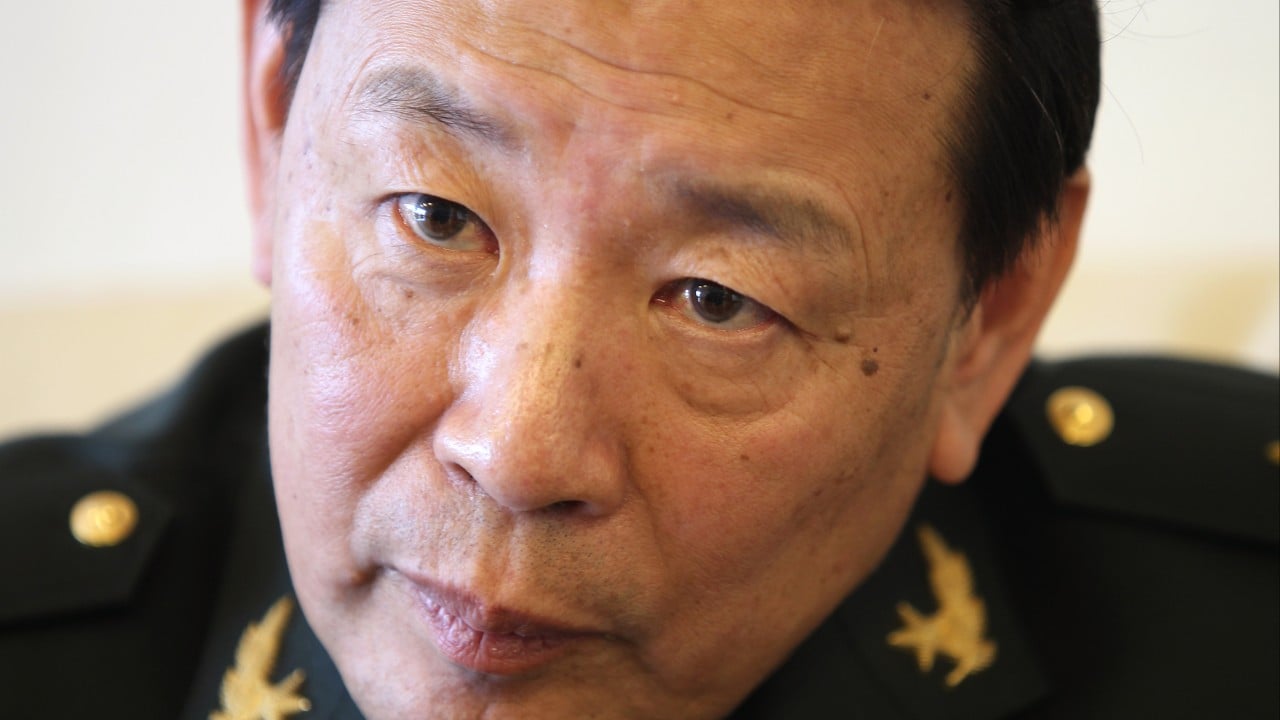
Retired PLA major general warns Taiwan 'provocation' could speed reunification, raising conflict risk
Coveragetap to expand ▾Spectrum: Center Only🌍Europe: 1 · Asia: 1
- Retired PLA major general Luo Yan spoke at the Xiangshan Forum and said Taiwan provocation could accelerate reunification with mainland China (per scmp.com).
- Luo Yan warned that Taiwan’s leader William Lai Ching-te had challenged Beijing’s red lines (per scmp.com).
Retired PLA major general Luo Yan told attendees at the Xiangshan Forum that provocation by Taiwan could accelerate reunification with mainland China, a statement that has drawn attention to rising cross-strait risk.
Luo named Taiwan’s leader William Lai Ching-te as having crossed Beijing’s red lines, framing Taipei’s actions as a potential catalyst for faster mainland measures toward reunification (per scmp.com).
The forum setting underlines that the warning came in a high-profile security discussion rather than an informal comment, and Luo’s status as a retired PLA major general was emphasized in the reporting (per scmp.com).
Luo’s statement does not itself announce any mainland policy move; it is a warning from a former senior officer that links Taiwanese political choices to an increased chance of coercive steps by Beijing, a linkage the article highlights without detailing specific military actions the mainland would take (per scmp.com).
Taipei’s response to the warning is not recorded in the report, and the coverage focuses on Luo’s framing rather than official reactions from Taiwan or Beijing (per scmp.com).
The piece signals that comments by ex-military figures at venues like the Xiangshan Forum can amplify concerns about cross-strait dynamics, especially when they name current political leaders and invoke ‘red lines’ that suggest thresholds for escalation (per scmp.com).
- Taiwanese voters and residents of Taiwan bear concrete costs: Luo’s warning ties Taiwan political moves to an increased risk of mainland coercion, raising the likelihood of political pressure or security measures affecting daily life in Taiwan (per scmp.com).
- William Lai Ching-te’s political positioning benefits domestic constituencies who favor stronger assertions of sovereignty, since such stances can shift public debate even as they draw hostile warnings from retired PLA figures (per scmp.com).
- Beijing-aligned security planners and advocates benefit from the rhetorical leverage of ex-PLA officers like Luo Yan, whose military credentials amplify warnings that can justify harder policy stances (per scmp.com).
- Whether Taiwan’s government or William Lai Ching-te issues an official response to Luo Yan’s remarks at the Xiangshan Forum within the next week (per scmp.com).
- Whether Beijing’s official ministries reference or echo Luo Yan’s warning in policy statements or state media in the days following the forum (per scmp.com).
- Whether the Xiangshan Forum publishes the full text or video of Luo Yan’s remarks, clarifying any specific thresholds he meant by ‘red lines’ by the end of this month (per scmp.com).
- Only scmp.com is in this pack; it frames Luo Yan’s comments as a warning that Taiwan provocation could accelerate reunification and highlights William Lai Ching-te as having challenged Beijing’s red lines (per scmp.com).
- No source in this pack disputes Luo Yan’s statement, and no source provides an official response from Taiwan or Beijing to the warning (per scmp.com).
- No source in this pack mentions any specific prior Taiwanese action that Luo Yan labels a ‘provocation’ or documents the precise acts that allegedly crossed Beijing’s red lines.
- No source in this pack provides casualty or military-movement data tied to the warning, nor does it cite formal mainland policy decisions that would follow such a warning.
- No source in this pack references international legal or diplomatic mechanisms (e.g., UN, ICC) relevant to cross-strait coercion or reunification.
- No differing numeric figures appear across sources in this pack (per scmp.com).
- The single-source report attributes causality in Luo Yan’s terms: Taiwan provocation → accelerated reunification risk; no independent confirmation of the causal link is provided (per scmp.com).
- scmp.com attributes the warning and the naming of William Lai Ching-te’s challenge to Beijing’s red lines directly to Luo Yan (per scmp.com).