
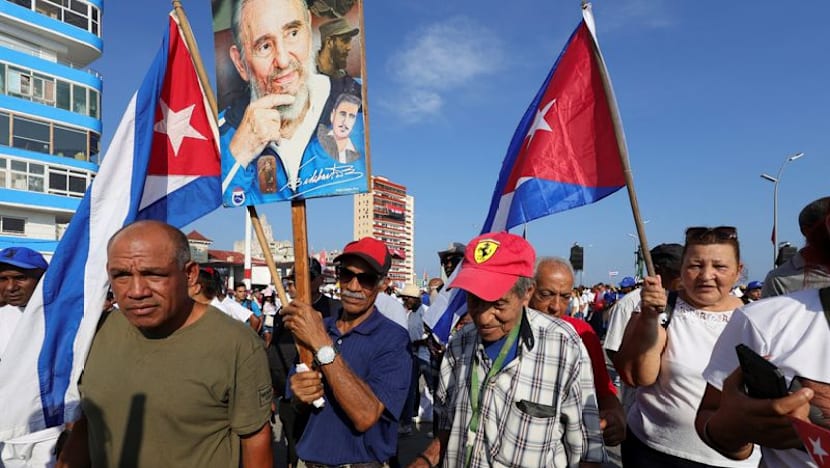
Marco Rubio says Cuba's leaders must go as US offers country €85 million in aid
Coveragetap to expand ▾Spectrum: Center Only🌍Other: 3 · Asia: 2
- Cuba accepts $100 million U.S. aid offer as country says it has run out of oil - Miami Herald
- aid offer as country says it has run out of oil - Miami Herald
Marco Rubio has called for a change in leadership in Cuba, asserting that the current government must go. This statement coincides with the U.S. government's announcement of a proposed $100 million aid package aimed at supporting democratic reforms within the country.
Rubio's remarks highlight the ongoing U.S. efforts to influence political change in Cuba, a nation that has been under a communist regime for decades. The proposed funding is intended to bolster initiatives that promote democracy and human rights, reflecting a consistent theme in U.S. foreign policy towards Cuba.
As discussions about the future of U.S.-Cuba relations continue, the emphasis on leadership change underscores the urgency felt by U.S. officials regarding the political situation in Cuba. The aid package is seen as a critical step in encouraging a transition towards a more democratic governance structure, which has been a long-standing goal of U.S. policy in the region.
Rubio's position aligns with broader sentiments within the U.S. government advocating for a more proactive approach to supporting democratic movements in authoritarian regimes worldwide.
- The U.S. aid of €85 million to Cuba comes at a critical juncture, as the country grapples with severe economic challenges and political unrest.
- This financial support aims to alleviate immediate humanitarian needs, such as food and medical shortages, directly impacting the lives of ordinary Cubans.
- By calling for a change in leadership, Rubio's stance reflects a broader strategy to promote democratic reforms in Cuba, potentially reshaping the island's political landscape and fostering a more stable environment for future U.S.-Cuba relations.
- In the coming weeks, watch for Marco Rubio to intensify his calls for regime change in Cuba, potentially rallying bipartisan support in Congress for additional sanctions against the Cuban government.
- Expect the Biden administration to outline specific conditions for the €85 million aid package, which could include demands for political reforms or humanitarian improvements in Cuba over the next month.
- Monitor the response from Cuban leaders, particularly President Miguel Díaz-Canel, as they may announce new policies or public statements regarding the aid and their oil crisis within the next two weeks.
- Keep an eye on international reactions, especially from Latin American countries, as they may convene to discuss the implications of U.S. aid to Cuba and its impact on regional stability in the upcoming weeks.
- Watch for potential protests or civil unrest in Cuba as citizens react to both the aid situation and the political rhetoric from U.S. officials, which could unfold in the next few days.