
Iran and U.S. Exchange Fire in International Waters Amid Tensions
Coveragetap to expand ▾Spectrum: Mixed🌍US: 2
- The U.S. hopes for an Iranian response that could initiate negotiations, as stated by Secretary of State Marco Rubio (per washingtonexaminer.com).
- Marco Rubio mentioned that the Iranian leadership is fractured, which may impede negotiations (per washingtonexaminer.com).
- The U.S. has not yet received the anticipated response from Iran as of the last report (per washingtonexaminer.com).
In a recent incident, Iranian forces and U.S. destroyers exchanged fire while navigating international waters. This confrontation highlights the ongoing tensions between the two nations amid a broader conflict. The U.S.
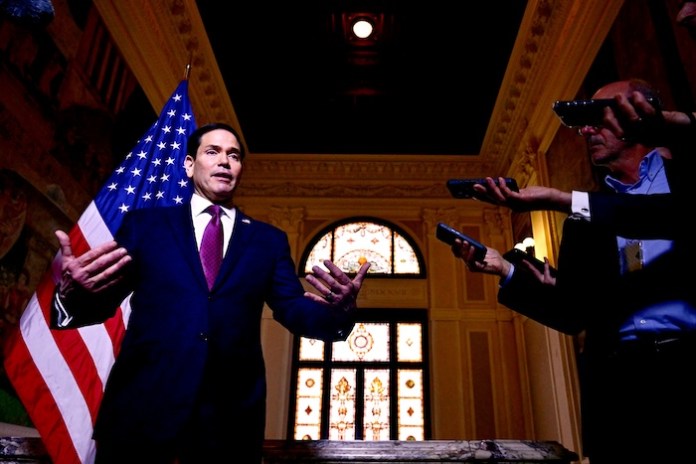
Secretary of State, Marco Rubio, expressed hope that an anticipated response from Iran could pave the way for serious negotiations aimed at resolving the conflict. Rubio noted that the Iranian leadership is currently experiencing internal fractures, which could complicate diplomatic efforts.
The exchange of fire comes as the U.S. seeks to bring an end to the ongoing war through diplomatic channels. Rubio's comments followed his meeting with Pope Leo XIV, where discussions likely touched on the geopolitical situation. The U.S. has yet to receive the expected response from Iran, which Rubio indicated could arrive soon.
The Trump administration is actively pursuing a diplomatic resolution to the conflict, despite the complexities within Iran's political structure. The fractured nature of Iran's leadership may serve as a barrier to swift negotiations, according to Rubio.
This incident underscores the fragile state of affairs in the region, where military engagements continue to pose risks of escalation. The U.S. remains committed to finding a peaceful resolution, though the path forward remains uncertain given the current dynamics.
As both nations navigate this tense period, many governments watches closely, hoping for a de-escalation that could lead to constructive dialogue. The outcome of these anticipated negotiations could significantly impact the stability of the region and the broader geopolitical landscape.
The situation remains fluid, with the potential for further developments depending on Iran's forthcoming response. The U.S. administration's strategy hinges on diplomatic engagement, aiming to mitigate the risks of further military confrontations.
- The exchange of fire between Iranian and U.S. forces in international waters raises the risk of military escalation, directly affecting regional stability and security.
- The U.S. hopes for negotiations to end the conflict, which could benefit both nations by reducing military expenditures and potential casualties.
- Iran's internal political fractures may hinder diplomatic efforts, impacting the likelihood of successful negotiations and prolonging the conflict.
- Whether Iran provides the anticipated response to the U.S. by the end of the week.
- Potential diplomatic engagements between the U.S. and Iran following any response.
- Any further military engagements in the region that could escalate tensions.
Left- and right-leaning outlets are covering this story differently — in which facts to emphasize, which context to include, and how to frame causes and consequences.
6 specific areas where coverage diverges — see below.
- The washingtonexaminer.com emphasizes the hope for negotiations, while not all sources may highlight this diplomatic angle.
- The exact details of the exchange of fire and the number of casualties, if any, remain unclear.
- No source mentions the broader context of the U.S.-Iran conflict, including the initial triggers of the ongoing war.
- The washingtonexaminer.com does not specify who initiated the exchange of fire.
- The washingtonexaminer.com attributes the hope for negotiations to Marco Rubio.
- Marco Rubio's statement about the fractured nature of Iran's leadership is a notable claim.