
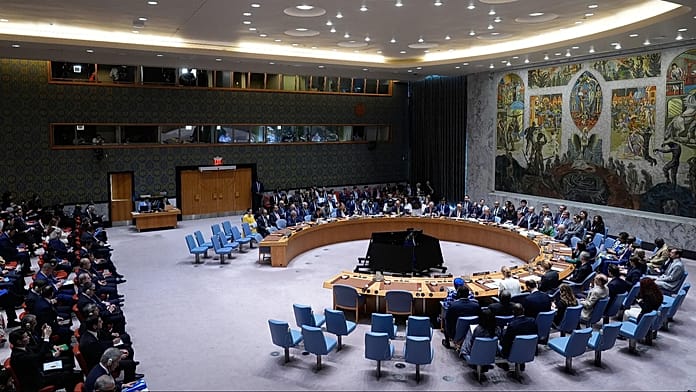
Russia and China veto US-drafted UN sanctions on Iran, blocking new restrictions
Topic: geopoliticsRegion: Middle EastUpdated: i2 outletsSources: 5Spectrum: Center Only⏱ 3 min read📡 Wire pickup
Story Summary
SITUATION
Russia and China vetoed a US-drafted UN Security Council resolution to impose new sanctions on Iran, blocking the measure. The vetoes drew criticism from US diplomats and highlighted divisions within the Security Council over how to respond to Tehran (per euronews).
Coveragetap to expand ▾Spectrum: Center Only🌍Europe: 1 · Other: 1
Political Spectrum
Position is inferred from coverage mix.
i2 outlets · Center
Left
Center
Right
Left: 0
Center: 2
Right: 0
Geography Coverage
Distribution of where coverage is coming from.
i2 unique outlets · Dominant: Europe
KEY FACTS
- The vetoes collectively prevented the proposed restrictions from being adopted by the Security Council (per euronews).
- US diplomats criticized the vetoes at the UN, framing them as evidence of continued council divisions over how to respond to Tehran (per euronews).
HISTORICAL CONTEXT
The immediate backdrop is the active US–Israel military campaign against Iran that began in early March 2026, when coordinated strikes targeted Iranian power plants, air defenses and military infrastructure; Iranian military actions throughout 2026 have been explicitly framed by Tehran as responses to that campaign.
Those operations unfolded against a long-running pattern of international disagreement over how to constrain Iran’s nuclear and regional activities, with the UN Security Council repeatedly divided over sanctions and enforcement options in the 2010s and 2020s.
Brief
Russia and China vetoed a United Nations Security Council resolution drafted by the United States that would have imposed new sanctions on Iran, blocking the measure from being adopted (per euronews). The double veto left US diplomats publicly criticizing the move and highlighted deep divisions inside the 15-member Council over how to handle Tehran (per euronews).
Russia and China exercised their veto authority in sequence to stop the US text; euronews reports the outcome and the diplomatic backlash but does not quote the vetoing governments' public rationales or the US text itself.
The United States framed the draft as necessary to tighten pressure on Iran; euronews records US diplomats’ criticism of Moscow and Beijing for using their vetoes to block the measure (per euronews).
Russia and China’s vetoes mean the Security Council will not adopt the proposed restrictions unless a revised text can secure nine affirmative votes and avoid any veto from a permanent member — a threshold the article implies is unlikely given the split documented at the UN (per euronews).
The story as reported focuses on the immediate diplomatic outcome and Council divisions rather than on the specific sanctions language or the downstream effects on Iran’s economy or regional actors; euronews does not provide the draft resolution text, the sanctions targeted entities, or statements from Iranian officials in this piece (per euronews).
Diplomats at the UN now face a choice: try to redraft the measure to win broader support or pursue alternative diplomatic and unilateral measures outside the Security Council framework; euronews frames the vetoes primarily as a setback for multilateral UN action on Iran (per euronews).
Why it matters
- - UN-sanction mechanism: UN member governments seeking UN-level restrictions on Iran lose a concrete tool when Russia and China veto a Security Council draft, shifting the burden of pressure onto the United States and its partners to use unilateral or coalition measures (per euronews). - Diplomatic isolation risk for US strategy: US diplomats publicly criticized the vetoes, signaling that the US faces entrenched opposition inside the Council that reduces the effectiveness of multilateral pressure campaigns against Iran (per euronews). - Policymaking impact on targeted populations: Without Security Council sanctions, populations in states the US might try to pressure (including Iranian economic actors) will instead feel effects through unilateral measures rather than unified UN restrictions, concentrating costs on those targeted by US-led tools (per euronews). - Strategic benefit to vetoing powers: Russia and China preserve their ability to shield Iran from additional UN measures, which benefits Tehran diplomatically by preventing a new multilateral sanctions regime (per euronews).
What to watch next
Whether the United States submits a revised sanctions draft to the UN Security Council that can win at least nine affirmative votes and avoid a Russian or Chinese veto. 2) Whether Russia or China publish formal statements explaining their vetoes and whether any other Council member joins their public rationale at the UN. 3) Whether the United States announces unilateral or coalition sanctions outside the UN in response to the vetoes and the specific entities or sectors targeted. 4) Whether Security Council negotiations produce an amended text or a different diplomatic pathway within 30 days of the vetoes (per euronews timeline implications).
Where sources differ
7 dimensionsFraming differences
?- Only euronews is in this pack; it frames the story as a diplomatic setback for the US, noting criticism from US diplomats and Council divisions (per euronews).
Disputed or unclear
?- No source in this pack disputes the core fact that Russia and China vetoed the US draft, but the vetoing governments' stated reasons are not included in the article (per euronews).
Omitted context
?- No source here provides the text of the US-drafted resolution or names the specific restrictions, entities, or sectors the sanctions would have targeted (per euronews).
- No source in this pack reports any statement from the Russian government, the Chinese government, or Iranian officials explaining their positions (per euronews).
- No source mentions potential economic impacts on specific Iranian populations, companies, or third-party states that would result from the proposed sanctions (per euronews).
- No source cites whether alternative unilateral or coalition measures have already been planned or what those measures would target (per euronews).
Conflicting figures
?- No differing figures appear in this single-source pack; the article does not provide vote tallies beyond noting the vetoes (per euronews).
Disputed causality
?- The article does not document a direct triggering event that prompted the US to file the draft now; euronews reports the veto action and diplomatic reaction but omits a prior trigger in the text provided (per euronews).
Attribution disputes
?- Euronews attributes the reported criticism to US diplomats and attributes the vetoes to Russia and China (per euronews).
Sources
5 of 5 linked articles
Russia, China veto US resolution about Iran sanctions
en.mehrnews.com17h agoLeft
↗
Iran Expresses Gratitude to Russia and China for Blocking U.S. Anti-Iran Resolution
wanaen.com18h agoLeft
↗
Iran Thanks Russia and China for Opposing US-Drafted UN Security Council Resolution
khaama.com19h agoLeft
↗
UN Security Council fails to adopt US-backed Iran sanctions resolution after Russia and China vetoes
euronews.com20h agoCenter
↗
Russia and China veto U.S. proposal for U.N. experts to keep monitoring sanctions on Iran
japantoday.comSep 17Left
↗