
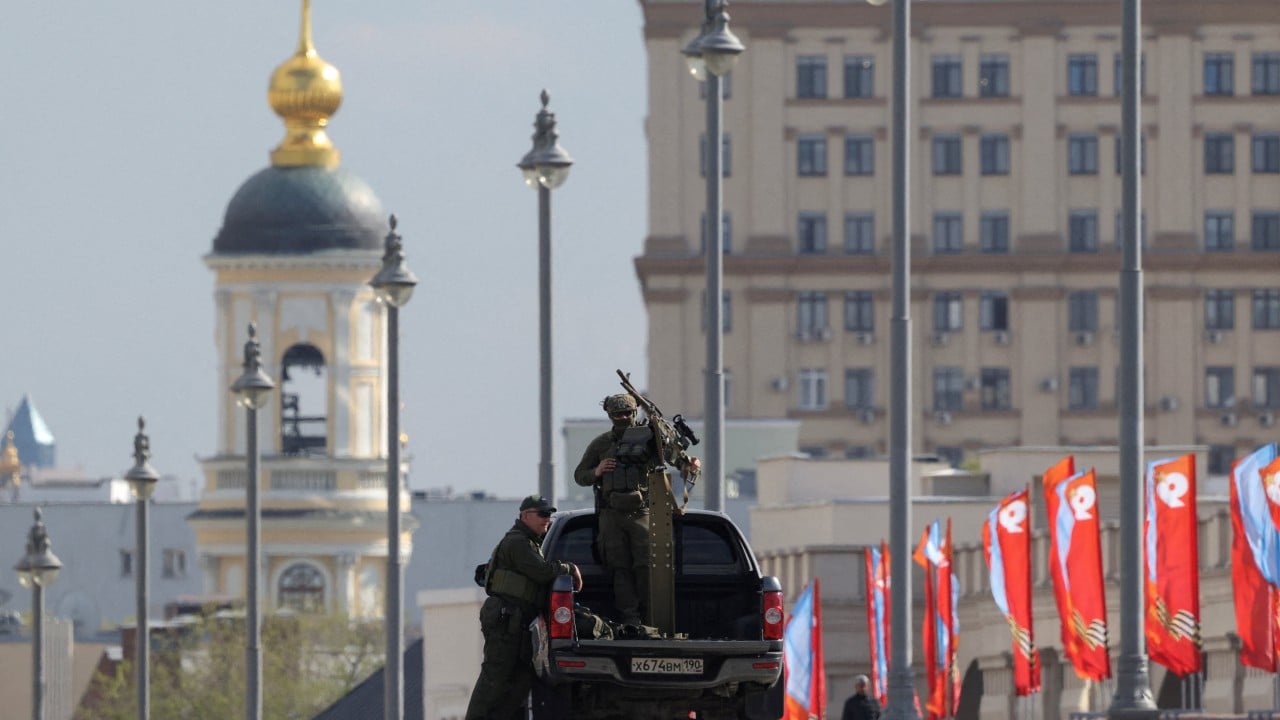
Russia Orders Ceasefire in Ukraine for Victory Day Amidst Zelensky's Skepticism
Coveragetap to expand ▾Spectrum: Mixed🌍Other: 2 · ME: 1 · Asia: 1
- Russian President Vladimir Putin ordered a two-day ceasefire in Ukraine on May 8 and 9 to mark Victory Day (per scmp.com).
- The Russian Ministry of Defense confirmed the ceasefire order, emphasizing its alignment with World War II Victory Day celebrations (per news.google.com).
- Ukrainian President Volodymyr Zelensky stated that Kyiv had not received any official proposals for a ceasefire during this period (per scmp.com).
- Zelensky proposed an earlier pause in fighting, starting on the night of May 5 to May 6, which was not acknowledged by Russia (per scmp.com).
- The ceasefire is unilateral, declared solely by Russia, without prior agreement from Ukraine (per news.google.com).
- Victory Day is a significant holiday in Russia, commemorating the Soviet Union's victory over Nazi Germany in World War II (per scmp.com).
- There is no indication from the sources whether the ceasefire will be respected by both parties on the ground (per scmp.com, news.google.com).
In a move to coincide with Russia's Victory Day celebrations, President Vladimir Putin has ordered a two-day ceasefire in the ongoing conflict with Ukraine, scheduled for May 8 and 9.
This announcement, confirmed by the Russian Ministry of Defense, is intended to mark the anniversary of the Soviet Union's victory over Nazi Germany in World War II, a day of considerable national pride in Russia. However, the ceasefire has been declared unilaterally, without prior agreement from Ukraine.
Ukrainian President Volodymyr Zelensky has expressed skepticism about the ceasefire, noting that Kyiv has not received any official proposals from Russia regarding the cessation of hostilities. Zelensky had earlier suggested a pause in fighting starting on the night of May 5 to May 6, but this proposal was not acknowledged by Russian authorities.
The announcement of the ceasefire comes amidst ongoing hostilities between Russian and Ukrainian forces, with both sides continuing to engage in military operations. The unilateral nature of the ceasefire raises questions about its potential effectiveness, as there is no indication from the sources whether it will be respected by both parties on the ground.
Victory Day holds significant historical and cultural importance in Russia, serving as a reminder of the sacrifices made during World War II.
The decision to declare a ceasefire during this period may be seen as an attempt by Russia to project a message of peace and commemoration, despite the ongoing conflict. many governments remains watchful of the situation, as the ceasefire's success or failure could have implications for the broader dynamics of the conflict.
While Russia's intentions may be to honor a historical event, the lack of coordination with Ukraine suggests that the ceasefire may face challenges in implementation. As the dates approach, observers will be keen to see how both Russian and Ukrainian forces respond to the ceasefire order and whether it leads to a temporary reduction in hostilities.
The situation remains fluid, with the potential for developments that could either reinforce or undermine the ceasefire's objectives.
- Ukrainian civilians bear the concrete costs of ongoing hostilities, facing displacement and casualties due to continued military operations.
- The Russian government benefits from the ceasefire announcement by aligning it with a significant national holiday, potentially bolstering domestic support.
- The unilateral nature of the ceasefire highlights the lack of coordination between Russia and Ukraine, complicating peace efforts and prolonging the conflict.
- Whether Ukrainian forces acknowledge and adhere to the ceasefire on May 8 and 9.
- Any official response from Ukraine regarding the ceasefire proposal before May 8.
- Potential international reactions or interventions if the ceasefire is violated.
- scmp.com emphasizes Zelensky's skepticism and lack of official proposals, while news.google.com focuses on the Russian Ministry of Defense's confirmation of the ceasefire.
- The effectiveness of the ceasefire is unclear, as there is no confirmation from Ukraine regarding its participation.
- No source mentions the ongoing military operations and their impact on civilians in Ukraine during the ceasefire period.