
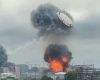
Moscow Mayor Sergei Sobyanin acknowledged that several drones reached the refinery.
Topic: defense & securityRegion: EuropeUpdated: i2 outletsSources: 6Spectrum: Mostly CenterFiltered: US/Canada (1/6)· Clear⏱ 4 min read
Story Summary
SITUATION
After Ukraine executed its largest-ever drone attack on Moscow, Russia threatened escalation. This incident marks a significant intensification in the ongoing conflict between the two nations.
Coveragetap to expand ▾Spectrum: Mostly Center🌍Other: 3 · US: 1 · Asia: 1 · LatAm: 1
Political Spectrum
Position is inferred from coverage mix.
i2 outlets · Center
Left
Center
Right
Left: 1
Center: 5
Right: 0
Geography Coverage
Distribution of where coverage is coming from.
i2 unique outlets · Dominant: Global
KEY FACTS
- Russia's Defense Ministry said it had shot down 555 Ukrainian drones overnight across various regions, almost 200 of them in the vicinity of the capital.
- According to Russian authorities, at least 16 people were injured in the Moscow region, including two minors.
HISTORICAL CONTEXT
The immediate backdrop to the current tensions between Russia and Ukraine is the ongoing conflict that escalated significantly following Russia's full-scale invasion of Ukraine on February 24, 2022. This invasion marked a dramatic intensification of hostilities that had been simmering since 2014, when Russia annexed Crimea and supported separatist movements in Eastern Ukraine.
In the months leading up to the latest drone attack, Ukraine had been increasingly successful in its counteroffensive operations, reclaiming territories occupied by Russian forces and demonstrating its growing military capabilities.
Brief
In a dramatic escalation of hostilities, Ukraine has executed its largest-ever drone attack on Moscow, prompting a stern warning from Russia about potential military escalation. The attack signifies a marked increase in Ukraine's offensive capabilities, as it seeks to undermine Russian military infrastructure.
Russia's government has responded with threats of intensified military actions, indicating that this incident could lead to further conflict in the already volatile region. Both sides have been engaged in a series of military exchanges since the onset of the invasion, with Ukraine increasingly targeting key Russian sites.
This latest development underscores the unpredictable nature of the ongoing war, as both nations navigate a complex battlefield. Analysts suggest that Ukraine's strategy may be aimed at demonstrating its capabilities and resilience in the face of Russian military actions.
As the situation unfolds, many governments watches closely, aware that any miscalculation could have dire consequences.
Sources
1 of 6 linked articles · Filter: US/Canada