
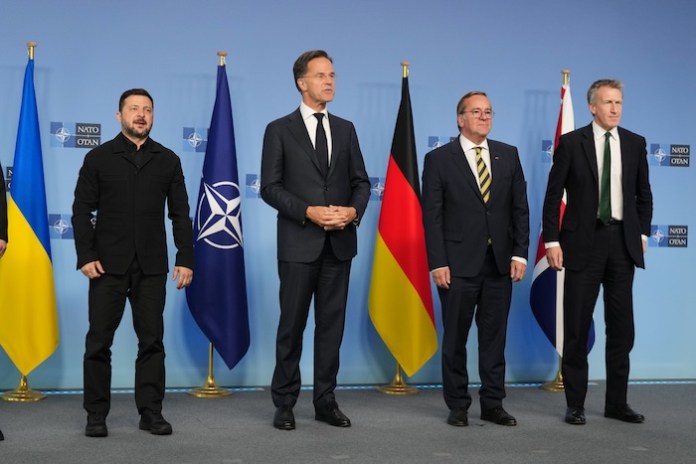
Rutte Urges NATO to Enhance Support for Ukraine Amid Critical Defense Needs
Topic: geopoliticsRegion: EuropeUpdated: i2 outletsSources: 3⚠ Bias gap — sources divergeSpectrum: Mostly CenterFiltered: Global (0/3)· Clear⏱ 4 min read
Story Summary
SITUATION
Rutte's call for enhanced NATO support underscores the urgent need for increased military aid to Ukraine as it faces critical defense challenges against Russian aggression. Strengthening Ukraine's capabilities is vital for regional stability and deterring further escalation in the conflict.
Coveragetap to expand ▾Spectrum: Mostly Center🌍Other: 2 · US: 1
Political Spectrum
Position is inferred from coverage mix.
i2 outlets · Center
Left
Center
Right
Left: 0
Center: 2
Right: 1
Geography Coverage
Distribution of where coverage is coming from.
i2 unique outlets · Dominant: Global
KEY FACTS
- NATO defense ministers met in Brussels on Thursday at the alliance’s headquarters, which was followed by a meeting of the Ukraine Defense Contact Group.
- BRUSSELS, Belgium — NATO Secretary-General Mark Rutte highlighted the “window of opportunity” for Ukraine and urged members to continue to increase their defense contributions for the besieged country.
- The UDGC announced a $1 billion weapons package for Ukraine that they will pay the United States for through the Prioritized Ukraine Requirements List, or PURL, initiative.
HISTORICAL CONTEXT
The ongoing conflict in Ukraine, which escalated significantly after Russia's full-scale invasion on February 24, 2022, remains a critical issue in global geopolitics. As of 2026, the war has seen numerous phases, with Ukraine receiving substantial military and financial support from NATO and Western allies in response to Russian aggression.
In recent months, NATO has intensified its support for Ukraine, with the Ukraine Defense Contact Group announcing a $1 billion weapons package aimed at bolstering Ukraine's defense capabilities. This package is part of a broader strategy to apply pressure on Russia and enhance Ukraine's military effectiveness during what has been described as a crucial period in the conflict.
Brief
In a significant call to action, NATO Secretary-General Mark Rutte emphasized the urgent need for member countries to enhance their defense contributions to Ukraine, citing a critical 'window of opportunity' for the nation as it continues to face military aggression.
This appeal was made during a NATO defense ministers meeting held in Brussels, where discussions centered on the ongoing conflict and the necessary support for Ukraine's defense efforts. Rutte's remarks come at a time when Ukraine is seeking to bolster its military capabilities against Russian forces, which have intensified their operations in recent months.
The Ukraine Defense Contact Group, which includes NATO allies, announced a substantial $1 billion weapons package aimed at strengthening Ukraine's defense capabilities. This funding will be channeled through the Prioritized Ukraine Requirements List initiative, allowing for a more streamlined procurement process from the United States.
The urgency of Rutte's message reflects the heightened stakes in the region, as Ukraine continues to navigate the complexities of its defense strategy amidst ongoing hostilities.
While NATO allies have generally rallied around Ukraine, the specifics of their contributions and commitments remain varied, highlighting the need for a unified approach to support the besieged nation effectively.
Why it matters
- The call from NATO Secretary-General Mark Rutte for increased defense contributions to Ukraine underscores the urgent need for enhanced military support as the conflict continues to strain Ukraine's resources and sovereignty.
- This commitment directly impacts Ukrainian soldiers and civilians, who face ongoing threats from Russian aggression, as well as NATO member states, which must balance their own defense readiness with support for Ukraine.
- A significant consequence of this support is the potential for Ukraine to regain territory and stabilize its borders, which could deter further Russian advances and contribute to a more secure Europe.
What to watch next
- NATO Secretary General Jens Stoltenberg is expected to announce a new defense support package for Ukraine within the next 72 hours, following Rutte's call for enhanced assistance.
- The U.S. Congress will vote on a proposed aid bill for Ukraine by the end of the week, which could significantly impact military support levels.
- European Union defense ministers are scheduled to meet next month to discuss a coordinated response to Ukraine's defense needs, with potential commitments to increase military aid.
- The Netherlands will host a bilateral meeting with Ukrainian officials before the June summit to finalize specific defense support initiatives.
- NATO member states will assess their military readiness and potential contributions to Ukraine's defense at the upcoming NATO defense ministers' meeting in mid-May.
Where sources differ
Bias gap0.50 / 2.0
Left- and right-leaning outlets are covering this story differently — in which facts to emphasize, which context to include, and how to frame causes and consequences.
Center (2)
mezha.neten.ilsole24ore.com
Right-leaning (1)
washington_examiner+0.70
Rutte urges NATO countries to take advantage of Ukrainian ‘window of opportunity’ Rutte urges NATO countries to take advantage of Ukrainian ‘window of opportunity’ Rutte urges NATO…
Sources
0 of 3 linked articles · Filter: Global