
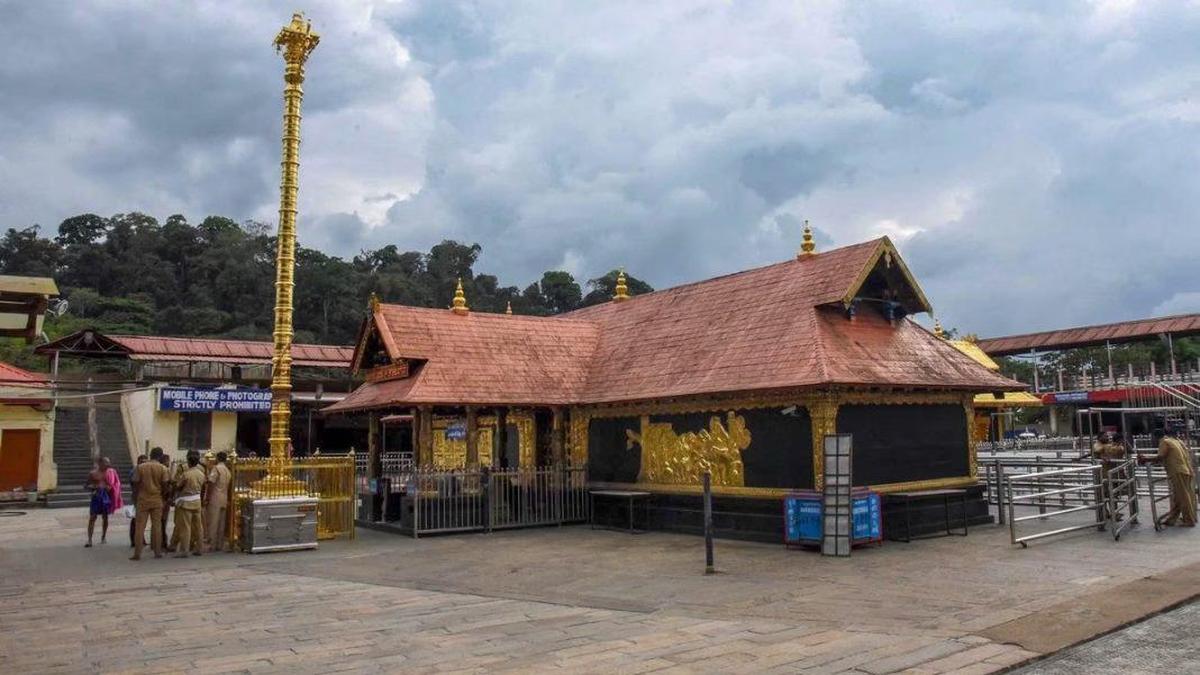
Sabarimala: Supreme Court grills lawyers' body on women's entry plea
Coveragetap to expand ▾Spectrum: Center Only🌍Other: 3 · Asia: 2
- Sabarimala women entry case: Were you the ‘Chief Minister’; what was your ‘business’, Supreme Court asks lawyers’ body
The Supreme Court of India has intensified its scrutiny of a plea concerning women's entry into the Sabarimala temple, a case that has sparked widespread debate over religious practices and gender equality.
During the proceedings, the court questioned the lawyers' body representing the plea, probing its authority and role in the matter by asking if it acted as the 'Chief Minister'. This line of questioning underscores the court's focus on the legitimacy and motivations of those challenging the temple's entry restrictions.
The Sabarimala temple, located in the southern state of Kerala, has been at the center of a contentious legal and social debate. The temple's traditional ban on women of menstruating age has been challenged as discriminatory, leading to a landmark Supreme Court ruling in 2018 that lifted the ban.
However, the ruling has faced significant backlash, resulting in protests and further legal challenges. The current proceedings reflect the ongoing complexity of balancing religious freedoms with constitutional rights to equality.
The Supreme Court's inquiry into the lawyers' body's role suggests a rigorous examination of the legal standing of the plea, which could have far-reaching implications for similar cases across India. The case is emblematic of broader societal tensions in India, where issues of gender equality often intersect with deeply held religious beliefs.
The outcome of this case could set a precedent for how such conflicts are resolved in the future. As the court continues its deliberations, the focus remains on whether the legal arguments presented align with constitutional principles and whether the lawyers' body has the appropriate standing to represent the interests of women seeking entry into the temple.
The Sabarimala case highlights the challenges faced by the judiciary in navigating complex social issues, where legal decisions can have profound impacts on societal norms and individual rights.
The court's decision will be closely watched, not only for its legal implications but also for its potential to influence public opinion and policy on gender and religious issues in India.
- The Supreme Court's scrutiny of the lawyers' body in the Sabarimala case underscores the ongoing tension between religious traditions and women's rights in India, impacting millions of women who seek equal access to sacred spaces.
- A ruling in favor of women's entry could set a precedent for similar cases across the country, challenging entrenched gender norms and potentially reshaping the legal landscape regarding religious practices.
- This case not only affects the devotees of the Sabarimala temple but also resonates with broader movements advocating for gender equality and social justice in India.
- In the coming weeks, the Supreme Court is expected to issue a detailed ruling on the women's entry plea, which could set a significant legal precedent for gender equality in religious practices in India.
- Watch for reactions from key political figures, including Kerala Chief Minister Pinarayi Vijayan, who may address the ruling's implications for state policy and religious freedoms within the next 10 days.
- Legal experts and women's rights organizations, such as the Women's Rights Initiative, are likely to hold press conferences and public discussions in the next two weeks to analyze the court's questioning and its potential impact on future cases.
- Anticipate statements from religious leaders and temple authorities in Sabarimala, who may respond to the Supreme Court's inquiries and outline their positions on women's entry in the next week.
- Keep an eye on social media campaigns and protests organized by both supporters and opponents of the ruling, which are expected to intensify as the court's decision approaches in the next month.