
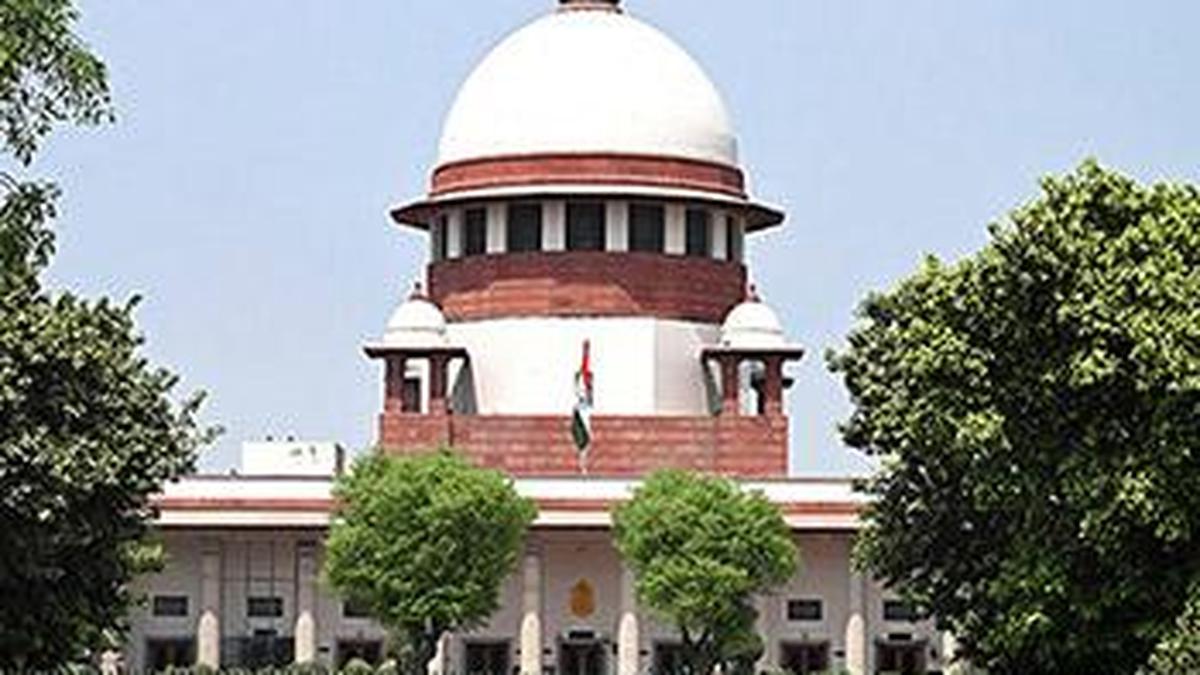
Supreme Court Questions Parliamentary Debate on Election Commission Law
Coveragetap to expand ▾Spectrum: Center Only🌍Asia: 2 · Other: 2
- The Supreme Court of India is examining whether there was adequate parliamentary debate before the enactment of the law governing the appointment of the Chief Election Commissioner (CEC) and Election Commissioners (ECs) (per The Hindu).
- Petitioners argue that the law was passed with 'virtually no debate' in Parliament, raising concerns about the legislative process (per news.google.com).
- The Supreme Court's inquiry is part of a broader legal challenge to the Chief Election Commissioner and other Election Commissioners (Appointment, Conditions of Service and Term of Office) Act (per The Hindu).
- The Supreme Court's questioning highlights potential procedural lapses in the legislative process, which could impact the credibility of the appointments (per news.google.com).
- The law in question was passed after a significant Supreme Court judgment aimed at reforming the appointment process to ensure independence from political influence (per The Hindu).
This inquiry comes in response to petitions challenging the law, which critics argue undermines the ethos of a 2023 Supreme Court judgment. That judgment had sought to reduce the political executive's exclusive control over these crucial appointments by involving the Chief Justice of India in the process until a new law was established.
Petitioners assert that the law was rushed through Parliament without sufficient discussion, raising concerns about its legitimacy and the independence of the Election Commission. The Supreme Court's scrutiny underscores the importance of procedural integrity in legislative processes, especially for laws affecting democratic institutions.
The court's examination is part of a broader legal challenge to the Chief Election Commissioner and other Election Commissioners (Appointment, Conditions of Service and Term of Office) Act. The 2023 judgment had been a significant step towards reforming the appointment process, aiming to ensure that the Election Commission remains free from political influence.
However, the new law, passed by Parliament, has sparked controversy over whether it aligns with the intended reforms. The Supreme Court's inquiry could have far-reaching implications for the credibility of the Election Commission and the broader democratic framework in India.
As the court continues to hear the case, it will need to consider the balance between legislative authority and judicial oversight in safeguarding democratic institutions. The outcome of this legal challenge could set a precedent for how similar laws are scrutinized in the future, potentially influencing the relationship between the judiciary and the legislature.
The case highlights the ongoing debate over the separation of powers and the role of the judiciary in ensuring that legislative processes adhere to constitutional principles. The Supreme Court's decision will be closely watched, as it could impact the future of electoral governance in India.
The case serves as a reminder of the critical role that transparent and accountable legislative processes play in maintaining the integrity of democratic institutions.
- The integrity of India's Election Commission is at stake, affecting the credibility of future elections and democratic governance.
- The Supreme Court's inquiry into the legislative process could lead to greater scrutiny of how laws affecting democratic institutions are enacted.
- The outcome of this case may influence the balance of power between the judiciary and the legislature in India, potentially setting a precedent for future legal challenges.
- Whether the Supreme Court will demand a review or amendment of the current law on CEC and EC appointments.
- The Supreme Court's final ruling on the petitions challenging the law, which could redefine the appointment process.
- Potential legislative responses if the court finds procedural lapses in the enactment of the law.
- The Hindu emphasizes the Supreme Court's concern over the lack of debate, while news.google.com highlights the petitioners' claims of 'virtually no debate'.
- The extent of parliamentary debate on the law remains unclear, with sources differing on whether any substantial discussion occurred.
- No source mentions the specific arguments presented by the government in defense of the legislative process.
- The potential impact of the law on the independence of the Election Commission is not detailed in the sources.