
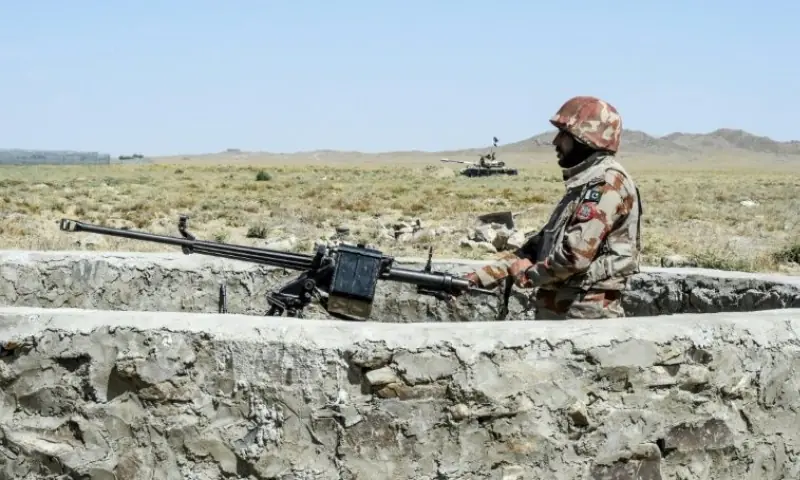
Security forces kill 17 terrorists in various districts of Balochistan following Quetta train bombing: ISPR
Coveragetap to expand ▾Spectrum: Center Only🌍Asia: 2 · Other: 2 · ME: 1
- 17 terrorists killed in Balochistan IBOs after Quetta train bombing
In a significant security operation, Pakistani security forces killed 17 terrorists across various districts of Balochistan following a recent bombing incident involving a train in Quetta. The Inter-Services Public Relations (ISPR) reported that these operations were intensified in direct response to the attack, which has raised concerns about safety and security in the region.
The Quetta train bombing has been attributed to terrorist groups operating in Balochistan, prompting the military to take decisive action against these threats. While the ISPR emphasized the success of the operations, the broader context of ongoing violence in the region remains a critical concern.
The Pakistani government has been under pressure to address the rising tide of terrorism, particularly in Balochistan, where such incidents have become increasingly frequent. As security forces continue their operations, the situation in the region remains tense, with potential implications for civilian safety and regional stability.
- The killing of 17 terrorists in Balochistan following the Quetta train bombing underscores the Pakistani government's commitment to countering terrorism and restoring security in a region plagued by violence.
- This operation directly impacts local communities, as it aims to reduce the threat of further attacks that have historically disrupted daily life and hindered economic activities.
- By targeting these militant groups, security forces hope to create a safer environment for residents, potentially leading to increased investment and development opportunities in Balochistan.
- However, the ongoing cycle of violence also raises concerns about the humanitarian situation, as families affected by both the attacks and military operations face displacement and loss of livelihoods.
- The Pakistani government is expected to announce new counter-terrorism measures within the next 72 hours in response to the recent violence in Balochistan.
- The Balochistan provincial assembly will convene next week to discuss security policies and potential legislative changes aimed at enhancing local law enforcement capabilities.
- The military is likely to conduct further operations in the region, with a focus on intelligence-sharing initiatives, scheduled for the coming weeks.
- International human rights organizations may release reports within the next month assessing the impact of the recent military actions on civilian populations in Balochistan.
- The United Nations is anticipated to hold a special session on regional security issues before the upcoming Asia-Pacific security summit in December.