
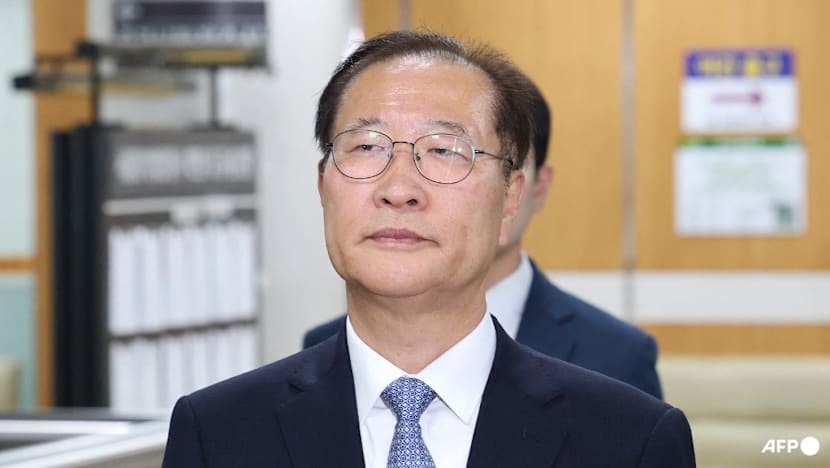
South Korea’s ex-justice minister jailed for 25 years over martial law bid
Topic: politicsRegion: AsiaUpdated: i2 outletsSources: 5Spectrum: Mostly Center⏱ 4 min read📡 Wire pickup
Story Summary
SITUATION
A South Korean court sentenced ex-Justice Minister Park Seong-jae to 25 years in prison for his involvement in the martial law disaster. This ruling underscores the ongoing accountability efforts for past government actions during periods of political unrest (per Reuters).
Coveragetap to expand ▾Spectrum: Mostly Center🌍Asia: 3 · US: 1 · Other: 1
Political Spectrum
Position is inferred from coverage mix.
i2 outlets · Center
Left
Center
Right
Left: 1
Center: 4
Right: 0
Geography Coverage
Distribution of where coverage is coming from.
i2 unique outlets · Dominant: Asia
KEY FACTS
- South Korea's ex-Justice Minister Park sentenced to 25 years in jail over martial law, Yonhap says - Reuters
HISTORICAL CONTEXT
The political landscape in South Korea has been shaped by a series of significant events and decisions, particularly regarding the military's role in governance and civil rights.
The immediate backdrop to the current situation involves ongoing scrutiny and legal repercussions for individuals associated with attempts to impose martial law in South Korea, a move that has been met with widespread condemnation and resistance from the public and political entities alike.
Brief
A South Korean court has sentenced ex-Justice Minister Park Seong-jae to 25 years in prison for his role in the martial law disaster, marking a significant moment in the country's efforts to address historical injustices.
This ruling comes amid a broader push for accountability regarding the actions of government officials during the martial law period in the 1980s, a time characterized by severe repression of pro-democracy protests. The court's decision reflects a growing sentiment among the South Korean public and lawmakers that past abuses must be acknowledged and addressed.
Park's involvement in the martial law disaster has been a focal point in discussions about the need for transparency and justice in South Korea's political history. While some view this sentencing as a necessary step towards healing, others argue that it may not be enough to rectify the deep-seated issues stemming from that era.
The ruling could also pave the way for further legal actions against other officials implicated in similar abuses, as the country grapples with its past and seeks to ensure that such events are not repeated in the future.
Sources
5 of 5 linked articles
South Korea ex-Minister gets 25 years for role in martial law disaster: Yonhap
thehindu.comJun 22Center
↗
South Korea’s ex-justice minister jailed for 25 years over martial law bid
scmp.comJun 22Left
↗
South Korea jails ex-justice minister for 25 years over martial law disaster
channelnewsasia.comJun 22Center
↗
South Korea's ex-Justice Minister Park sentenced to 25 years in jail over martial law, Yonhap says
reuters.comJun 22Left
↗
Court jails ex–justice minister Park Seong-jae 25 years for insurrection in South Korea - CHOSUNBIZ
biz.chosun.comJun 22Left
↗