
Spirit Airlines Shutdown Sparks Debate on Biden's Antitrust Policies
Coveragetap to expand ▾Spectrum: Right Only🌍US: 1
- The collapse of Spirit Airlines has fueled a broader political debate over regulation and industry consolidation (per washingtonexaminer.com).
- Doescher highlighted the increased consolidation among the 'big four' airlines as a consequence of blocking mergers (per washingtonexaminer.com).
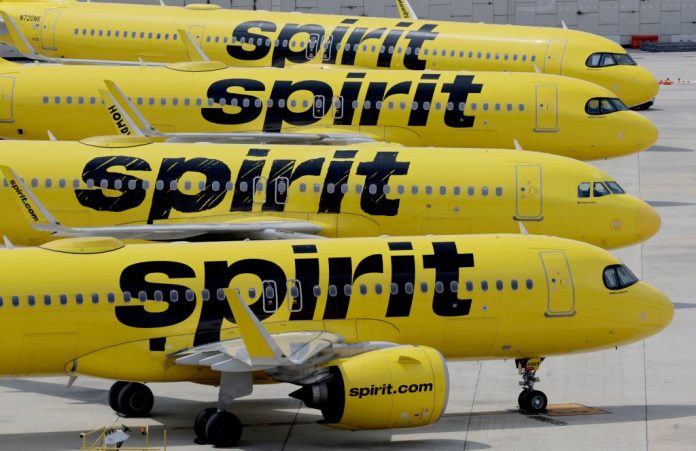
The recent shutdown of Spirit Airlines has sparked a contentious debate over the Biden administration's approach to antitrust enforcement, particularly its decision to block the proposed merger between JetBlue and Spirit.
Washington Examiner columnist Tiana Lowe Doescher has been vocal in her criticism, arguing that the administration's interventionist policies have exacerbated problems within the airline industry.
She contends that the decision to prevent the merger has led to greater consolidation among the remaining major airlines, which she views as detrimental to competition and consumer choice.
Transportation Secretary Sean Duffy has echoed concerns about the administration's role in Spirit's downfall, suggesting that the blocked merger played a significant part in the airline's financial struggles.
This perspective aligns with Doescher's assertion that government intervention often leads to unintended negative consequences, such as reduced market competition and increased industry consolidation.
Doescher has also pushed back against calls for government bailouts of struggling airlines, arguing that such measures would only serve to delay the inevitable outcomes dictated by market forces. She maintains that a market-driven approach, free from excessive government interference, would better serve the industry's long-term health.
The collapse of Spirit Airlines has intensified the political debate surrounding regulation and consolidation, with critics of the administration pointing to this case as a prime example of overreach. Proponents of the administration's policies, however, argue that antitrust enforcement is necessary to prevent monopolistic practices and protect consumers.
As the fallout from Spirit's shutdown continues to unfold, there is growing anticipation of increased scrutiny on past regulatory decisions and their economic impacts. The debate over the role of government in regulating industries like airlines is likely to persist, with both sides presenting arguments about the best path forward for ensuring a competitive and fair market.
This situation highlights the broader challenges faced by industries subject to significant regulatory oversight, as well as the ongoing tension between market-driven solutions and government intervention.
The outcome of this debate could have far-reaching implications for how similar cases are handled in the future, potentially influencing policy decisions across various sectors.
- Consumers may face higher prices and fewer choices due to increased airline consolidation, as the shutdown of Spirit Airlines reduces competition.
- The Biden administration's antitrust policies are under scrutiny, with potential implications for future regulatory decisions affecting various industries.
- Airline industry stakeholders, including employees and investors, are directly impacted by the financial instability and market shifts resulting from Spirit's collapse.
- Whether the Biden administration revisits its antitrust policies in light of Spirit Airlines' shutdown.
- Potential legal challenges or appeals regarding the blocked JetBlue-Spirit merger.
- Further consolidation moves among the remaining major airlines and their regulatory implications.
- The Washington Examiner frames the Biden administration's antitrust enforcement as overzealous, while other outlets may emphasize consumer protection aspects.
- The direct causal link between the blocked merger and Spirit's shutdown is debated, with differing opinions on the administration's responsibility.
- No source mentions the specific financial struggles Spirit Airlines faced prior to the merger block, which could provide context for its collapse.
- There is disagreement on whether the blocked merger was the primary cause of Spirit's shutdown or if other factors were more significant.
- The Washington Examiner attributes the airline's collapse to Biden's policies, while other sources might attribute it to broader market conditions.
- Tiana Lowe Doescher claimed the administration's actions led to greater consolidation among the 'big four' airlines.