
DOT says airlines paid 56% more for fuel in March than before Iran war
Coveragetap to expand ▾Spectrum: Mixed🌍US: 6
- DOT says airlines paid 56% more for fuel in March than before Iran war The Department of Transportation revealed that aviation fuel prices increased by 56% over the war in Iran.
- In February, it reported that airlines collectively paid $3.23 billion, while in March it paid $5.06 billion, a 56% increase.
- The price per gallon for aviation fuel rose from $2.39 per gallon in February to $3.13 per gallon in March.
- Other budget airlines could be put in jeopardy by the rise, with their smaller profit margins giving them less flexibility for dealing with a crisis.
- Spirit Airlines Shuts Down Due to Iran War Fuel Crisis. Other Low-Cost Airlines Could Be Next - Time Magazine
- Other Low-Cost Airlines Could Be Next - Time Magazine
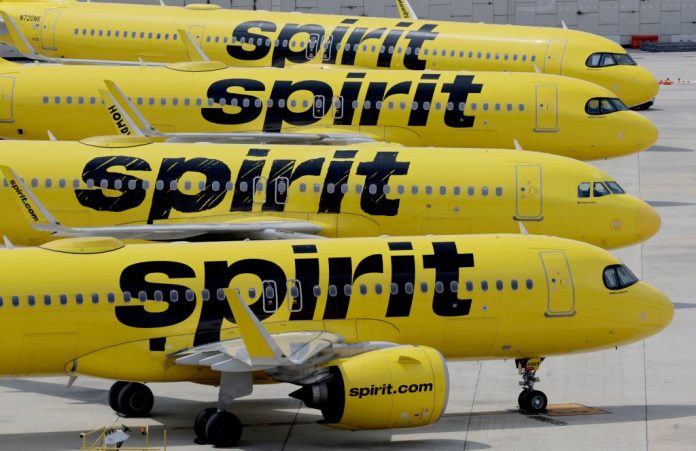
Spirit Airlines, a major discount carrier, has ceased operations following a dramatic rise in jet fuel costs. The airline, which had been in business for 34 years, canceled all flights at 3AM ET on Saturday, leaving both passengers and employees in a state of uncertainty.
This decision comes in the wake of the U.S. military actions in Iran, which have caused jet fuel prices to double, severely impacting the airline's financial viability. The abrupt shutdown of Spirit Airlines highlights the vulnerability of the aviation industry to geopolitical events and fluctuating fuel prices.
As a low-cost carrier, Spirit Airlines operated on thin margins, making it particularly susceptible to such economic shocks. The increase in fuel costs, driven by the conflict in Iran, proved to be an insurmountable challenge for the airline.
Travelers who had booked flights with Spirit Airlines are now scrambling to find alternative arrangements, while employees face an uncertain future with the sudden loss of their jobs. The airline's closure underscores the broader impact of international conflicts on domestic industries, particularly those heavily reliant on fuel.
The U.S. military actions in Iran, which have led to this economic ripple effect, are part of a broader geopolitical strategy. However, the consequences of these actions are being felt far beyond the battlefield, affecting businesses and consumers alike.
As the situation unfolds, the aviation industry may need to reassess its strategies for coping with such volatile market conditions. The shutdown of Spirit Airlines serves as a stark reminder of the interconnectedness of global events and local economies.
Moving forward, stakeholders in the aviation sector will likely advocate for measures to mitigate the impact of fuel price volatility, potentially through hedging strategies or seeking alternative energy sources. Meanwhile, affected employees and passengers will be looking for support and solutions in the wake of this unexpected development.
Left- and right-leaning outlets are covering this story differently — in which facts to emphasize, which context to include, and how to frame causes and consequences.