
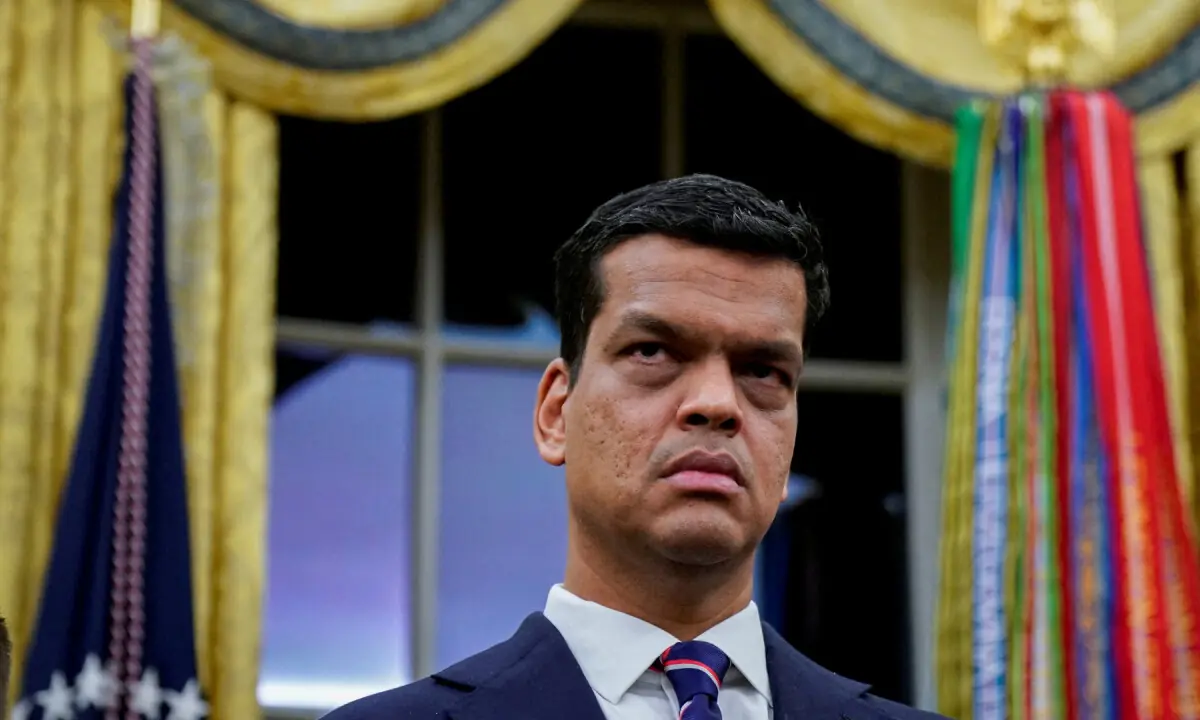
Sriram Krishnan Announces Departure as White House AI Policy Adviser
Coveragetap to expand ▾Spectrum: Mostly Center🌍Other: 2 · Europe: 1 · ME: 1 · Asia: 1
- “This journey has been the privilege of a lifetime,” the adviser, Sriram Krishnan, posted on social media platform X.
- Krishnan has been involved in the Trump administration’s efforts to create a national framework for regulating developments in AI.
Sriram Krishnan, the White House AI policy adviser, announced his resignation, effective at the end of June 2026. In a statement on social media, he expressed that his time in the role has been a privilege of a lifetime.
Krishnan has played a significant role in the Trump administration's efforts to establish a national framework for regulating AI technologies, a priority that has gained momentum in recent months. He credited Donald Trump for positioning the United States as a leader in the AI sector, highlighting the administration's commitment to advancing AI initiatives.
While the administration is reportedly accelerating its AI agenda, the specific reasons for Krishnan's departure remain unclear, leaving room for speculation about potential shifts in policy direction. His exit signifies a notable change in the White House's approach to AI, as he was a prominent figure in shaping its regulatory landscape.
The implications of his departure for ongoing AI initiatives and the broader technology policy landscape will be closely monitored as the administration continues to navigate this rapidly evolving field.
- Sriram Krishnan's departure as White House AI Policy Adviser comes at a critical juncture as the U.S. navigates its competitive stance against China in AI technology.
- His role was pivotal in shaping a regulatory framework that directly impacts tech companies and startups, which now face uncertainty in their innovation strategies and compliance requirements.
- Without strong leadership in AI policy, the U.S. risks falling behind in the global AI race, potentially jeopardizing its economic growth and national security interests.
- Watch for the Biden administration to announce a replacement for Sriram Krishnan as AI Policy Adviser within the next two weeks, which could signal a shift in AI regulatory strategy.
- Monitor upcoming statements from key tech companies, such as Google and Microsoft, regarding their AI development plans, expected to be released during their quarterly earnings calls next month.
- Anticipate a joint statement from Asia-Pacific leaders on AI governance at the upcoming regional summit scheduled for early next month, which may outline collaborative efforts in AI regulation.
- Keep an eye on Congress as they prepare to hold hearings on AI policy, expected to take place within the next month, which could influence future legislation.
- Look for reactions from major AI advocacy groups, which are likely to release position papers on the implications of Krishnan's departure within the next 72 hours.
Left- and right-leaning outlets are covering this story differently — in which facts to emphasize, which context to include, and how to frame causes and consequences.