
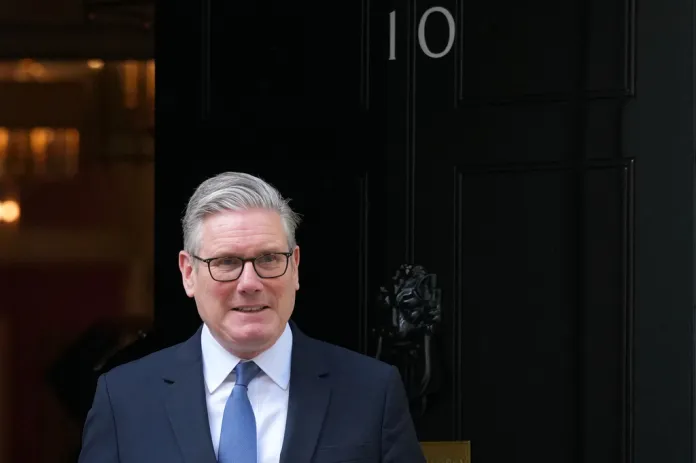
Starmer Calls for Tougher Measures on Gaza Protests After Antisemitic Attacks
Coveragetap to expand ▾Spectrum: Mostly Center🌍US: 3 · Asia: 2 · Other: 1
- UK Prime Minister Keir Starmer urged tougher action against pro-Palestinian protests following the stabbing of two Jewish men in London (per washingtonexaminer.com, washingtontimes.com).
- Starmer suggested that repeated pro-Palestinian marches have a 'cumulative effect' on antisemitism in the UK (per washingtonexaminer.com, washingtontimes.com).
- Starmer's comments have caused tension within his party, as some members oppose linking antisemitism with pro-Palestinian activism (per washingtonexaminer.com).
- Starmer stated that while he supports the right to protest, some demonstrations might need to be banned due to their impact on public safety (per washingtontimes.com).
- The Jewish community in the UK has called for increased government protection following the recent attacks (per washingtonexaminer.com).
- The war in Gaza has been linked to a rise in antisemitic hate crimes and planned attacks against Jewish targets in the UK (per washingtonexaminer.com).
In the wake of a violent attack on two Jewish men in London, UK Prime Minister Keir Starmer has called for stricter measures against pro-Palestinian protests, which he claims contribute to rising antisemitism in the country.
Starmer's remarks come amid heightened concerns for the safety of British Jews, as the Jewish community has urged the government to enhance protective measures. The Prime Minister pointed to specific chants, such as 'globalize the intifada,' as examples of rhetoric that should be more tightly regulated.
Starmer's stance has sparked debate within his own party, with some members expressing discomfort over the perceived linkage of antisemitism with pro-Palestinian activism. While Starmer affirmed his support for the right to protest, he suggested that certain demonstrations might need to be banned to ensure public safety.
This position reflects a broader concern about the impact of repeated pro-Palestinian marches, which Starmer described as having a 'cumulative effect' on antisemitic incidents. The recent stabbing incident has intensified the focus on the relationship between the ongoing conflict in Gaza and domestic tensions in the UK.
The war in Gaza, which has seen significant casualties on both sides, has reportedly radicalized segments of the UK's Islamic community, leading to a surge in antisemitic hate crimes and planned attacks against Jewish targets. Starmer's comments have been met with mixed reactions, highlighting the complex interplay between free speech, public safety, and community relations.
Critics within his party argue that equating pro-Palestinian activism with antisemitism risks alienating key constituencies and oversimplifying the motivations behind the protests. The Prime Minister's call for action underscores the challenges faced by the UK government in balancing the rights of protestors with the need to protect vulnerable communities.
As the situation evolves, the government may need to navigate these tensions carefully to prevent further escalation. The broader context of the Israeli-Palestinian conflict, including the long-standing Israeli military occupation and blockade of Palestinian territories, continues to influence domestic and international discourse.
This historical backdrop is essential for understanding the motivations and grievances of those involved in the protests. Moving forward, the UK government will likely face pressure to clarify its stance on protest regulation and community protection. The outcome of this debate could have significant implications for civil liberties and social cohesion in the UK.
- British Jews face increased risk of antisemitic attacks, driven by rhetoric at pro-Palestinian protests, impacting their safety and community cohesion.
- Pro-Palestinian activists may see their right to protest curtailed, affecting their ability to express dissent and advocate for Palestinian rights.
- The UK government, led by Keir Starmer, must balance civil liberties with public safety, influencing future policy on protest regulation and community protection.
- Whether the UK government implements stricter regulations on pro-Palestinian protests in response to Starmer's call.
- Reactions from within the Labour Party to Starmer's stance and potential policy changes.
- The impact of any new protest regulations on the frequency and nature of pro-Palestinian demonstrations in the UK.
Left- and right-leaning outlets are covering this story differently — in which facts to emphasize, which context to include, and how to frame causes and consequences.
3 specific areas where coverage diverges — see below.
- Washingtonexaminer.com emphasizes the link between pro-Palestinian protests and antisemitism, while washingtontimes.com focuses on Starmer's support for protest rights despite potential bans.
- No source mentions the historical context of the Israeli military occupation and blockade of Palestinian territories, which is relevant to understanding the motivations behind pro-Palestinian protests.
- Keir Starmer: 'When you see, when you hear some of those chants - ‘globalize the intifada’ would be one I would pick out - then clearly there should be tougher action in relation to that.'