
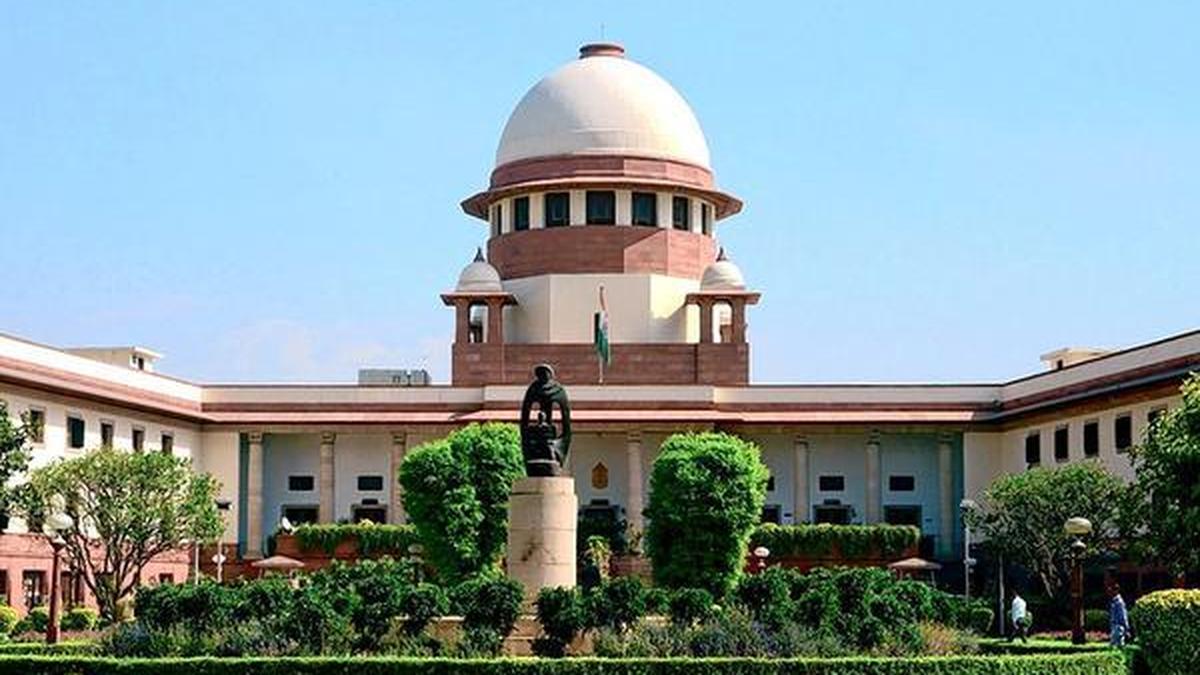
Supreme Court Limits CJI's Role in Election Appointments Post-2023 Law
Coveragetap to expand ▾Spectrum: Center Only🌍Asia: 1
- The Supreme Court of India clarified that the Chief Justice of India's involvement in appointing the Chief Election Commissioner and Election Commissioners was intended to be temporary (per thehindu.com).
- The 2023 law was introduced in December 2023, aiming to override a previous Constitution Bench ruling (per thehindu.com).
- The Supreme Court's observation was made on May 6, 2026 (per thehindu.com).
- The 2023 law was seen as a response to a Constitution Bench ruling that previously involved the CJI in the appointment process (per thehindu.com).
The Supreme Court of India has clarified that the Chief Justice of India's (CJI) involvement in the appointment of the Chief Election Commissioner (CEC) and Election Commissioners (ECs) was always intended to be a temporary measure until Parliament enacted a specific law.
This statement was made on May 6, 2026, in response to multiple petitions challenging the Chief Election Commissioner and other Election Commissioners (Appointment, Conditions of Service, and Term of Office) Act of 2023.
The 2023 law, introduced in December of that year, was designed to countermand a previous Constitution Bench ruling that had included the CJI in the appointment process.
Petitioners, including the NGO Association for Democratic Reforms and activist Jaya Thakur, have argued that the 2023 law effectively grants the political executive of the day dominant, if not exclusive, control over the appointment of the CEC and ECs.
They contend that this undermines the independence of the Election Commission, a body crucial for maintaining the integrity of democratic processes in India. The Supreme Court's observation underscores the ongoing tension between judicial oversight and executive power in India.
The court's decision to address these petitions highlights the judiciary's role in interpreting the balance of power as defined by the Constitution and subsequent legislative actions.
The introduction of the 2023 law followed a Constitution Bench ruling that had previously involved the CJI in the appointment process, a move seen as a safeguard against potential political influence. However, the new law shifts this balance, placing appointment powers more squarely in the hands of the political executive, which critics argue could lead to biased appointments.
This development is significant as it touches upon the broader theme of checks and balances within the Indian political system. The Supreme Court's stance may influence future legislative actions and judicial interpretations concerning the separation of powers and the independence of constitutional bodies.
As the petitions progress, the court's final decision will likely have lasting implications for the structure and function of the Election Commission, potentially affecting its ability to operate free from political interference.
The outcome of this legal challenge will be closely watched by political analysts, legal experts, and the public, given its potential impact on the democratic framework of India.
- The independence of the Election Commission is at stake, affecting the integrity of India's democratic processes.
- The 2023 law potentially centralizes power with the political executive, impacting the balance of power in government.
- Petitioners argue that the law undermines judicial oversight, a critical check on executive authority.
- The outcome of this legal challenge could set a precedent for future legislative and judicial interactions in India.
- Whether the Supreme Court will uphold or overturn the 2023 law in its final ruling.
- Potential legislative responses from Parliament if the court rules against the 2023 law.
- Reactions from political parties and civil society groups following the court's decision.
- No source mentions the specific Constitution Bench ruling that the 2023 law aims to countermand.
- The potential impact on the Election Commission's independence is not quantified in terms of specific cases or decisions.