
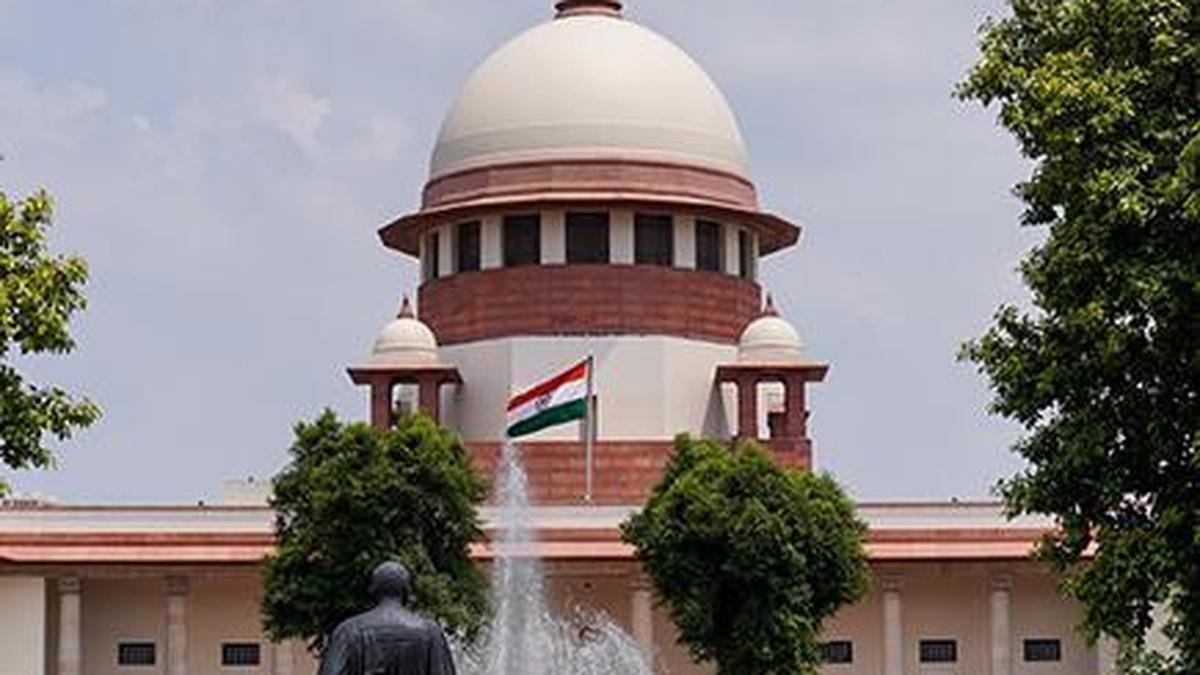
Supreme Court to Hear PIL on Education Regulation for Children Under 14
Coveragetap to expand ▾Spectrum: Center Only🌍Asia: 1
- The Supreme Court will hear the PIL on May 11 (per The Hindu).
- The case will be heard by a bench of Justices Dipankar Datta and Satish Chandra Sharma (per The Hindu).
The Supreme Court is scheduled to hear a Public Interest Litigation (PIL) on May 11 that seeks to regulate all institutions providing education to children below the age of 14.
This significant case, filed by advocate Ashwini Kumar Upadhyay, aims to establish necessary guidelines for educational and religious instruction for young children, addressing concerns over the quality and standards of education in various institutions.
A bench comprising Justices Dipankar Datta and Satish Chandra Sharma will preside over the hearing, which highlights the growing demand for regulatory measures in the education sector. The plea reflects broader societal concerns regarding the adequacy of educational frameworks and the need for oversight to protect the interests of children.
As the court prepares to deliberate on this matter, it underscores the importance of ensuring that educational institutions meet established standards, particularly for vulnerable populations such as children. The outcome of this hearing could have far-reaching implications for educational policy and the governance of institutions catering to young learners.
- Children under 14 years may face inadequate educational standards without regulation, impacting their development.
- The proposed regulations could lead to improved educational quality and accountability in institutions serving young children.
- The outcome of the PIL may set a precedent for future educational policies and regulations in India.
- Whether the Supreme Court issues any immediate directives regarding educational regulations after the hearing on May 11.
- The specific guidelines proposed in the PIL and how they may affect current educational practices.
- Reactions from educational institutions and advocacy groups following the court's decision.
- {"framing":[],"numbers":[],"causality":[],"attribution":[],"omitted_context":[],"disputed_or_unclear":[],"notable_quotes_or_claims":[]}