
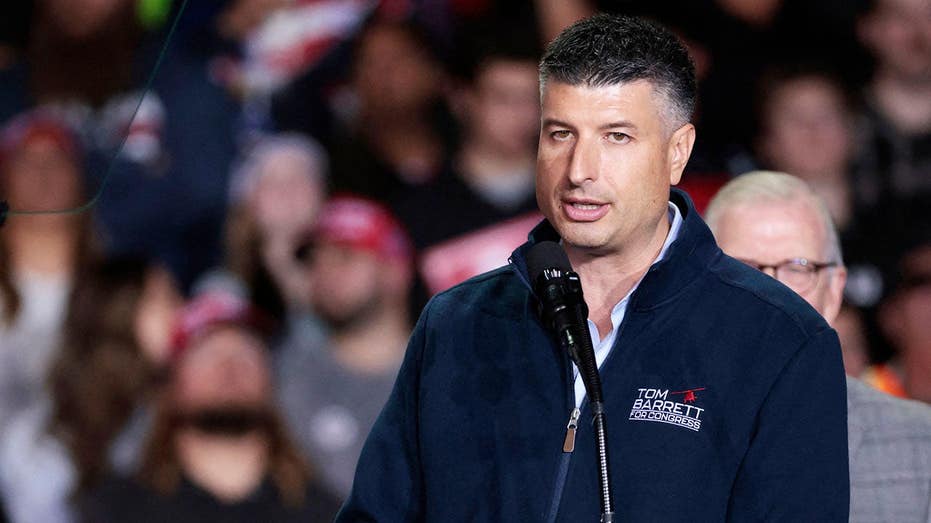
Swing-District Republican Challenges Trump's Iran War Strategy
Coveragetap to expand ▾Spectrum: Mostly Center🌍Other: 2 · US: 1
- A Republican lawmaker from a swing district has broken with President Trump over his handling of the Iran conflict, advocating for a more restrained military approach (per foxnews.com).
- President Trump has been sidestepping Congress in his approach to the Iran war, describing a blockade as 'friendly' (per news.google.com).
- The internal GOP disagreement comes amid ongoing military actions by the U.S. and Israel against Iran, which began in early March 2026 (contextual knowledge).
- The Republican's break with Trump is significant as it comes from a swing district, where electoral outcomes can be pivotal (per foxnews.com).
The disagreement centers on the extent of U.S. military involvement in Iran, with the swing-district Republican pushing for limitations on military action. President Trump has been sidestepping Congress in his handling of the Iran war, describing a blockade as 'friendly,' a move that has raised concerns among some party members.
The Republican's opposition is particularly notable given the political significance of swing districts, where electoral outcomes can influence broader party strategies. This internal GOP conflict emerges against the backdrop of ongoing military actions by the United States and Israel against Iran, which began in early March 2026.
The Republican's call for restraint contrasts sharply with Trump's hardline approach, which has been characterized by aggressive military tactics and a willingness to bypass legislative oversight. The lawmaker's position reflects a broader debate within the party about the direction of U.S. foreign policy, particularly in volatile regions like the Middle East.
As the situation develops, the Republican's break with Trump could influence other party members who are similarly concerned about the implications of an extended military engagement. While reporting on this development is limited, the Republican's stance underscores the potential for significant shifts in party dynamics, especially as the 2026 elections approach.
The outcome of this internal debate could have lasting implications for U.S. foreign policy and the Republican Party's electoral prospects. As the conflict with Iran continues, the Republican's call for a more measured approach may resonate with constituents wary of prolonged military involvement.
This development highlights the complex interplay between domestic politics and international relations, as lawmakers navigate the challenges of representing diverse constituencies while addressing global security concerns.
- Swing-district voters could influence the Republican Party's stance on military engagement, as their representatives push for more restrained policies.
- President Trump's approach to Iran, bypassing Congress, raises concerns about executive overreach and its impact on legislative authority.
- The internal GOP divide over Iran policy could affect the party's unity and electoral strategy ahead of the 2026 elections.
- U.S. military actions in Iran, initiated in early March 2026, continue to have significant geopolitical implications, affecting regional stability.
- Whether the swing-district Republican's stance influences other GOP members to advocate for a more restrained Iran policy.
- Potential Congressional debates or votes on limiting executive power in military engagements with Iran.
- Reactions from President Trump and his administration to the Republican's opposition and any subsequent policy adjustments.
Left- and right-leaning outlets are covering this story differently — in which facts to emphasize, which context to include, and how to frame causes and consequences.
3 specific areas where coverage diverges — see below.
- Fox News emphasizes the internal GOP divide over Iran policy, while news.google.com focuses on Trump's sidestepping of Congress.
- The specific identity of the swing-district Republican is not disclosed in the sources.
- No source mentions the initial U.S. and Israeli military actions against Iran in early March 2026 as the trigger for current events.