
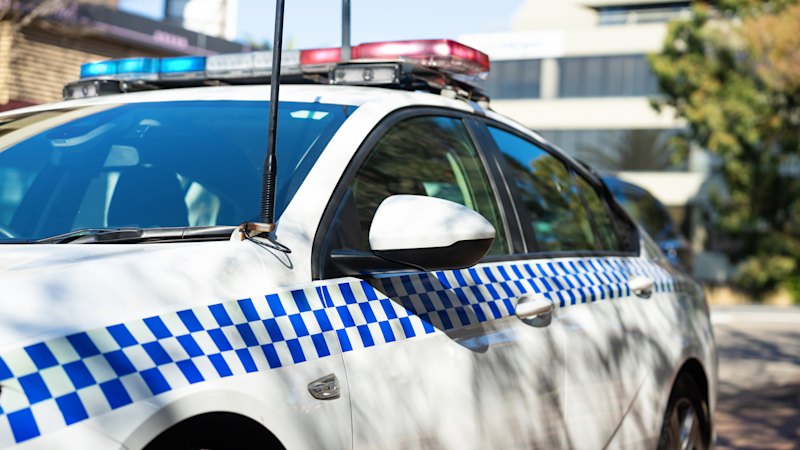
15-year-old arrested in Sutherland Shire on four aggravated sexual‑assault charges
Topic: law & justiceRegion: asia pacificUpdated: i1 outletsSources: 1Spectrum: Center Only⏱ 3 min read
Story Summary
SITUATION
A 15-year-old in Sydney was arrested and charged with four counts of aggravated sexual assault and with intentionally choking a person without consent, over alleged incidents across the Sutherland Shire from December to July (per smh.com.au). The youth appeared at a children’s court and was granted conditional bail to return in November (per smh.com.au).
Coveragetap to expand ▾Spectrum: Center Only🌍Asia: 1
Political Spectrum
Position is inferred from coverage mix.
i1 outlets · Center
Left
Center
Right
Left: 0
Center: 1
Right: 0
Geography Coverage
Distribution of where coverage is coming from.
i1 unique outlets · Dominant: Asia
KEY FACTS
- A 15-year-old was arrested at a home in Sydney’s southern suburbs by officers from the State Crime Command’s Child Abuse Squad (per smh.com.au).
- The aggravated sexual assaults allegedly involved the rape of a teenage girl on four occasions over eight months, with incidents said to have occurred between December and July across Sydney’s southern suburbs including the Sutherland Shire (per smh.com.au).
- The youth was taken to the Sutherland Shire police station and appeared at a children’s court, where they were granted conditional bail to appear before the same court in November (per smh.com.au).
HISTORICAL CONTEXT
The immediate backdrop is the ongoing emphasis in New South Wales on detecting and prosecuting child sexual offences through specialist units: complaints by victims or their families routinely trigger referrals to the NSW Police Force’s State Crime Command and its specialist Child Abuse Squad, which investigates alleged offending involving children and juveniles.
Criminal proceedings for people under 18 are carried out through the Children’s Court of New South Wales, with bail and custodial decisions governed by the state’s Bail Act 2013 and the court’s longstanding practices for youth defendants.
Brief
A 15-year-old from Sydney’s southern suburbs has been arrested and charged with four counts of aggravated sexual assault and with intentionally choking a person without consent, after alleged incidents across the Sutherland Shire from December to July (per smh.com.au).
New South Wales police from the State Crime Command’s Child Abuse Squad carried out the arrest at a home in Sydney’s southern suburbs before taking the youth to the Sutherland Shire police station (per smh.com.au).
The aggravated sexual assault charges are described in NSW law as equivalent to rape; the allegations say a teenage girl was raped on four separate occasions over an eight‑month period (per smh.com.au).
Separately, the teenager faces a charge of intentionally choking a boy without consent, which police say occurred in separate incidents in the same general area (per smh.com.au).
The youth appeared at a children’s court on Friday and was granted conditional bail to return to the same court in November; the court appearance and bail conditions were reported without further public detail by police or prosecutors in the article (per smh.com.au).
The reporting confines itself to police allegations and court process; the article does not include identification, motive, forensic detail, or statements from victims or defence, and it does not report on any related investigations or charges beyond those listed (per smh.com.au).
Given the age of the accused and the court jurisdiction, proceedings will continue in children’s court later this year as the criminal process advances (per smh.com.au).
Why it matters
- - Victims: A named teenage girl is alleged to have been raped on four occasions, meaning survivors in the Sutherland Shire face ongoing criminal‑justice processes and potential trauma from multiple alleged assaults (per smh.com.au). - Public safety and policing: The State Crime Command’s Child Abuse Squad undertook the arrest, indicating specialized police resources are being used to investigate alleged child sexual offences in Sydney’s southern suburbs (per smh.com.au). - Legal stakes: The accused is charged with aggravated sexual assault—an offence legally equivalent to rape in NSW—so conviction would carry severe criminal penalties under state law (per smh.com.au). - Court timeline: Conditional bail and a return date in November set the near‑term timetable for pretrial proceedings in the children’s court (per smh.com.au).
What to watch next
Whether the teenager appears before the same children’s court in November as scheduled (per smh.com.au). 2) Whether prosecutors file additional charges or detail further evidence in the lead‑up to the November hearing (per smh.com.au). 3) Whether police or court records disclose victim support measures, bail conditions, or reporting restrictions at the next court appearance (per smh.com.au).
Where sources differ
7 dimensionsFraming differences
?- Only smh.com.au is in this pack; no other outlet framing differences are available (per smh.com.au).
Disputed or unclear
?- No source disputes the basic allegations; details such as identities, forensic evidence, precise dates of each alleged incident, and circumstances of the choking charge remain unverified in the article (per smh.com.au).
Omitted context
?- No source in this pack provides the precise calendar dates for each alleged incident beyond the month range 'December to July' (per smh.com.au).
- The article omits victim-identifying information, forensic or medical findings, and any statements from victims, family, or defence counsel (per smh.com.au).
- The piece does not mention specific bail conditions imposed by the court or whether reporting restrictions apply to the children’s court matter (per smh.com.au).
- No source discusses prior relevant police investigations or whether the accused has any prior history noted by police (per smh.com.au).
Conflicting figures
?- smh.com.au reports four counts of aggravated sexual assault and that the assaults allegedly occurred over an eight‑month period from December to July (per smh.com.au).
Disputed causality
?- The article reports arrest leading to charging and court appearance; it does not attribute the arrest to a specific triggering new disclosure or complaint beyond the police investigation (per smh.com.au).
Attribution disputes
?- smh.com.au attributes the arrest and charges to actions by officers from the State Crime Command’s Child Abuse Squad and to reporting by police (per smh.com.au).
Sources
1 of 1 linked articles