
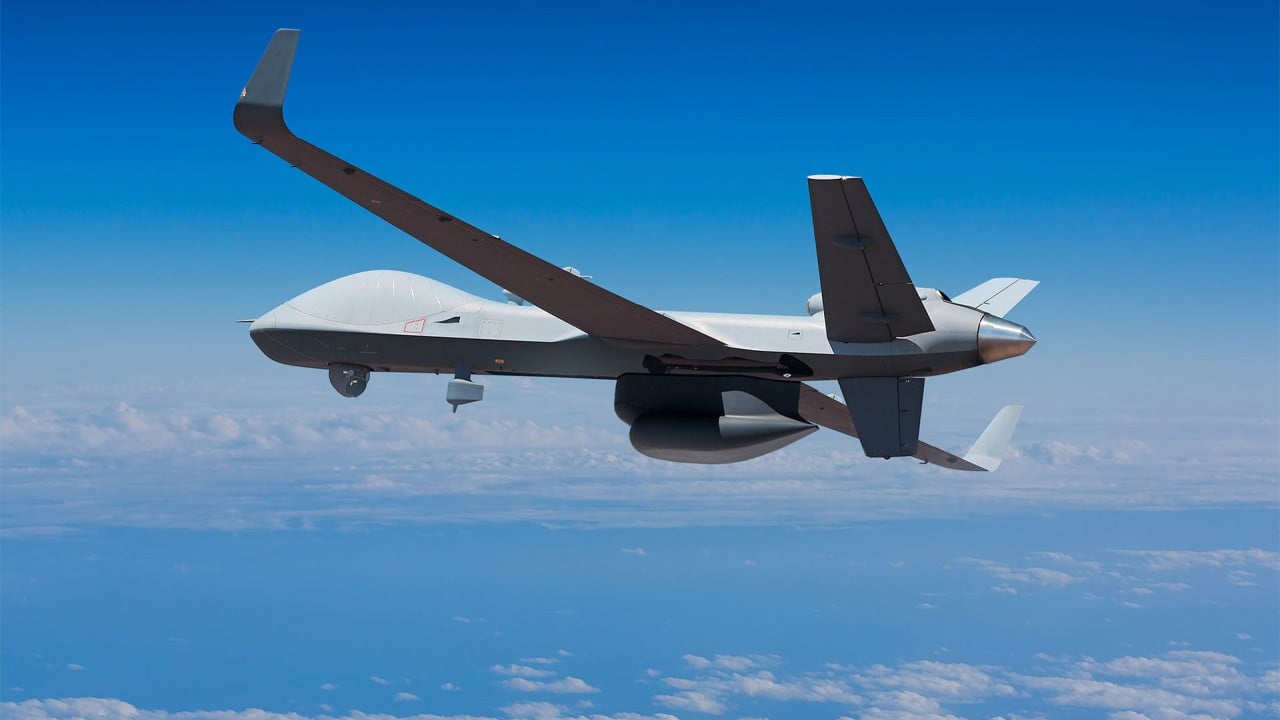
Taiwan flights first two US-made MQ-9B drones for long-range ISR from Hualien
Topic: geopoliticsRegion: AsiaUpdated: i2 outletsSources: 2Spectrum: Center Only⏱ 3 min read⚠ 3d+ old
Story Summary
SITUATION
Taiwan began flight testing US-made MQ-9B SeaGuardian drones, giving the island a long-range reconnaissance platform able to monitor People’s Liberation Army and grey-zone activities across surrounding waters. The first two of four drones took off from Hualien Air Base after arriving in June and being assembled with General Atomics Aeronautical Systems, and Taiwan will use them for intelligence, surveillance and reconnaissance.
Coveragetap to expand ▾Spectrum: Center Only🌍Asia: 1 · Other: 1
Political Spectrum
Position is inferred from coverage mix.
i2 outlets · Center
Left
Center
Right
Left: 0
Center: 2
Right: 0
Geography Coverage
Distribution of where coverage is coming from.
i2 unique outlets · Dominant: Asia
KEY FACTS
- Taiwan began flight testing newly acquired MQ-9B SeaGuardian drones.
- The drones were handed over to Taiwanese personnel in the United States on March 17 before being shipped to Kaohsiung and transported to Hualien county.
- Taiwan will use the MQ-9B drones for intelligence, surveillance and reconnaissance.
- The platform is described as capable of monitoring People’s Liberation Army and grey-zone activities across vast stretches of surrounding waters.
HISTORICAL CONTEXT
The immediate backdrop is a prolonged period of heightened cross‑Strait tension in which the People’s Republic of China has steadily increased naval and air patrols, gray‑zone maritime harassment, and sorties near Taiwan’s air defense identification zone; those operations intensified after Taiwan’s 2016 presidential election and again after the island’s 2020 presidential election, prompting Taipei to prioritize longer‑range maritime intelligence, surveillance and reconnaissance capabilities.
This current security environment is framed by the United States’ enduring security role toward Taiwan under the Taiwan Relations Act (enacted April 10, 1979), which established U.S. legal commitments to provide Taiwan with defensive articles and services, and by the longer‑standing U.S. policy of “strategic ambiguity” that has underpinned Washington’s approach to deterrence in the Taiwan Strait.
Brief
Taiwan began operational flight testing of US-made MQ-9B SeaGuardian remotely piloted aircraft, sending the first two of four SeaGuardians aloft from Hualien Air Base after the drones arrived in June and were assembled with General Atomics Aeronautical Systems, scmp.com reports.
Taipei frames the flights as a step to field a long-range intelligence, surveillance and reconnaissance capability to monitor People’s Liberation Army movements and so-called grey-zone activity across nearby waters.
Taiwanese officials in the report emphasize ISR as the primary use; the source notes the platform’s endurance and maritime sensors suit it to extended patrols over the East and South China Seas. The aircraft arrived in June and underwent assembly before the test flights, according to the same report.
The initial two takeoffs mark the start of validating integration and operational procedures ahead of bringing the remaining pair into service.
The rollout follows a series of recent procurements and security ties between Taipei and Washington; scmp.com links the SeaGuardian’s arrival to those broader defense ties but does not provide operational details or timelines for sustained deployments.
Confirmed in the reporting: four MQ-9B airframes were delivered, two have completed initial flights from Hualien, and General Atomics Aeronautical Systems handled assembly; claims about specific future patrol patterns, sortie rates or basing beyond Hualien remain unreported.
Analysts quoted in regional coverage often argue ISR platforms change detection and deterrence calculations at sea, but the source here focuses on the documented facts of delivery, assembly and the first test flights rather than forecasting specific operational consequences.
Sources
2 of 2 linked articles