
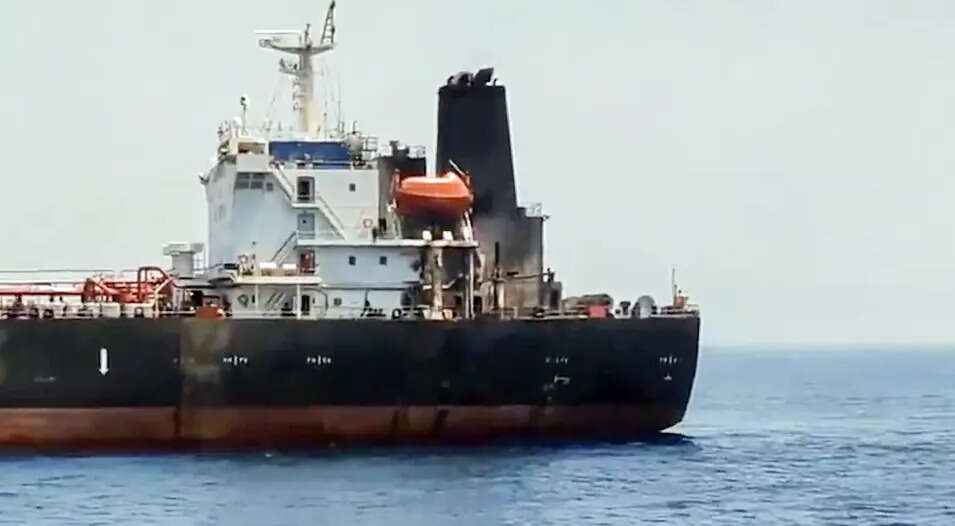
US Military Strike Kills 3 Indian Sailors After Tanker Ignores Warnings
Coveragetap to expand ▾Spectrum: Mostly Center🌍Asia: 3 · Other: 1
- Tanker ignored 60 warnings: US on strike that killed 3 Indians
- US defends tanker strike that killed 3 Indian sailors, says vessel ignored over 60 warnings - Firstpost
- US warned tanker nearly 60 times before strike killed 3 Indian sailors off Oman coast: Report - The Indian Express
A US military strike recently killed three Indian sailors aboard a tanker that allegedly ignored nearly 60 warnings from US forces. The incident occurred off the coast of Oman, where the US has been actively engaged in military operations amid rising tensions in the region.
The US government has defended the strike, asserting that the vessel's refusal to comply with repeated warnings justified the action. While the US maintains that the strike was necessary to uphold maritime security, the loss of Indian lives has raised concerns about the implications for US-India relations.
Indian officials have yet to comment on the incident, but the deaths of their nationals in a US military operation could strain diplomatic ties. This strike underscores the complexities of military engagement in a region already fraught with conflict, as the US continues to navigate its strategic interests while managing the risks of civilian casualties.
The broader context of military operations in the region has intensified, with various actors involved in ongoing conflicts that complicate the situation further.
- The U.S. military strike that resulted in the deaths of three Indian sailors underscores the precarious nature of maritime security in the Asia Pacific, particularly as tensions between the U.S. and Iran escalate.
- This incident not only raises concerns for the safety of commercial shipping routes but also puts India in a difficult position, as it navigates its diplomatic relations with both the U.S. and Iran.
- The loss of Indian lives may lead to increased scrutiny of U.S. military operations in the region and could prompt India to reassess its naval strategies and alliances, potentially straining its ties with Washington while seeking to protect its citizens and maritime interests.
- The Indian government is expected to issue a formal response to the US military strike within 48 hours, potentially impacting diplomatic relations between the two countries.
- The Indian Navy may conduct a review of its maritime security protocols and operational readiness in response to the incident, with findings likely to be released within a week.
- The US Department of Defense is anticipated to hold a press briefing within 72 hours to clarify the circumstances surrounding the strike and outline any changes to engagement rules.
- Regional allies, including Australia and Japan, are likely to convene for emergency discussions on maritime security and defense cooperation within the next month.
- The Indian Ministry of External Affairs may call for an emergency meeting of the United Nations Security Council to address the incident, potentially within the next two weeks.