
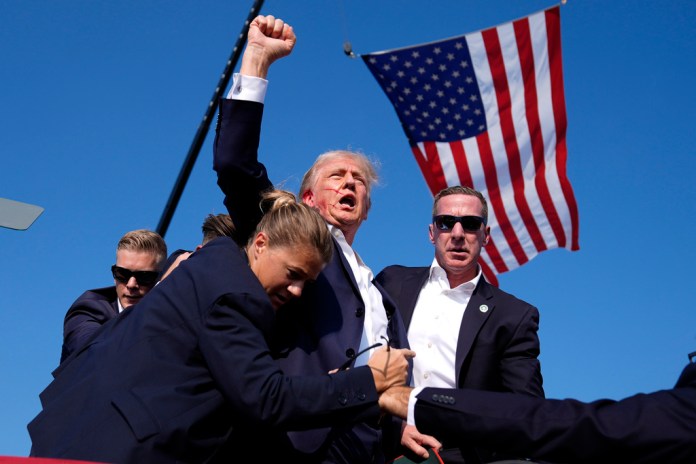
Texas Bill Seeks Death Penalty for Attempted Assassination of Trump
Coveragetap to expand ▾Spectrum: Right Only🌍US: 1
- The bill was introduced in response to an alleged assassination attempt on President Donald Trump at the White House Correspondents' Association dinner (per washingtonexaminer.com).
- The proposed legislation would amend the criminal code to include the death penalty as a possible punishment for failed assassination attempts (per washingtonexaminer.com).
- Cole Tomas Allen is the alleged shooter in the recent attempt on President Trump's life (per washingtonexaminer.com).
- The attempt on Trump's life was the third such incident in nearly three years (per washingtonexaminer.com).
In a significant legislative move, Rep. Lance Gooden has introduced the Protect the Presidency Act, which seeks to make the death penalty a viable punishment for those who attempt to assassinate the President of the United States. This proposal comes in the wake of an alleged assassination attempt on President Donald Trump during the White House Correspondents' Association dinner. The suspect, Cole Tomas Allen, is accused of targeting the president, marking the third such attempt in nearly three years. Under current U.S. law, attempting to kill or kidnap the president is punishable by up to life in prison. However, Gooden's bill aims to amend the criminal code to allow federal prosecutors to seek the death penalty in cases where an assassination attempt is made, even if it does not result in the president's death. Gooden argues that the severity of the crime warrants the most severe punishment, stating, 'A failed assassin is still an assassin and should be treated as such under the law.'
The introduction of this bill highlights the ongoing security concerns surrounding the presidency, particularly in a politically charged environment. The alleged attempt on Trump's life underscores the potential risks faced by sitting presidents and the need for stringent legal deterrents. While the bill has been introduced, it remains to be seen how it will be received by Congress and whether it will gain the necessary support to become law. The proposal raises questions about the balance between punishment and deterrence, as well as the broader implications for the U.S. legal system. Critics of the bill may argue that the existing penalties are sufficient and that the introduction of the death penalty could lead to further legal and ethical debates. Supporters, however, may view it as a necessary step to protect the nation's highest office from threats. As the legislative process unfolds, the Protect the Presidency Act will likely spark discussions on the appropriate measures needed to safeguard the president and the potential consequences of expanding the use of the death penalty in federal cases.
- The proposed legislation could lead to harsher penalties for attempted presidential assassinations, impacting individuals accused of such crimes.
- If passed, the bill would set a precedent for expanding the use of the death penalty in federal cases, affecting the U.S. legal system.
- The bill reflects heightened security concerns for the presidency, highlighting the risks faced by sitting presidents.
- Whether Congress will support the Protect the Presidency Act and move it forward in the legislative process.
- Potential debates in Congress regarding the ethical implications of expanding the death penalty.
- Reactions from legal experts and civil rights organizations on the proposed changes to the criminal code.
- The Washington Examiner emphasizes the need for harsher penalties, while potential critics may focus on ethical concerns.
- The exact details of the alleged assassination attempt on President Trump remain limited.
- No source mentions the broader implications of expanding the death penalty in federal cases beyond presidential assassination attempts.
- Rep. Lance Gooden stated, 'A failed assassin is still an assassin and should be treated as such under the law.'