
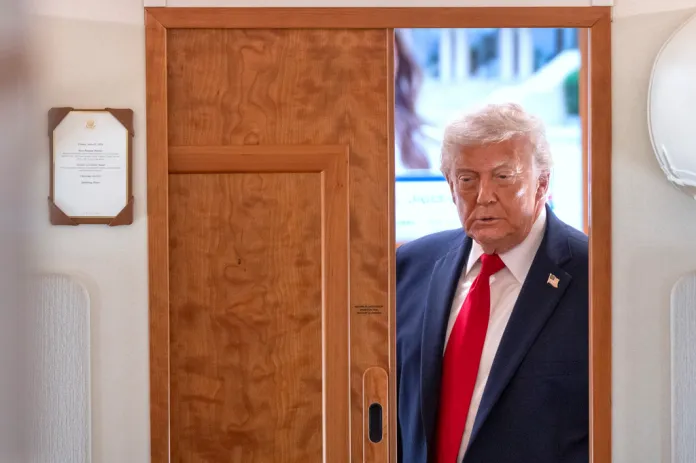
Trump Hints at Possible Iran Agreement This Weekend Amid Ongoing Conflict
Topic: geopoliticsRegion: North AmericaUpdated: i2 outletsSources: 3⚠ Bias gap — sources divergeSpectrum: Mostly Center⏱ 4 min read⚠ 3d+ old
Story Summary
SITUATION
President Donald Trump indicated that a potential agreement to end the Iran war could occur over the weekend. He stated that talks were progressing well, but acknowledged uncertainty about the outcome.
Coveragetap to expand ▾Spectrum: Mostly Center🌍US: 1 · Asia: 1 · Other: 1
Political Spectrum
Position is inferred from coverage mix.
i2 outlets · Center
Left
Center
Right
Left: 0
Center: 2
Right: 1
Geography Coverage
Distribution of where coverage is coming from.
i2 unique outlets · Dominant: US/Canada
KEY FACTS
- But if it happens, it could happen over the weekend,” the president said.
- Last Wednesday, President Donald Trump told reporters that talks to end the Iran war were going “very well,” so well that they might result in an agreement in a few days.
- At that point, Trump made one of those comments that are both sharply funny and sadly true.
- When a reporter asked him how he defined the word “ceasefire” — that is, the situation that exists now between the United States and Iran — Trump said, “Pretty much the way it is.
HISTORICAL CONTEXT
The ongoing military campaign against Iran, initiated by the United States and Israel in March 2026, marks a significant escalation in a long-standing conflict characterized by mutual hostilities and geopolitical maneuvering.
This coordinated effort by the US and Israel includes targeted strikes on Iranian military infrastructure, air defenses, and power plants, which have prompted Iranian military responses throughout 2026. These actions are not isolated; rather, they are the culmination of years of escalating tensions and confrontations between Iran and its adversaries.
Brief
President Donald Trump recently suggested that a potential agreement to end the ongoing conflict with Iran could be reached over the weekend. This statement came as he reported that negotiations were progressing well, although he acknowledged that the outcome remained uncertain.
Trump's remarks highlight the complexities of defining terms like 'ceasefire' in the context of the current hostilities, which he described as 'pretty much the way it is.' The situation has been characterized by significant military actions from both the United States and Iran since early March 2026, following coordinated strikes by the U.S. and Israel.
Trump's comments reflect a blend of humor and seriousness, indicating the challenges of navigating diplomatic discussions in a region marked by ongoing conflict. As talks continue, many governments is closely monitoring the developments, particularly given the potential implications for regional stability and security.
Where sources differ
Bias gap0.50 / 2.0
Left- and right-leaning outlets are covering this story differently — in which facts to emphasize, which context to include, and how to frame causes and consequences.
Center (2)
asiae.co.kraol.com
Right-leaning (1)
washington_examiner+0.70
But if it happens, it could happen over the weekend,” the president said. The Iran runaround.
Sources
3 of 3 linked articles
But if it happens, it could happen over the weekend,” the president said.
washingtonexaminer.comJun 8Center
↗
Trump: "Close to Final Agreement with Iran... Asked Netanyahu to Refrain from Retaliation" - 아시아경제
asiae.co.krJun 7Left
↗
Donald Trump branded 'unhinged yapper' after nine-word Iran boast
aol.comJun 7Left
↗