
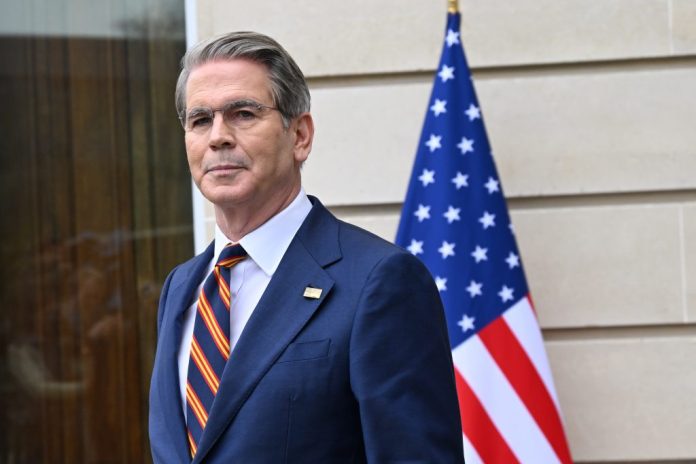
Bessent announces sanctions on Iranian Strait of Hormuz authority to block toll payments
Topic: geopoliticsRegion: Middle EastUpdated: i3 outletsSources: 7⚠ Bias gap — sources divergeSpectrum: Mostly Center⏱ 4 min read⚠ 3d+ old
Story Summary
SITUATION
Bessent's sanctions on Iran's newly formed Persian Gulf Strait Authority aim to undermine Tehran's control over the strategic Strait of Hormuz, signaling a significant escalation in U.S. efforts to counter Iranian influence in the region.
Coveragetap to expand ▾Spectrum: Mostly Center🌍Other: 3 · US: 2 · ME: 1 · Asia: 1
Political Spectrum
Position is inferred from coverage mix.
i3 outlets · Center
Left
Center
Right
Left: 0
Center: 5
Right: 2
Geography Coverage
Distribution of where coverage is coming from.
i3 unique outlets · Dominant: Global
KEY FACTS
- Iran has tried to maximize its one major trump card, proximity to the Strait of Hormuz, going so far as to assert complete control over the key waterway in recent weeks.
- To consolidate its claims of control, Tehran created the Persian Gulf Strait Authority, which was tasked with vetting vessels for approval through the waterway and collecting tolls for passage.
- In a statement, Bessent portrayed the establishment of the PGSA as proof that Operation Economic Fury was working.
- “The Iranian military’s latest attempt to extort global maritime trade is proof that Economic Fury has left the regime desperate for cash,” he said.
- “Treasury has deprived the Iranian government of revenue for their weapons programs, terrorist proxies, and nuclear ambitions.
- “The Iranian economy and currency are in free fall.
HISTORICAL CONTEXT
In recent weeks, Iran has intensified its efforts to assert control over the Strait of Hormuz, a critical maritime chokepoint through which approximately 20% of the world's oil passes. This strategic maneuvering culminated in the establishment of the Persian Gulf Strait Authority (PGSA) on September 15, 2023.
The PGSA was tasked with vetting vessels for passage and collecting tolls, a move that Tehran claims solidifies its authority over the waterway. This development is particularly significant given the backdrop of ongoing geopolitical tensions and economic pressures faced by Iran.
Brief
The Iranian economy is currently facing a severe crisis, with the currency in free fall and essential services collapsing. Treasury Secretary Scott Bessent announced sanctions on Iran's new Persian Gulf Strait Authority, a move aimed at crippling the country's economic capabilities further.
He emphasized that the sanctions are part of the US's Economic Fury campaign against the Iranian government, which has been struggling under the weight of ongoing military actions and economic isolation.
Bessent highlighted the dire situation within Iran, noting that troops are not being paid and police forces are failing to report for duty, indicating a breakdown in public order. The sanctions also include warnings to shipping companies against paying tolls to cross the strategically vital Strait of Hormuz, a critical passage for global oil shipments.
This economic pressure is compounded by a naval blockade that has led to a record low in the amount of Iranian crude oil available for export. The situation reflects the broader impact of the US-led sanctions and military actions against Iran, which have left the country in a precarious state.
Why it matters
- The sanctions imposed by Bessent on the Iranian Strait of Hormuz authority directly impact Iran's ability to generate revenue from tolls on maritime traffic, further straining its already weakened economy.
- This move not only undermines Tehran's efforts to exert control over a critical global shipping route but also hampers its funding for military initiatives and proxy groups.
- As a result, shipping companies and global trade routes may face increased uncertainty and potential disruptions, leading to higher costs and delays in the supply chain.
What to watch next
- Monitor the response from the Iranian government regarding potential retaliatory measures against the sanctions within the next 72 hours.
- Watch for statements from the U.S. Department of State on further diplomatic actions or sanctions targeting Iranian maritime activities before the upcoming G20 summit.
- Keep an eye on shipping companies operating in the Strait of Hormuz for any announcements regarding changes in toll payment practices or routes in response to the sanctions within the next month.
- Expect a reaction from international oil markets, particularly from major producers like Saudi Arabia, regarding their shipping strategies and pricing adjustments in the next quarterly earnings reports.
- Track developments from European Union officials on potential collaborative sanctions or measures against Iran's maritime operations before the end of the current fiscal quarter.
Where sources differ
Bias gap0.50 / 2.0
Left- and right-leaning outlets are covering this story differently — in which facts to emphasize, which context to include, and how to frame causes and consequences.
Center (5)
wionews.comthenationalnews.comcryptobriefing.comhannity.comusmuslims.com
Right-leaning (2)
ny_post_news+0.80
“The Iranian economy and currency are in free fall. Bessent sanctions Iran’s Strait Authority — and sends firm warning against paying tolls WASHINGTON — Treasury Secretary Scott Be…
washington_examiner+0.70
Bessent announces sanctions on Iranian Strait of Hormuz authority to block toll payments Bessent announces sanctions on Iranian Strait of Hormuz authority to block toll payments Be…
Sources
7 of 7 linked articles
Treasury Secretary Scott Bessent issues sanctions warning to Oman over Strait of Hormuz toll, says 'any willing partners
wionews.comMay 28Left
↗
Treasury chief calls Iran's Strait Authority 'a joke' as US imposes sanctions
thenationalnews.comMay 28Left
↗
Bessent announces sanctions on Iranian Strait of Hormuz authority to block toll payments
washingtonexaminer.comMay 28Center
↗
Scott Bessent warns Oman of US penalties for tolls in Strait of Hormuz
cryptobriefing.comMay 28Left
↗
Treasury Sanctions Iran’s New Strait Authority, Warns Companies Against Paying Hormuz Tolls - hannity.com
hannity.comMay 28Left
↗
“The Iranian economy and currency are in free fall.
nypost.comMay 28Center
↗