
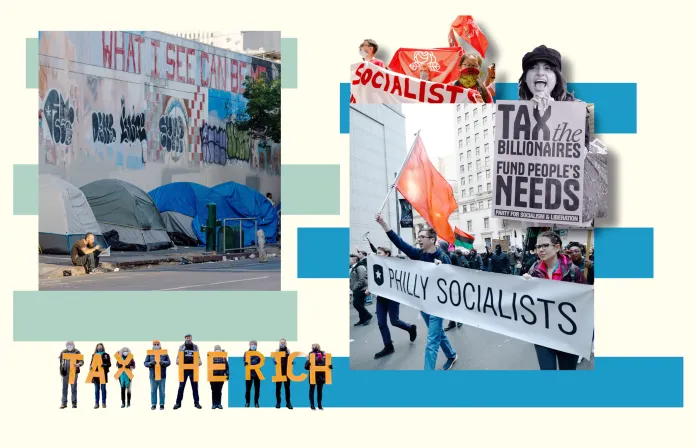
It has to be said, however, that the regret never really rang true.
Coveragetap to expand ▾Spectrum: Right Only🌍US: 1
- The Left's rhetoric against wealth creators has been characterized by a lack of sincerity, according to the Washington Examiner.
- Current reporting indicates a shift in the Left's stance, with contempt replacing regret towards wealth creators.
- This development is part of a broader ideological stance on taxation and government spending in North America.
- The Left has openly declared its contempt for wealth creators, signaling a change in their public messaging.
- The analysis of this rhetoric is limited at this stage, with further reporting expected to clarify the implications.
An analysis from the Washington Examiner critiques the Left's rhetoric on wealth creators, arguing that it lacks genuine regret and reflects a hardened stance against those who generate economic prosperity. The piece suggests that the Left's approach to taxation is driven more by a moral imperative to support government spending than by sound economic strategy.
Historically, left-leaning politicians have often cloaked their fiscal policies in the guise of social conscience, presenting tax hikes as necessary for aiding the needy. However, the analysis contends that such regret over taxing the wealthy has never been sincere.
The critique highlights a shift in the Left's messaging, which now appears to express open contempt for wealth creators. This is particularly evident in the framing of taxation as a moral duty, rather than a pragmatic economic tool.
The analysis argues that this perspective has led to policies that prioritize fairness over economic efficiency, with the Left's champions often retreating behind the concept of 'fairness' when defending their tax policies.
The analysis also challenges the effectiveness of these policies, claiming that historical data shows tax hikes have reduced revenues, while tax cuts have led to increased economic activity. This assertion is used to question the Left's fiscal strategies, suggesting that their approach may be more ideologically driven than economically sound.
The Washington Examiner's analysis reflects a broader critique of the Left's economic policies, particularly in how they address the role of wealth creators in society. By framing taxation as a moral imperative, the Left is accused of alienating those who contribute significantly to the economy, potentially undermining the very economic growth they seek to promote.
This critique comes at a time when economic policies and taxation are central to political debates, with differing views on how best to balance government spending and economic growth. The analysis suggests that the Left's approach may need reevaluation to align more closely with economic realities and the contributions of wealth creators.
As the debate continues, the role of wealth creators in the economy remains a contentious issue, with significant implications for future policy decisions. The analysis calls for a more nuanced understanding of the economic impact of taxation and the importance of fostering an environment that supports both government initiatives and private enterprise.
- The Left's apparent contempt for wealth creators could undermine economic growth by discouraging investment and innovation, which are crucial for job creation and technological advancement.
- Small business owners and entrepreneurs, who drive much of the economy, may feel increasingly marginalized and less inclined to take risks, leading to a stagnation in economic dynamism.
- This shift in rhetoric could also result in more aggressive taxation policies that further burden these wealth creators, ultimately impacting their ability to contribute to local economies and communities.
- Watch for statements from key Democratic leaders regarding proposed tax reforms within the next week, as they may clarify their stance on wealth creators.
- Monitor upcoming congressional hearings scheduled for next month that will address government spending and taxation policies, potentially revealing shifts in party strategy.
- Keep an eye on the next quarterly earnings reports from major corporations, due in the next two weeks, which may influence public discourse on wealth creation and taxation.
- Anticipate a response from influential think tanks, such as the Brookings Institution, regarding the implications of the Left's rhetoric on economic policy within the next 72 hours.
- Look for public opinion polls to be released in the coming days that gauge voter sentiment on taxation and wealth distribution, which could impact future legislative agendas.