
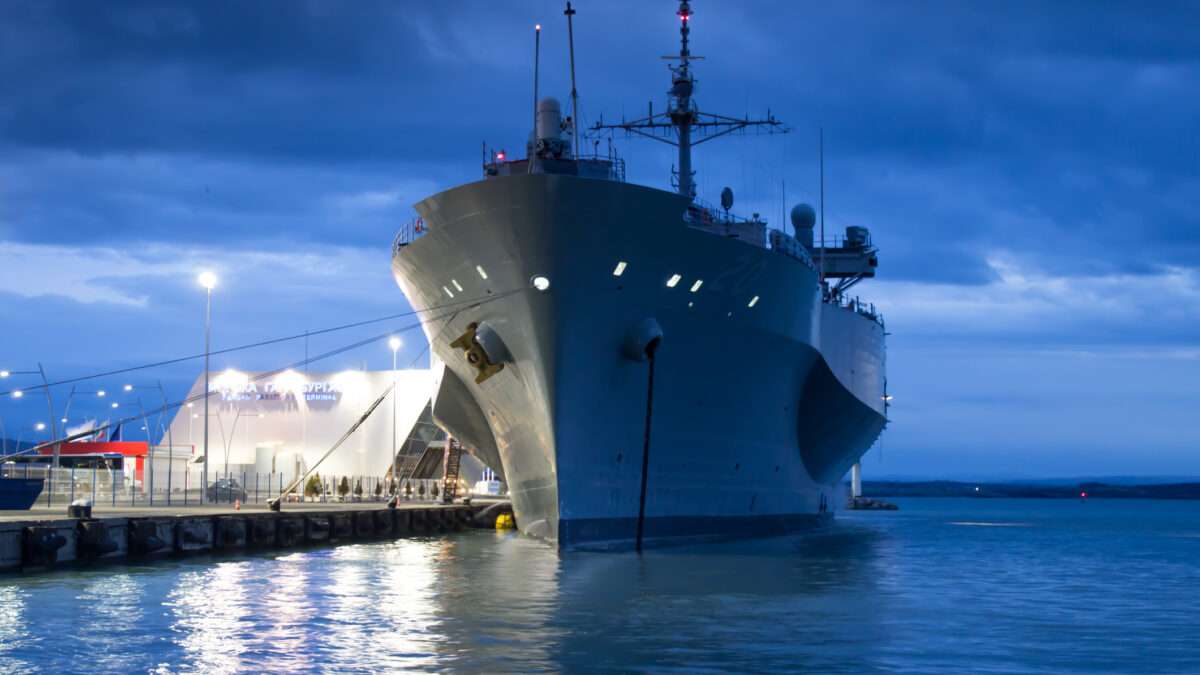
Iranian Missiles Hit UAE Oil Port Amid U.S. Naval Operations
Coveragetap to expand ▾Spectrum: Center Only🌍US: 5
- In response, Iran fired missiles at an oil port in the United Arab Emirates, which hosts a large U.S. military base (per reason.com).
- Several merchant ships in the Gulf reported explosions or fires on Monday (per reason.com).
- Iranian media claimed the U.S. fired on commercial vessels, resulting in civilian casualties, though these claims are disputed (per reason.com).
The recent escalation in the Gulf region has seen the U.S. military take decisive action against Iranian naval assets, reportedly destroying six small boats and several drones. This operation, part of President Donald Trump's 'Project Freedom', aims to ensure the safe passage of commercial shipping through the strategically vital Strait of Hormuz.
In response to these actions, Iran has accused the U.S. of violating a truce and retaliated by launching missiles at an oil port in the United Arab Emirates, a site that also hosts a significant U.S. military presence. The U.S. Navy has since begun escorting commercial vessels through the Strait, a critical chokepoint for global oil shipments.
This move comes amid reports of explosions and fires affecting several merchant ships in the Gulf, raising concerns over the safety of maritime operations in the region. Iranian media outlets have attempted to counter the U.S. narrative, alleging that American forces targeted commercial vessels, resulting in civilian casualties.
However, these claims have not been independently verified and are contested by U.S. sources. The situation underscores the fragile nature of the current ceasefire and the potential for further conflict escalation. The Strait of Hormuz remains a focal point of geopolitical tension, with both the U.S. and Iran asserting their strategic interests in the area.
As the U.S. continues its naval operations, many governments watches closely, aware of the broader implications for regional stability and global energy markets. The actions of both nations in the coming days will likely determine the trajectory of this conflict and its impact on international shipping lanes.
The unfolding events highlight the complex interplay of military strategy, diplomatic negotiations, and economic interests that define the current U.S.-Iran relations. With both sides entrenched in their positions, finding a path to de-escalation remains a significant challenge.
- Civilians in the Gulf region face increased risk of harm due to military actions and retaliatory strikes, with reports of explosions affecting merchant ships.
- The global oil market could experience disruptions if the Strait of Hormuz remains a conflict zone, impacting energy prices worldwide.
- The U.S. military's actions in the region demonstrate a commitment to securing vital shipping lanes, potentially deterring further Iranian aggression.
- Whether Iran escalates its military response to U.S. naval operations in the Strait of Hormuz.
- The U.S. Navy's continued efforts to escort commercial vessels and maintain open shipping lanes.
- Potential diplomatic engagements or negotiations aimed at de-escalating tensions in the Gulf region.
Left- and right-leaning outlets are covering this story differently — in which facts to emphasize, which context to include, and how to frame causes and consequences.
6 specific areas where coverage diverges — see below.
- reason.com emphasizes U.S. military actions as part of a strategic operation, while Iranian media claims civilian casualties from U.S. attacks.
- Iranian media claims of U.S. attacks on commercial vessels and resulting civilian casualties are disputed and lack independent verification.
- No source mentions the broader context of U.S.-Iran tensions, including previous military engagements or diplomatic efforts.
- reason.com attributes the missile attack on the UAE oil port as a response to U.S. military actions.
- Iran attributes the violation of a truce to U.S. actions, while the U.S. frames its operations as necessary for securing shipping lanes.
- Iranian media claims that the U.S. fired on commercial vessels, killing civilians, though these claims are disputed.