
U.S. Military Official Warns of Iran's Remaining Threat to Strait of Hormuz
Topic: geopoliticsRegion: Middle EastUpdated: i5 outletsSources: 31⚠ Bias gap — sources divergeSpectrum: Mostly CenterFiltered: US/Canada (15/36)· Clear⏱ 4 min read📡 Wire pickup: 9⚠ 3d+ old
Story Summary
SITUATION
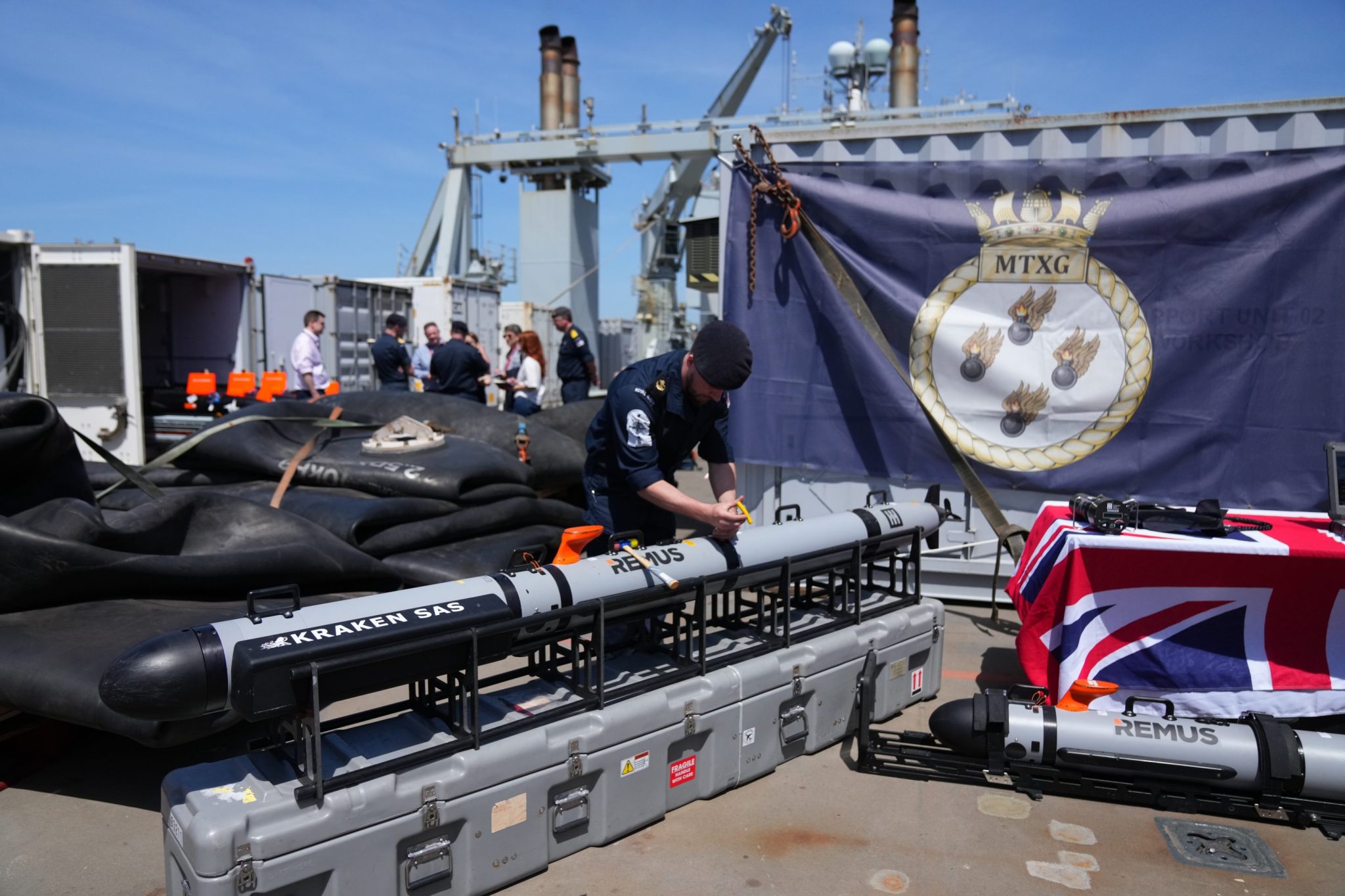
Britain prepares to deploy to clear mines in the Strait of Hormuz but is waiting for a peace deal
- MSN
Coveragetap to expand ▾Spectrum: Mostly Center🌍Other: 18 · US: 15 · Europe: 1 · ME: 1 · Asia: 1
Political Spectrum
Position is inferred from coverage mix.
i5 outlets · Center
Left
Center
Right
Left: 4
Center: 30
Right: 2
Geography Coverage
Distribution of where coverage is coming from.
i5 unique outlets · Dominant: Global
KEY FACTS
- Cooper noted that Iran's ability to threaten shipping through the Strait of Hormuz has been diminished, but their threats are still impactful (per Washington Examiner).
- Iran has threatened to target vessels with drones and missiles, and has acted on these threats multiple times (per Washington Examiner).
- The U.S. military has met its objectives in Operation Epic Fury, yet Iran continues to threaten commerce in the region (per Washington Examiner).
- The U.S. and Israeli militaries have significantly degraded Iran’s military capabilities, but the country remains a vocal threat (per Washington Examiner).
- Iran's military actions have raised alarms in the merchant and insurance industries, indicating a continued risk to maritime operations (per Washington Examiner).
HISTORICAL CONTEXT
In the weeks leading up to the recent announcement by the United Arab Emirates (UAE) regarding resumed Iranian attacks, the geopolitical landscape in the Gulf region had been marked by heightened military activity and strategic maneuvers. On September 20, 2023, the U.S.
Navy confirmed the deployment of additional naval assets to the Strait of Hormuz, a critical chokepoint through which approximately 20% of the world's oil passes. This move was perceived as a direct response to increasing threats from Iran, particularly following a series of incidents involving Iranian naval forces and commercial shipping in the region.
Brief
Adm. Brad Cooper, the commander of U.S. Central Command, recently testified before lawmakers that Iran, despite having its military capabilities significantly degraded, still poses a considerable threat to the Strait of Hormuz.
He emphasized that while the U.S. military has achieved its objectives in Operation Epic Fury, Iran's threats to maritime shipping remain pronounced, with the country having acted on its threats to target vessels with drones and missiles. This situation underscores the ongoing complexities of U.S.-Iran relations, particularly as tensions in the region continue to escalate.
Cooper's remarks highlight a critical assessment of Iran's military posture, suggesting that while its capabilities have been diminished, the nation retains a significant ability to disrupt commerce in this vital waterway.
The implications of these threats are felt not only by military strategists but also by the merchant and insurance industries, which are wary of the risks associated with navigating through the Strait of Hormuz.
As the U.S. and its allies navigate these challenges, the situation remains fluid, with ongoing military operations and diplomatic efforts aimed at stabilizing the region.
Why it matters
- The continued threat from Iran affects global shipping routes, particularly through the Strait of Hormuz, impacting international trade (per Washington Examiner).
- Iran's military capabilities pose risks to U.S. and allied naval operations, potentially leading to increased military engagement in the region (per Washington Examiner).
- The insurance and merchant industries face heightened risks due to Iran's threats, which could lead to increased costs for shipping and insurance premiums (per Washington Examiner).
What to watch next
- Whether the U.S. military adjusts its operational strategies in response to Iran's threats by June 2026.
- Any developments in U.S.-Iran peace talks that could influence military operations in the Strait of Hormuz.
- The impact of Iran's military actions on global shipping insurance rates in the coming months.
Where sources differ
1 dimensionBias gap0.85 / 2.0
Left- and right-leaning outlets are covering this story differently — in which facts to emphasize, which context to include, and how to frame causes and consequences.
Left-leaning (4)
middle_east_eye-0.35
US heading for ‘checkmate’ and ‘total defeat’ in Iran war, says neocon Robert Kagan US heading for ‘checkmate’ and ‘total defeat’ in Iran war, says neocon Robert Kagan Robert Kagan…
cnn.com-0.30
Iran eyes a new source of power deep beneath the Strait of Hormuz Iran eyes a new source of power deep beneath the Strait of Hormuz. Reporting is limited at this stage.
cbsnews.com-0.20
Live Updates: Rubio says "slight progress" in Iran peace talks, but rejects Strait of Hormuz "tolling system" Live Updates: Rubio says "slight progress" in Iran peace talks, but re…
cbsnews.com-0.20
Live Updates: Israel, Lebanon extend ceasefire as Iran says it "cannot trust the Americans at all" Live Updates: Iran says it "cannot trust the Americans at all" as Trump says "we …
Center (30)
msn.comfortune_businessfinance.yahoo.comdevdiscourse.comapnews.combloomberg.comnytimes.comapnews.comreuters.commsn.comen.apa.azmsn.comnews18.comthehill.comfacebook.comindiatribune.comkeia.orgapnews.comafrica.businessinsider.comreuters.comapnews.comgcaptain.comscrippsnews.comsnjtoday.comfacebook.comiranintl.comiranintl.comfacebook.commilitary.comfrance24.com
Right-leaning (2)
ny_post_news+0.80
If this assault on international law is allowed to stand, the precedent will be catastrophic. Iran’s ‘unacceptable’ deal means US must open the Strait of Hormuz by force Iran's 'un…
washington_examiner+0.70
“They are a very large country, and they retain some military capability,” Cooper added. Iran’s capabilities ‘significantly degraded’ but still a threat to Strait of Hormuz A senio…
1 specific area where coverage diverges — see below.
Summary
?- {"framing":[],"numbers":[],"causality":[],"attribution":[],"omitted_context":[],"disputed_or_unclear":[],"notable_quotes_or_claims":[]}
Sources
15 of 36 linked articles · Filter: US/Canada
Britain’s navy prepares to clear mines in the Strait of Hormuz while waiting for a peace deal
apnews.comMay 24Left
↗
Rubio Sees Good News Coming on Hormuz as Iran Talks Continue. Reporting is limited at this stage.
bloomberg.comMay 24Left
↗
Britain Preparing for Mission That Could Clear Strait of Hormuz
nytimes.comMay 23Left
↗
Trump says a deal with Iran and opening of Strait of Hormuz are ‘largely negotiated’
apnews.comMay 23Left
↗
Live Updates: U.S. preparing for possible strikes against Iran, sources say, as Rubio says tolls on Strait of Hormuz "not acceptable"
cbsnews.comMay 23Center
↗
US Secretary of State Rubio sees progress in Iran talks, more work to be done
reuters.comMay 22Left
↗