
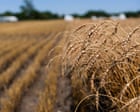
Extreme Heat and Drought strikes US Wheat Harvest, Farmers Face Severe Losses
Coveragetap to expand ▾Spectrum: Left Only🌍Europe: 1
- Extreme weather conditions have left wheat crops in the US Great Plains in poor condition, with some farmers choosing not to harvest (per theguardian.com).
- Merrill Nielsen, a farmer with 50 years of experience, reported that his wheat fields would yield only two bushels per acre, compared to the usual upper-40s to mid-50s (per theguardian.com).
- The extreme temperature swings have been detrimental to the resilience of wheat crops, which are typically hardy (per theguardian.com).
Extreme heat and drought have wreaked havoc on wheat crops across the US Great Plains, forcing some farmers to abandon their harvests entirely. Merrill Nielsen, a seasoned farmer with half a century of experience, has faced one of his most challenging seasons yet.
His wheat fields, which typically yield between 40 to 55 bushels per acre, are expected to produce a mere two bushels per acre this year. The drastic reduction in yield is attributed to severe temperature fluctuations that have left crops in poor condition.
Nielsen, who farms on land established by his great-grandfather in 1871, has decided not to harvest his wheat crop this year. Instead, he plans to terminate the crop, as the cost of harvesting would outweigh the minimal returns. This decision underscores the dire situation faced by many farmers in the region, who are grappling with the impacts of climate change on agriculture.
The resilience of wheat, a crop known for its hardiness, has been tested by the extreme weather conditions. The temperature swings have been particularly damaging, leaving crops unsure whether to brace for cold or heat. This volatility has resulted in historically low yields, threatening the livelihoods of farmers who depend on wheat production.
Nielsen's farm also produces grain sorghum, soybeans, and alfalfa, but the focus on wheat highlights the broader challenges faced by farmers in adapting to changing climate patterns. As the agricultural sector contends with these challenges, the economic implications extend beyond individual farmers to the wider food supply chain.
The situation in the Great Plains serves as a stark reminder of the vulnerability of agriculture to climate change. As farmers like Nielsen navigate these unprecedented conditions, the need for adaptive strategies and support from policymakers becomes increasingly urgent.
The impact of this year's wheat crop failure will likely be felt in both domestic and international markets, as supply constraints could drive up prices. In the face of these challenges, the agricultural community is calling for greater attention to climate resilience and sustainable farming practices.
The experiences of farmers in the Great Plains may serve as a catalyst for broader discussions on how to mitigate the effects of climate change on food production.
- Farmers in the US Great Plains face significant financial losses due to drastically reduced wheat yields, threatening their livelihoods and economic stability.
- The extreme weather conditions highlight the vulnerability of agriculture to climate change, emphasizing the need for adaptive strategies and policy support.
- Reduced wheat production could lead to supply constraints and increased prices in both domestic and international markets, affecting consumers and food security.
- Whether US policymakers introduce measures to support farmers affected by climate change impacts.
- The response of the agricultural sector to adapt to extreme weather conditions in future planting seasons.
- Potential price increases in wheat and related products in the coming months due to reduced supply.
- No source mentions specific climate policies or initiatives that could mitigate the impact of extreme weather on agriculture.
- The economic impact on consumers due to potential price increases in wheat products is not detailed.