
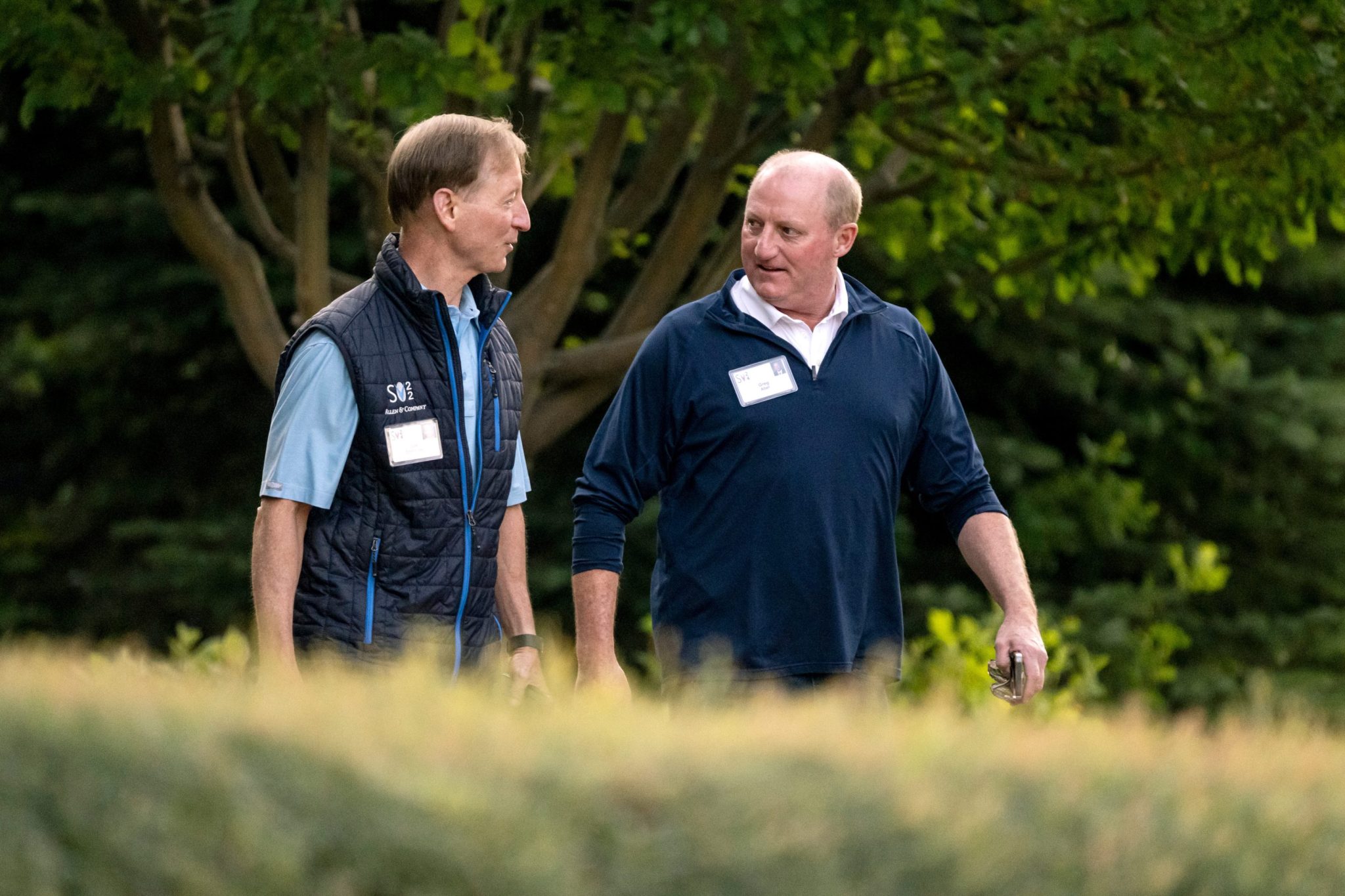
Investors Back Greg Abel as Berkshire Hathaway CEO Despite Smaller Meeting Turnout
Coveragetap to expand ▾Spectrum: Center Only🌍Other: 2
- Greg Abel has taken over as CEO of Berkshire Hathaway, succeeding Warren Buffett (per Fortune).
- Investors have expressed confidence in Abel's leadership during his first quarter (per Fortune).
- The annual Berkshire Hathaway meeting had a smaller turnout compared to previous years (per Fortune).
- Warren Buffett's absence as CEO was a notable change for the annual meeting (per Fortune).
In his inaugural quarter as CEO of Berkshire Hathaway, Greg Abel has received a positive reception from investors, despite a noticeable decline in attendance at the company's annual meeting. Abel, who succeeded the legendary Warren Buffett, faced the challenge of stepping into a role long defined by Buffett's iconic presence.
The meeting, traditionally a major event for shareholders, was marked by fewer attendees, a change attributed to Buffett's absence. However, those who did attend reported that the meeting offered significant insights into the company's future under Abel's leadership.
Abel's transition into the CEO role comes at a pivotal time for Berkshire Hathaway, as the company navigates a complex economic landscape. Investors appear to be endorsing Abel's approach, reflecting confidence in his ability to steer the conglomerate effectively.
The annual meeting, while smaller in scale, was described by attendees as insightful, suggesting that Abel is successfully maintaining the company's tradition of transparency and strategic foresight. The reduced turnout at the meeting highlights the impact of Buffett's departure on shareholder engagement.
Buffett, known for his charismatic leadership and investment acumen, had been a central figure at these gatherings for decades. His absence marks a new era for Berkshire Hathaway, with Abel now tasked with upholding the company's reputation and performance.
Despite the changes, the meeting's content was well-received, indicating that Abel's leadership style resonates with investors. This reception is crucial as Berkshire Hathaway continues to adapt to evolving market conditions and seeks to capitalize on new opportunities.
Abel's leadership will be closely watched in the coming months as investors look for signs of continuity and innovation. The support he has garnered in his first quarter suggests a promising start, but the long-term impact of his leadership will depend on his ability to sustain the company's growth and address emerging challenges.
Overall, the transition from Buffett to Abel represents a significant shift for Berkshire Hathaway, but the initial investor response indicates confidence in the new CEO's capabilities. As the company moves forward, Abel's strategic decisions will be pivotal in shaping its future trajectory.
- Berkshire Hathaway shareholders bear the concrete costs of leadership changes, as the company's strategic direction directly affects their investments.
- Greg Abel benefits from investor confidence, which supports his leadership and decision-making in his new role as CEO.
- The reduced attendance at the annual meeting reflects the impact of Warren Buffett's departure, highlighting the importance of leadership continuity for shareholder engagement.
- Whether Greg Abel maintains investor confidence through strategic decisions in the next quarter.
- Attendance and engagement levels at future Berkshire Hathaway meetings as a measure of shareholder confidence in Abel's leadership.
- Any strategic shifts or new initiatives introduced by Abel that could impact Berkshire Hathaway's market position.
- No source mentions the specific economic challenges or opportunities that Abel will need to address as CEO.
- The potential impact of Abel's leadership on Berkshire Hathaway's long-term strategy and market performance is not detailed.