
Trump's Pressure on Netanyahu Could Shape Iran Peace Talks
Topic: geopoliticsRegion: North AmericaUpdated: i2 outletsSources: 4⚠ Bias gap — sources divergeSpectrum: Mixed⏱ 4 min read
Story Summary
SITUATION
As Israel continues its military actions in Lebanon, the Trump administration is considering whether to restrain Prime Minister Netanyahu to protect ongoing Iran peace talks. The administration's willingness to publicly criticize Israeli leadership marks a significant shift in U.S.
Coveragetap to expand ▾Spectrum: Mixed🌍Other: 2 · Europe: 1 · ME: 1
Political Spectrum
Position is inferred from coverage mix.
i2 outlets · Center
Left
Center
Right
Left: 2
Center: 2
Right: 0
Geography Coverage
Distribution of where coverage is coming from.
i2 unique outlets · Dominant: Global
KEY FACTS
- To protect the Iran peace talks, will Trump finally restrain Netanyahu? | Mohamad Bazzi
- To protect the Iran peace talks, will Trump finally restrain Netanyahu? | Mohamad Bazzi To protect the Iran peace talks, will Trump finally restrain Netanyahu?
- To protect the Iran peace talks, will Trump finally restrain Netanyahu? | Mohamad Bazzinded menu
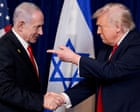
- ‘The question now is whether Trump is willing to back up his anger at Netanyahu with action.’ Photograph: Jonathan Ernst/Reuters
HISTORICAL CONTEXT
The ongoing military campaign initiated by the United States and Israel against Iran in March 2026 marks a significant escalation in a long-standing conflict. This coordinated effort has involved targeted strikes on Iranian military infrastructure, air defenses, and power plants, with the intention of curbing Iran's regional influence and military capabilities.
In response to these actions, Iran has engaged in military responses, including missile strikes and other retaliatory measures, as it seeks to defend its sovereignty and deter further aggression.
Brief
The Trump administration is facing a critical juncture regarding its approach to Israel as military actions in Lebanon continue to escalate. With ongoing peace talks with Iran at stake, President Donald Trump is weighing whether to exert pressure on Israeli Prime Minister Benjamin Netanyahu to restrain his government's military actions. Recently, J.D. Vance, the U.S.
Vice President, publicly criticized Israeli leadership, marking a rare instance of high-level U.S. officials calling out Netanyahu's actions. This criticism underscores a significant shift in U.S. policy, as the administration signals its willingness to confront Israel over its military strategies that could undermine diplomatic efforts with Iran.
Netanyahu's military operations are viewed as attempts to prolong regional conflicts, which some analysts argue serve to bolster his political standing domestically. The ongoing conflict in Lebanon complicates the already delicate negotiations between the U.S. and Iran, as any escalation could derail potential agreements.
As the situation unfolds, the effectiveness of Trump's pressure on Netanyahu will be pivotal in determining the future of U.S.-Iran relations and regional stability.
Where sources differ
Bias gap1.10 / 2.0
Left- and right-leaning outlets are covering this story differently — in which facts to emphasize, which context to include, and how to frame causes and consequences.
Left-leaning (1)
guardian_us-0.50
To protect the Iran peace talks, will Trump finally restrain Netanyahu? | Mohamad Bazzi To protect the Iran peace talks, will Trump finally restrain Netanyahu?
Center (2)
worldisraelnews.comnews.laodong.vn
Right-leaning (1)
dailysabah.com+0.20
Netanyahu sidelined as US-Iran understanding reshapes Lebanon | Daily Sabah - Daily Sabah. Reporting is limited at this stage.
Sources
4 of 4 linked articles
To protect the Iran peace talks, will Trump finally restrain Netanyahu?
theguardian.comJun 25Left
↗
‘Mad as a hornet’ Trump clashed with GOP senators over Iran
worldisraelnews.comJun 25Left
↗
Israel considers withdrawing part of its army from southern Lebanon
news.laodong.vnJun 24Left
↗
Netanyahu sidelined as US-Iran understanding reshapes Lebanon | Daily Sabah
dailysabah.comJun 23Center
↗