
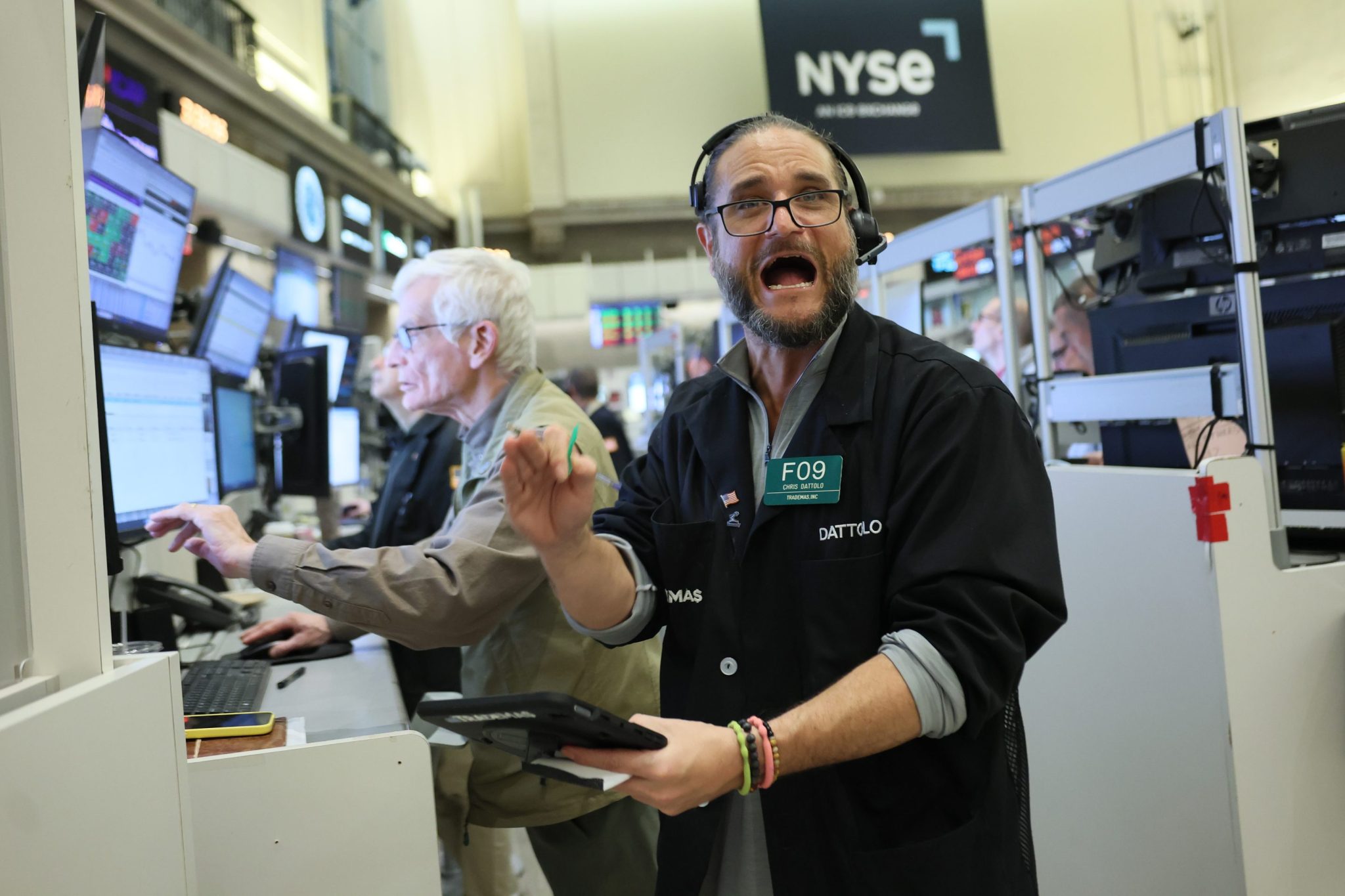
Financial markets are losing the security blanket that’s bailed them out of trouble so many times, top economist warns
Coveragetap to expand ▾Spectrum: Center Only🌍Other: 1
- Stocks continue notching record high after Financial markets are losing the security blanket that’s bailed them out of trouble so many times, top economist warns.
- Stocks continue notching record high after record high as the AI boom overwhelms fears about the global oil shock, but markets are doing it without a long-implied safety net.
- That’s according to Mohamed El-Erian, chief economic adviser at Allianz and chair of Gramercy Funds Management, who warned in a Financial Times op-ed that a decades-old “policy put” is vanishing.
- Until recently, monetary policy and fiscal policy were often employed when stock markets crashed, eventually causing investors to expect policymakers to come to the rescue.
Financial markets are currently facing a significant shift as they lose the historical safety net provided by policy interventions, according to Mohamed El-Erian, chief economic adviser at Allianz.
In a recent op-ed for the Financial Times, El-Erian emphasized that the long-standing expectation of government support during market downturns is fading, which could lead to increased volatility and uncertainty for investors.
He noted that this change in market psychology has conditioned many to view volatility not as a warning sign but as an automatic buying opportunity, a belief that has contributed to the rapid recoveries seen in the past.
Despite the ongoing conflict in Iran and the closure of the Strait of Hormuz, which typically would raise alarms about oil supply and economic stability, stock markets have continued to reach record highs, largely driven by the booming AI sector.
El-Erian pointed out that this resilience in the face of geopolitical tensions is noteworthy, as it contrasts with the historical patterns of market behavior. The current surge in stock prices is also supported by substantial capital expenditures from major tech companies, known as hyperscalers, which are investing heavily in AI technologies.
However, El-Erian cautioned that this optimism may be misplaced, as it overlooks the underlying issues of shrinking real incomes and plummeting consumer confidence. The disconnect between stock market performance and economic fundamentals raises questions about the sustainability of this growth.
Investors may need to reassess their strategies as the traditional mechanisms of market support become less reliable, potentially leading to more pronounced market corrections in the future.