
↑Part of: Amodei and Altman ask US to curb AI risks; Trump and Johnson push back
›› 


Trump and Amodei Clash Over AI Pace as U.S. Warnings Highlight Chinese capability-extraction
Topic: technologyRegion: North AmericaUpdated: i2 outletsSources: 5⚠ Bias gap — sources divergeSpectrum: Mixed⏱ 3 min read⚠ 3d+ old
Story Summary
SITUATION
Dario Amodei urged AI companies to slow development of frontier models and strengthen evaluation and safeguards (per Washington Examiner). President Donald Trump warned that a unilateral U.S.
Coveragetap to expand ▾Spectrum: Mixed🌍US: 2
Political Spectrum
Position is inferred from coverage mix.
i2 outlets · Center
Left
Center
Right
Left: 0
Center: 1
Right: 1
Geography Coverage
Distribution of where coverage is coming from.
i2 unique outlets · Dominant: US/Canada
KEY FACTS
- Dario Amodei, CEO of Anthropic, urged AI companies to slow development of increasingly capable frontier models and strengthen independent evaluation, industry coordination, and international safeguards (per Washington Examiner)
- President Donald Trump said: "whoever wins AI wins," and warned that a unilateral American slowdown would allow China to "win" for free (per Washington Examiner)
HISTORICAL CONTEXT
The immediate backdrop is a period of heightened great-power competition in advanced technologies that has been treated as a national-security priority by multiple administrations, running alongside an active Middle East crisis that began with large coordinated U.S.–Israeli strikes against Iranian infrastructure in March 2026.
Policymakers in Washington have framed controls on semiconductor and AI supply chains as instruments to preserve U.S. military and economic advantages while complicating adversaries’ ability to exploit foreign cloud-hosted models or purchase cutting‑edge chips at scale.
Brief
Dario Amodei, chief executive of Anthropic, urged AI firms to slow the rollout of increasingly capable frontier models and to tighten independent evaluation, industry coordination and international safeguards (per Washington Examiner).
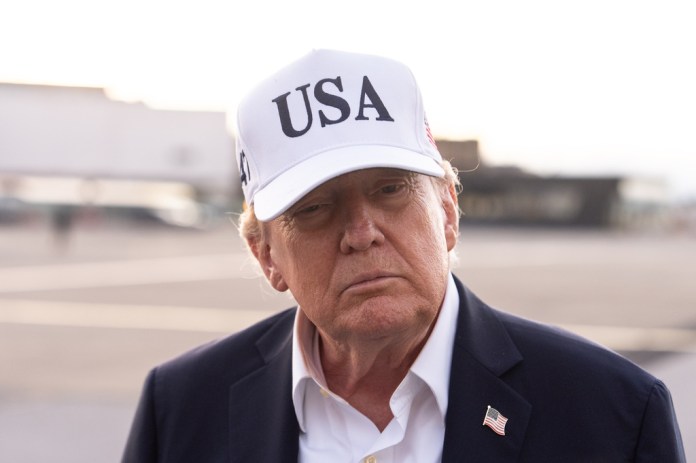
His call for a deliberate slowdown collided publicly with President Donald Trump’s stark strategic refrain that "whoever wins AI wins," and Trump warned that a unilateral American pause would let China "win" for free (per Washington Examiner).
The debate centers on two linked policy problems: whether U.S. firms should decelerate development to reduce risk, and how Washington would stop adversaries from extracting capabilities developed by those firms (per Washington Examiner).
The Examiner reports an advisory that activity to harvest restricted proprietary capabilities was being distributed across model providers, cloud platforms and other infrastructure to avoid a single point of detection, underscoring the practical difficulty of slowing only in the United States (per Washington Examiner).
Amodei, per the piece, emphasizes stronger independent testing and international coordination as partial remedies; Trump and the article’s author counter that the U.S. must preserve commercial speed while raising barriers to capability exfiltration by rivals (per Washington Examiner).
Those positions mark a policy tradeoff: slowing frontier work reduces immediate risk but, according to Trump’s framing in the article, risks ceding advantage when capability extraction is distributed across many actors and platforms (per Washington Examiner).
The near-term policy consequence documented in the piece is a call for coordinated action that keeps U.S. development competitive while hardening the ecosystem against organized harvesting of proprietary capabilities (per Washington Examiner).
Why it matters
- U.S. AI developers — including Anthropic — bear the concrete cost if a domestic slowdown reduces commercial advantage, measured in lost competitive position and investment returns cited in the debate (per Washington Examiner).
- Chinese AI actors stand to benefit if the United States slows and capability extraction continues across distributed infrastructure, a central risk noted in the advisory described (per Washington Examiner).
- Independent evaluators and industry coordinators are identified as mechanisms to reduce risks from faster models; their effectiveness determines whether slowing or hardening the ecosystem protects U.S. technological lead (per Washington Examiner).
What to watch next
- Whether Anthropic and other major AI firms adopt policies to slow frontier-model deployment and implement stronger independent evaluation within the next quarter (per Washington Examiner).
- Whether the U.S. government issues or publicizes technical guidance or an advisory to harden cloud platforms and model-provider interfaces against capability extraction by distributed actors (per Washington Examiner).
- Whether U.S. policymakers reconcile calls for a unilateral slowdown with measures intended to make capability harvesting harder, and announce a coordinated approach in coming months (per Washington Examiner).
Where sources differ
7 dimensionsBias gap0.50 / 2.0
Left- and right-leaning outlets are covering this story differently — in which facts to emphasize, which context to include, and how to frame causes and consequences.
Center (3)
cnbc.comnewscord.orgkhaama.com
Right-leaning (2)
jpost.com+0.75
washington_examiner+0.70
Anthropic CEO Dario Amodei urged AI firms to slow frontier model development, and President Donald Trump warned that if America slows AI, China would "win" for free. The article ar…
7 specific areas where coverage diverges — see below.
Framing differences
?- Only the Washington Examiner source frames the debate as a clash between Amodei’s call to slow frontier models and President Donald Trump’s warning that a unilateral U.S. slowdown would let China “win” for free (per Washington Examiner)
Disputed or unclear
?- No source in this pack disputes the central claims, but there is no independent verification here of how widespread capability-extraction activity is or which Chinese actors, if any, are directly involved (per Washington Examiner).
Omitted context
?- No source in this pack identifies specific Chinese companies, government agencies, or actors alleged to be conducting capability-extraction operations.
- No source in this pack provides independent technical evidence or named incidents demonstrating the distributed extraction scheme described in the advisory.
- No source in this pack cites U.S. government departments or named officials beyond quoting President Donald Trump and referencing an "advisory" generally.
Conflicting figures
?- The single source does not provide differing numerical figures for the same quantity.
Disputed causality
?- The article frames Amodei’s call as a caution about risk and frames Trump’s remarks as a counterargument that a unilateral slowdown would cede advantage to China; there is no disagreement recorded about which claim occurred first.
Attribution disputes
?- The article attributes the call to slow frontier models to Dario Amodei and the counterargument about letting China win to President Donald Trump (per Washington Examiner).
Related Developments2 stories
Huawei chair urges Chinese AI labs to speed up, warns US pause would help China
Eric Xu, the rotating chair at Huawei, urged Chinese AI labs to accelerate development so they can also identify AI dangers (per nypost.com). His remarks came days after Anthropic and OpenAI called for a coordinated slowdown and critics, including Eric Schmidt, warned a US pause would advantage Chinese firms (per nypost.com).
1d ago
Trump: U.S. must keep AI lead to prevent China dominating Pacific and spying
President Donald Trump says the United States currently holds the global initiative on artificial intelligence and must retain it rather than pause development to avoid ceding ground to China (per Washington Examiner). The Examiner frames a pause as 'extraordinarily dangerous,' arguing China would continue advancing and could use AI dominance to subjugate the Pacific and conduct unconstrained espionage (per Washington Examiner).
1d ago
Sources
5 of 5 linked articles
Trump and Amodei Clash on AI Pace as U.S. Agencies Warn of China's Distillation Campaigns
washingtonexaminer.comSep 15Center
↗
Anthropic's Amodei says China presents 'toughest dilemma' for his proposed AI slowdown
cnbc.comSep 13Left
↗
Anthropic CEO Dario Amodei Urges AI Companies To Slow Model Development To Safer Pace: 15 outlets compared - newscord.org
newscord.orgSep 13Left
↗
Anthropic CEO Dario Amodei Urges AI Industry to Slow Development Over Safety Risks
khaama.comSep 13Left
↗
'We Must Pace the Frontier': Anthropic CEO urges AI companies to slow model development
jpost.comSep 13Left
↗