
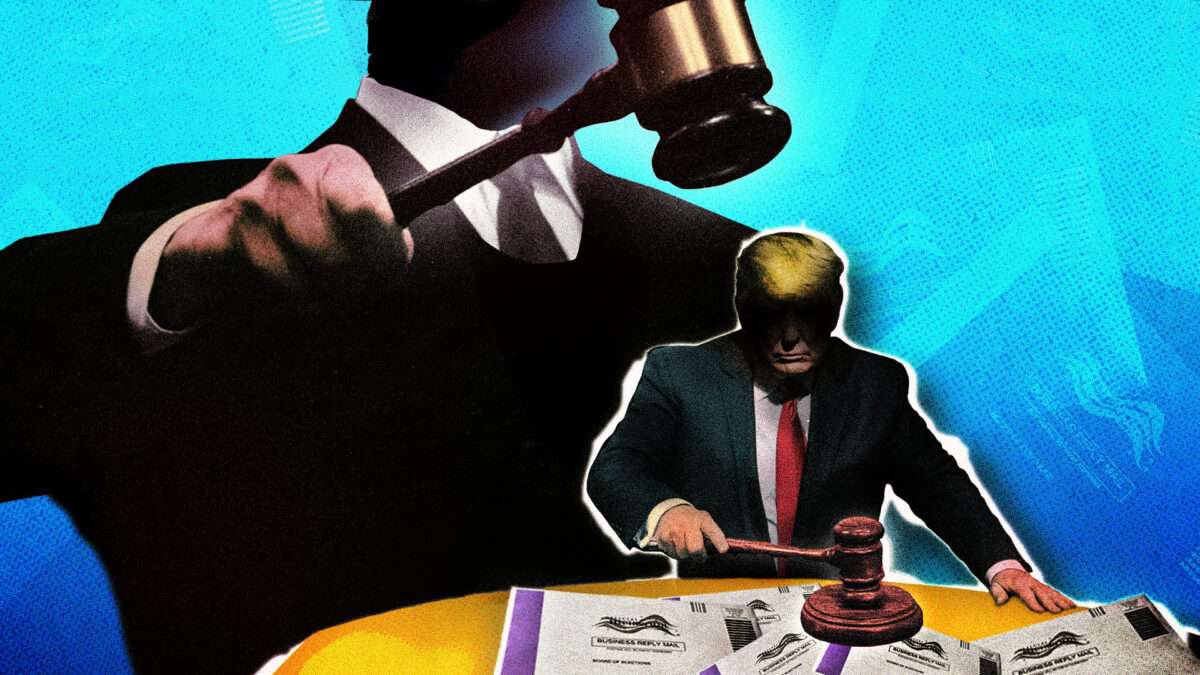
Judge Carl Nichols blocks USPS rule limiting mail‑in ballots, citing lack of authority
Coveragetap to expand ▾Spectrum: Center Only🌍US: 2
- Judge Carl Nichols, a Trump appointee on the U.S. District Court for the District of Columbia, issued an order blocking enforcement of a USPS Final Rule that would restrict mail‑in ballots (per reason.com).
- Nichols’s injunction extends litigation that the U.S. Supreme Court said last month was not yet finally resolved (per reason.com).
A federal judge appointed by President Donald Trump has paused a United States Postal Service final regulation that would have restricted mail‑in ballots, ruling the agency lacks the statutory authority to promulgate the rule. Judge Carl Nichols of the U.S.
District Court for the District of Columbia issued an order that prevents the Postal Service from issuing or enforcing the Final Rule while the legal challenge proceeds, a decision that keeps the dispute alive in the federal courts.
Nichols found the Postal Service exceeded its statutory powers in writing the regulation and used the court’s authority to enjoin the agency’s action; the order also prolongs litigation that the U.S. Supreme Court earlier said was not yet finally resolved, according to the reporting.
The Postal Service’s rule was presented as a regulatory change affecting how mail‑in ballots are handled; Nichols’s injunction means the status quo for how the Postal Service treats ballots remains in place for now.
The decision arrives amid broader political debates over voting access and election administration, and it guarantees additional rounds of briefing and likely appeals before the courts provide a final resolution.
What happens next will be determined by further litigation in the D.C. federal court and potential appeals that could again bring the issue to higher courts, leaving states, campaign officials and voters uncertain about any new Postal Service restrictions until the legal process concludes.
This ruling underscores the judiciary’s role in policing agency authority: Nichols’s order rests on a legal finding about statutory power rather than an assessment of the policy merits of restricting mail‑in voting, and it shifts the immediate battleground back to lawyers and judges rather than postal regulators or election officials.
- - Voters who use mail‑in ballots in upcoming elections bear the concrete cost: the injunction preserves current ballot handling practices and prevents new USPS restrictions from taking effect (per reason.com). - The United States Postal Service faces the cost of protracted litigation and uncertainty over regulatory authority, which could require additional legal resources and delay administrative reforms (per reason.com). - Judicial and political actors who favor stricter controls on mail‑in voting lose an immediate policy change but can still pursue the rule through further litigation or different administrative routes (per reason.com).
Whether the United States Postal Service appeals Judge Nichols’s injunction to the U.S. Court of Appeals for the D.C. Circuit within statutory deadlines. 2) Whether the Department of Justice or USPS files emergency motions asking the Supreme Court to revisit the injunction, given the Supreme Court previously said the dispute was not finally resolved (per reason.com). 3) Whether the case proceeds to a full merits briefing and an evidentiary record in the U.S. District Court for the District of Columbia, producing a final judgment that could be appealed (per reason.com).
Left- and right-leaning outlets are covering this story differently — in which facts to emphasize, which context to include, and how to frame causes and consequences.
7 specific areas where coverage diverges — see below.
- Only reason.com is present in this pack; it frames the story as a statutory authority issue and emphasizes the injunction’s effect of prolonging litigation.
- No source in this pack disputes Nichols’s legal finding; alternative legal interpretations or defenses from USPS are not present.
- No source here explains the specific provisions of the Postal Service statute Nichols relied on or the textual basis for the lack‑of‑authority finding.
- No source in this pack quotes the Postal Service’s rationale for the Final Rule or any administrative record supporting the rule.
- No source here provides details on how many ballots or which states would have been affected by the Rule or the projected operational impact on mail voting.
- No differing numerical figures appear across sources in this pack.
- Reason reports Nichols enjoined the Rule because he found the Postal Service lacked statutory authority; no source here attributes other causes or competing triggers for the injunction.
- Reason attributes the injunction and lack‑of‑authority finding to Judge Carl Nichols (per reason.com).