
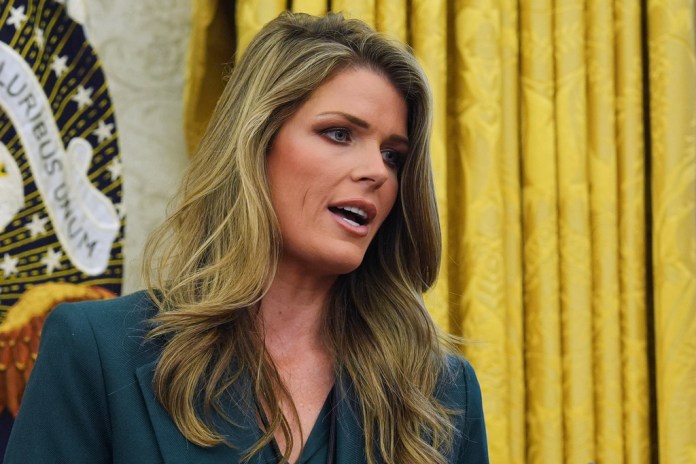
Trump asks appeals court to revive prosecutions after judge found Lindsey Halligan unlawfully appointed
Topic: politicsRegion: North AmericaUpdated: i2 outletsSources: 3⚠ Bias gap — sources divergeSpectrum: Mostly Center⏱ 3 min read⚠ 3d+ old
Story Summary
SITUATION
President Donald Trump asked the 4th U.S. Circuit Court of Appeals to revive prosecutions that a judge dismissed after finding Lindsey Halligan was unlawfully appointed.
Coveragetap to expand ▾Spectrum: Mostly Center🌍US: 1 · Other: 1
Political Spectrum
Position is inferred from coverage mix.
i2 outlets · Center
Left
Center
Right
Left: 0
Center: 1
Right: 1
Geography Coverage
Distribution of where coverage is coming from.
i2 unique outlets · Dominant: US/Canada
KEY FACTS
- The 4th U.S. Circuit Court of Appeals will hear the Trump administration’s appeal over prosecutors’ appointments that led to dismissed indictments (per WashingtonExaminer).
- A judge dismissed the indictments of James Comey and Letitia James after finding former interim U.S. Attorney Lindsey Halligan was unlawfully appointed (per WashingtonExaminer).
- The Trump administration has asked the Supreme Court to take up a related dispute about appointing U.S. attorneys without Senate confirmation (per WashingtonExaminer).
HISTORICAL CONTEXT
The immediate backdrop is a sustained, high‑profile legal contest over the executive branch’s authority to install interim federal prosecutors and other officers without Senate confirmation that intensified after President Donald Trump took office on January 20, 2025, prompting a wave of litigation in federal courts over the validity of acting appointments used in politically sensitive prosecutions.
The structural roots of that contest lie in the Appointments Clause of the U.S.
Brief
The 4th U.S. Circuit Court of Appeals will hear an appeal the Trump administration filed seeking to revive prosecutions that a judge tossed after concluding Lindsey Halligan had been unlawfully appointed as an interim U.S. Attorney.
The dismissed indictments named James Comey and Letitia James; the administration argues that the courts should validate the appointments and let those prosecutions proceed.
The judge’s ruling that Halligan’s appointment was unlawful triggered the dismissals, and the administration elevated the fight to the appeals court while separately asking the Supreme Court to consider the broader legal question (per WashingtonExaminer).
Supporters of the administration frame the case as a test of presidential authority to place preferred prosecutors in office without Senate confirmation; critics say allowing such appointments would sidestep the Senate’s advice-and-consent role and upend longstanding norms (per WashingtonExaminer).
Legal analysts say the appeals court decision, and any Supreme Court review, could set a nationwide precedent on how U.S. attorneys are installed and when convictions or indictments must be tossed for appointment defects (per WashingtonExaminer).
For now, the immediate consequence is procedural: the appealed ruling keeps the underlying prosecutions stalled until the courts resolve whether Halligan’s appointments were valid (per WashingtonExaminer).
Why it matters
- - Concrete cost: The dismissed prosecutions directly affect the legal status of James Comey and Letitia James by removing active indictments tied to Lindsey Halligan’s appointment (per WashingtonExaminer). - Concrete mechanism: Unresolved appellate and Supreme Court rulings would determine whether courts must dismiss charges whenever an interim U.S. Attorney’s appointment is later found unlawful, potentially voiding prosecutions across jurisdictions (per WashingtonExaminer). - Who benefits: President Donald Trump’s administration benefits if courts validate appointments without Senate confirmation, restoring prosecutions it wants to pursue (per WashingtonExaminer). - Who bears risk: Federal prosecutors and defendants nationwide face legal uncertainty over indictments and convictions tied to appointment irregularities if courts adopt the judge’s view (per WashingtonExaminer).
What to watch next
Whether the 4th U.S. Circuit Court of Appeals issues a decision reinstating the dismissed indictments in its upcoming hearing (per WashingtonExaminer). 2) Whether the Supreme Court agrees to take up the related appointment dispute after the administration’s filing (per WashingtonExaminer). 3) Whether a ruling for the administration leads district courts to revive prosecutions tied to Lindsey Halligan’s appointments (per WashingtonExaminer).
Where sources differ
7 dimensionsBias gap0.50 / 2.0
Left- and right-leaning outlets are covering this story differently — in which facts to emphasize, which context to include, and how to frame causes and consequences.
Center (2)
kansascity.compolitiko.com.ph
Right-leaning (1)
washington_examiner+0.70
President Donald Trump is seeking to install federal prosecutors without Senate confirmation, and the 4th U.S. Circuit Court of Appeals will hear an appeal over dismissed indictmen…
7 specific areas where coverage diverges — see below.
Framing differences
?- Only WashingtonExaminer is in the pack; it frames the dispute as a major test of presidential power to install prosecutors without Senate confirmation (per WashingtonExaminer).
Disputed or unclear
?- No other source in this pack disputes the facts; the appellate outcome and Supreme Court acceptance remain unresolved (per WashingtonExaminer).
Omitted context
?- No source in this pack discusses the statutory mechanism used to install Lindsey Halligan or the precise appointment paperwork and chain of authority that the judge relied on.
- No source in this pack lists the specific charges in the dismissed indictments against James Comey and Letitia James.
- No source in this pack cites prior court decisions on appointment defects that might guide the appeals court or Supreme Court.
Conflicting figures
?- No differing numerical figures appear in this single-source pack (per WashingtonExaminer).
Disputed causality
?- WashingtonExaminer states the judge’s finding that Lindsey Halligan was unlawfully appointed caused the dismissals; the administration’s appeal seeks to reverse that consequence (per WashingtonExaminer).
Attribution disputes
?- WashingtonExaminer attributes the appeals filing and the Supreme Court request to the Trump administration and attributes the dismissals to the judge’s finding about Lindsey Halligan’s appointment (per WashingtonExaminer).
Sources
3 of 3 linked articles
Trump asks appeals court to revive prosecutions after judge found Lindsey Halligan unlawfully appointed
washingtonexaminer.comSep 13Center
↗
8th Circuit to hear Missouri redistricting case following U.S. Supreme Court ruling
kansascity.comSep 12Left
↗
US appeals court rejects Trump mail-in ballot restrictions as Supreme Court considers rule - politiko.com.ph
politiko.com.phSep 11Left
↗