
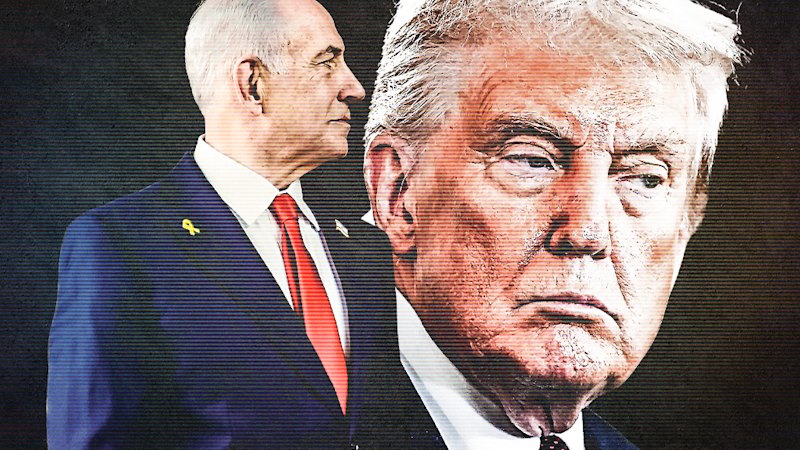
Trump Asserts Control Amid Diverging Responses from Netanyahu and Iran
Coveragetap to expand ▾Spectrum: Mostly Center🌍Asia: 2 · Other: 2 · Europe: 1
- On May 1, 2026, Iran's central command announced a suspension of missile strikes on Israel, contingent upon Israel not conducting attacks on southern Lebanon.
- Former President Donald Trump claimed on May 1, 2026, that he directs U.S. foreign policy regarding Israel, insisting that Prime Minister Benjamin Netanyahu must comply with White House directives.
- The Israeli military launched airstrikes targeting Iranian military infrastructure on March 15, 2026, significantly escalating regional tensions.
- Following the March 15, 2026, airstrikes, Iranian officials characterized their military actions as retaliatory, indicating a shift in the conflict dynamics.
- The geopolitical struggle between the United States and Israel against Iran has historical roots dating back to the 1979 Iranian Revolution, influencing current military and diplomatic relations.
In a recent declaration, President Trump asserted that he is the one who 'calls the shots' in U.S. foreign policy, particularly regarding the ongoing conflict involving Israel and Iran.
This statement comes amid heightened tensions following Israeli military actions, which prompted Iran's central command to announce a temporary halt to missile strikes on Israel, contingent upon Israel refraining from further strikes in southern Lebanon. Iran's warning indicates that it is prepared to escalate its military response should Israel continue its aggressive actions.
Meanwhile, Israel has paused its attacks on Iranian targets after previously striking military sites and an oil refinery, suggesting a momentary shift in its military strategy. Trump's insistence on directing U.S. policy raises questions about the autonomy of Israeli leadership, with reports suggesting that Netanyahu feels compelled to align with White House demands.
The current situation reflects a complex interplay of military actions and diplomatic pressures, with both Iran and Israel navigating the consequences of their respective strategies in the context of U.S. influence. As the conflict continues, the potential for renewed hostilities remains high, particularly if either side perceives a breach of the fragile ceasefire conditions.
- The diverging responses from Netanyahu and Iran, coupled with Trump's assertion of control over U.S. policy, could significantly impact the strategic landscape in the Middle East.
- If Iran follows through on its halt to missile strikes, it may temporarily ease tensions along the Israel-Lebanon border, potentially reducing civilian casualties and humanitarian crises in the region.
- However, Trump's insistence that Netanyahu comply with U.S. demands could strain Israel's autonomy in military decision-making, leading to a precarious balance of power that may embolden Iran's regional influence and complicate future diplomatic efforts.
- Watch for Iran's response within the next 72 hours regarding its commitment to halt missile strikes, particularly if Israel conducts any operations in southern Lebanon.
- Monitor Netanyahu's upcoming speech scheduled for next week, where he is expected to address U.S. demands and outline Israel's strategic response.
- Anticipate a potential meeting between Trump and key U.S. allies in the region before the upcoming G20 summit, where U.S. foreign policy towards Israel and Iran will likely be a focal point.
- Keep an eye on the Israeli Defense Forces' operational decisions in the coming days, as any military action could provoke a swift reaction from Iran.
- Look for statements from the U.S. State Department within the next week that may clarify Trump's assertions of control over U.S. foreign policy in the region.