
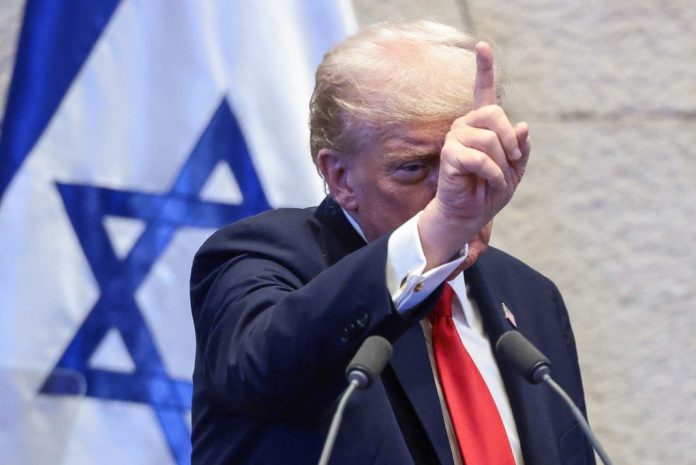
“You can’t let Iran have a nuclear weapon,” Trump said.
Coveragetap to expand ▾Spectrum: Mixed🌍ME: 2 · US: 1 · Other: 1
- A special investigative team was established in recent weeks after intelligence raised suspicions that an active reservist was involved in weapons trafficking.
- The suspect was transferred for questioning by the Military Police amid serious suspicions that he had been selling weapons.
- Police said the seizure and cooperation between the agencies were highly important in preventing weapons from reaching criminal organizations.
- President Donald Trump called himself the “best president in the history of Israel” on Thursday as his relationship with Israeli Prime Minister Benjamin Netanyahu continues to strain amid the unresolved Iran war.
- During an interview with CNBC host Joe Kernen, Trump boasted that he has been the greatest ally of Israel in its most challenging moments of late.
In a recent interview, President Donald Trump proclaimed himself the 'best president in the history of Israel,' a statement that underscores his ongoing support for the nation amid rising tensions with Prime Minister Benjamin Netanyahu.
Trump made these remarks while discussing the critical issue of Iran's nuclear program, stating emphatically, 'You can’t let Iran have a nuclear weapon.' This assertion reflects the heightened concerns surrounding Iran's military capabilities, especially in light of the ongoing conflict that has seen the U.S. and Israel conducting military operations against Iranian targets since early March 2026.
Trump's comments come at a time when his relationship with Netanyahu appears to be under strain, as both leaders navigate the complexities of the current geopolitical landscape. Trump further expressed bewilderment at Jewish voters supporting the Democratic Party, emphasizing his belief that he has been a steadfast ally to Israel during its most challenging moments.
The unresolved tensions with Iran remain a focal point for Israel, as both nations grapple with the implications of military actions and diplomatic relations. As the situation evolves, the dynamics between Trump and Netanyahu will be crucial in shaping future U.S.-Israel relations.
- Trump's assertion that Iran must not be allowed to acquire nuclear weapons underscores the heightened stakes for U.S.-Israel relations and regional security.
- As military actions against Iran escalate, Israeli citizens face increased threats from Iranian-backed groups, potentially leading to more frequent and severe conflicts.
- Additionally, the ongoing tensions could disrupt economic ties and trade in the region, affecting local businesses and livelihoods, particularly in areas reliant on stability for tourism and commerce.
- Watch for a potential response from the Biden administration regarding new sanctions on Iran, expected within the next 72 hours.
- Monitor statements from key Senate leaders on proposed legislation aimed at increasing military support for Israel, anticipated before the upcoming congressional recess.
- Keep an eye on the International Atomic Energy Agency (IAEA) for their next report on Iran's nuclear activities, due to be released within the next month.
- Expect a press conference from the Secretary of State addressing diplomatic efforts with European allies to curb Iran's nuclear ambitions, scheduled for next week.
Left- and right-leaning outlets are covering this story differently — in which facts to emphasize, which context to include, and how to frame causes and consequences.