
Trump Declares No Deadline for Iran Peace Deal Amid Ongoing Tensions
Coveragetap to expand ▾Spectrum: Mostly Center🌍Other: 3 · US: 1 · Europe: 1 · Asia: 1
- President Donald Trump announced there is no deadline for a peace deal with Iran (per washingtonexaminer.com).
- The U.S. and Iran are currently observing a fragile ceasefire, despite recent attacks on U.S. naval forces and the United Arab Emirates (per washingtonexaminer.com).
- Trump paused 'Project Freedom' and stated he would open the Strait of Hormuz to all nations if Iran accepts a peace deal (per washingtonexaminer.com).
- Trump previously extended a two-week ceasefire deal last month and has not provided a timeline for peace negotiations (per washingtonexaminer.com).
- Trump claimed that Iran is weakened and will eventually agree to a deal (per washingtonexaminer.com).
- The president emphasized that Iran is eager to make a deal, stating, 'They want to make a deal badly, and we’ll see if we get there' (per washingtonexaminer.com).
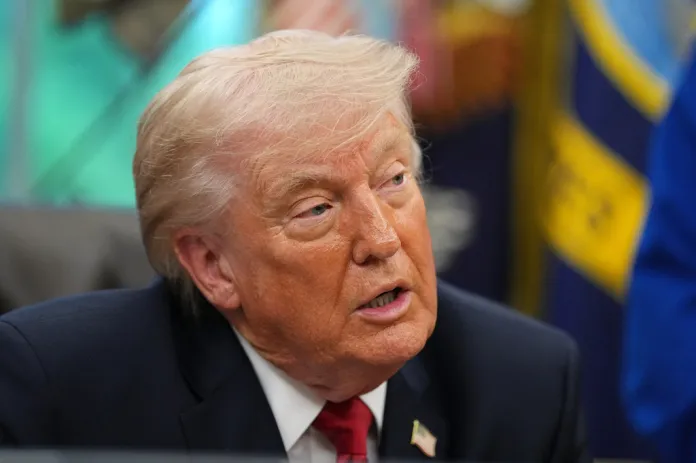
President Donald Trump has declared that there is no set deadline for reaching a peace agreement with Iran, a statement made during an Oval Office event promoting an upcoming UFC event. This announcement comes amid a fragile ceasefire between the United States and Iran, which has been marred by recent attacks involving U.S. naval forces and the United Arab Emirates.
Despite the ongoing tensions, Trump has paused 'Project Freedom' and expressed willingness to open the Strait of Hormuz to all nations if Iran agrees to a peace deal. The president's decision to forgo a deadline marks a continuation of his previous stance, as he had already extended a two-week ceasefire deal last month without specifying a timeline for peace negotiations.
Trump has consistently maintained that Iran is in a weakened state and will eventually be compelled to agree to a deal. 'They want to make a deal badly, and we’ll see if we get there,' Trump remarked, indicating his belief in the eventual success of negotiations.
The current ceasefire, while fragile, represents a temporary halt in hostilities that have characterized the ongoing conflict between the U.S. and Iran. The president's approach to the peace process reflects his broader strategy of applying pressure on Tehran while remaining open to diplomatic solutions.
By pausing 'Project Freedom' and offering to open the Strait of Hormuz, Trump is signaling a willingness to engage in negotiations that could lead to a resolution of the conflict. However, the absence of a deadline raises questions about the long-term prospects for peace and the potential for renewed hostilities if negotiations stall.
The situation remains tense, with recent attacks underscoring the volatility of the ceasefire and the challenges of achieving a lasting peace. Trump's assertion that Iran is eager to make a deal suggests that he views the current conditions as favorable for negotiations.
Yet, the lack of a clear timeline or deadline may complicate efforts to reach an agreement, as both sides navigate the complexities of the conflict and the broader geopolitical landscape.
As the situation unfolds, many governments will be closely monitoring developments in the U.S.-Iran relationship, particularly in light of the strategic importance of the Strait of Hormuz and the potential implications for global energy markets. The outcome of these negotiations will have significant ramifications for regional stability and the future of U.S.-Iran relations.
- The absence of a deadline for peace negotiations prolongs uncertainty for Iranian civilians, who face economic hardships due to ongoing sanctions and conflict.
- U.S. military personnel in the region remain at risk as the fragile ceasefire could collapse without a clear path to peace.
- Global energy markets are affected by the situation in the Strait of Hormuz, a critical chokepoint for oil shipments, impacting countries reliant on Middle Eastern oil.
- Whether Iran responds to Trump's offer to open the Strait of Hormuz in exchange for a peace deal.
- Any changes in U.S. military posture in the region if the ceasefire breaks down.
- Developments in diplomatic efforts by other nations to mediate the U.S.-Iran conflict.
Left- and right-leaning outlets are covering this story differently — in which facts to emphasize, which context to include, and how to frame causes and consequences.
4 specific areas where coverage diverges — see below.
- The washingtonexaminer.com emphasizes Trump's confidence in Iran's eventual agreement to a deal, while omitting specific details on the recent attacks.
- The specific nature and impact of the recent attacks on U.S. naval forces and the UAE remain unclear.
- No source mentions the initial U.S. and Israeli military strikes against Iran that triggered the current conflict.
- 'They want to make a deal badly, and we’ll see if we get there,' said Trump.