
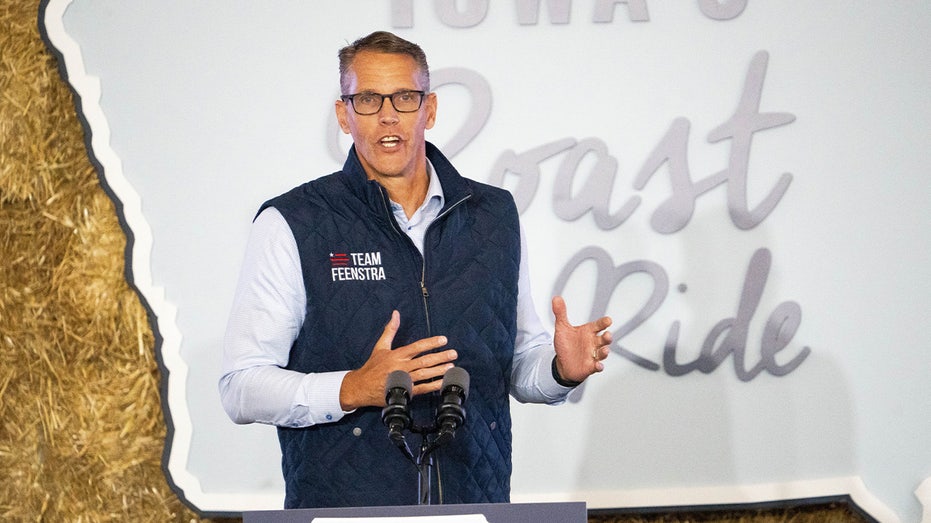
The congressman conceded before most outlets even called the race.
Topic: politicsRegion: north americaUpdated: i3 outletsSources: 5⚠ Bias gap — sources divergeSpectrum: Mixed⏱ 4 min read⚠ 3d+ old
Story Summary
SITUATION
Trump’s pick for Iowa governor Randy Feenstra concedes election to Zach Lahn — breaking president’s endorsement streak Trump’s pick for Iowa governor Randy Feenstra concedes election to Zach Lahn — breaking president’s endorsement streak Trump-backed Rep. Randy Feenstra conceded to businessman Zach Lahn in the Iowa GOP primary for governor, marking a rare endorsement defeat for the president in the primaries.
Coveragetap to expand ▾Spectrum: Mixed🌍US: 3 · Other: 2
Political Spectrum
Position is inferred from coverage mix.
i3 outlets · Center
Left
Center
Right
Left: 0
Center: 3
Right: 2
Geography Coverage
Distribution of where coverage is coming from.
i3 unique outlets · Dominant: US/Canada
KEY FACTS
- Up until Tuesday, Trump had a perfect endorsement record in House, Senate, and governor races on the Republican side.
HISTORICAL CONTEXT
The current political landscape in the United States is heavily influenced by the ongoing influence of former President Donald Trump, particularly within the Republican Party. As of June 2026, Trump had maintained a perfect endorsement record in House, Senate, and gubernatorial races since his return to political prominence following his inauguration on January 20, 2025.
However, this streak faced a significant challenge in the Iowa GOP primary, where Trump-endorsed candidate Randy Feenstra conceded to businessman Zach Lahn. This concession marks a notable upset in a political environment where Trump's endorsements have typically been seen as a decisive factor in primary elections.
Brief
In a surprising turn of events, businessman Zach Lahn has defeated Congressman Randy Feenstra in the Iowa GOP primary, breaking a significant endorsement streak for former President Donald Trump. Feenstra, who was backed by Trump, conceded the election before most media outlets had officially called the race, underscoring the unexpected nature of Lahn's victory.
This defeat marks the first time Trump has lost an endorsement in House, Senate, or gubernatorial races, a notable shift in the political landscape as the former president has maintained a perfect record until now.
Lahn's win positions him to face Democratic state auditor Rob Sand in the upcoming general election, raising questions about the dynamics of the Republican Party in Iowa and the influence of Trump's endorsements. The primary took place against a backdrop of early voting that began in mid-May, with Trump's endorsement coming just days before the election.
This timing may have contributed to the surprising outcome, as voters had already begun casting their ballots. The implications of Lahn's victory could resonate beyond Iowa, potentially signaling a shift in voter sentiment within the Republican base as the party prepares for the general election.
Where sources differ
Bias gap0.80 / 2.0
Left- and right-leaning outlets are covering this story differently — in which facts to emphasize, which context to include, and how to frame causes and consequences.
Center (3)
aol.comabcnews.comnbcnews.com
Right-leaning (2)
fox_politics+0.80
Trump-endorsed Feenstra concedes to MAHA-backed Lahn in GOP governor primary upset Trump-endorsed Feenstra concedes to MAHA-backed Lahn in GOP governor primary upset Trump-endorsed…
ny_post_news+0.80
Trump’s pick for Iowa governor Randy Feenstra concedes election to Zach Lahn — breaking president’s endorsement streak Trump’s pick for Iowa governor Randy Feenstra concedes electi…
Sources
5 of 5 linked articles
Trump’s pick for Iowa governor Randy Feenstra concedes election to Zach Lahn — breaking president’s endorsement streak
aol.comJun 3Left
↗
Iowa primary results: Trump-backed Feenstra concedes to Lahn in governor primary; Hinson and Turek will compete for open Senate seat - ABC News - Breaking News, Latest News and Videos
abcnews.comJun 3Left
↗
Trump-endorsed Feenstra concedes to MAHA-backed Lahn in GOP governor primary upset
foxnews.comJun 3Right
↗
The congressman conceded before most outlets even called the race.
nypost.comJun 3Center
↗
MAHA-backed Zach Lahn defeats Trump-backed Randy Feenstra in Iowa GOP primary for governor
nbcnews.comJun 3Left
↗