
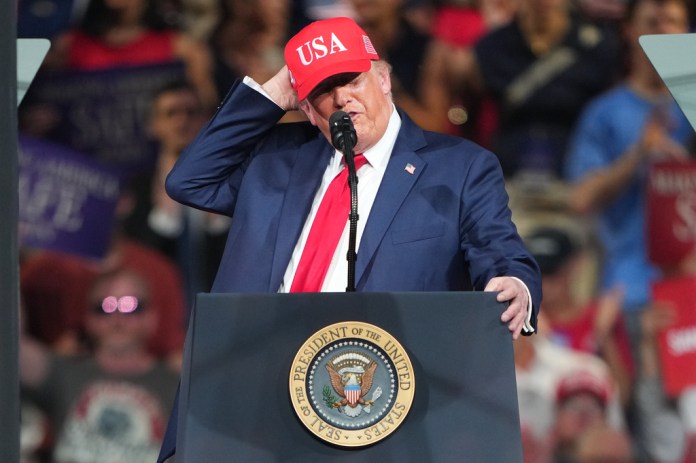
Trump pledges $5,000 checks if GOP keeps Congress; columnist warns they will worsen inflation
Coveragetap to expand ▾Spectrum: Mixed🌍US: 1 · Other: 1
- Treasury Secretary Scott Bessent said the checks would be delivered without adding to the national deficit and suggested they could be paid for with visa fees (per Washington Examiner).
- A Washington Examiner columnist argued that new stimulus checks would exacerbate persistent inflation that followed COVID-19-era spending (per Washington Examiner).
President Donald Trump pledged to send every American adult $5,000 if Republicans retain control of both the House and Senate this November, and Treasury Secretary Scott Bessent said the checks could be delivered without adding to the national deficit, possibly paid for with visa fees (per Washington Examiner).
The pledge is framed in partisan terms: Trump presents a large, one-time payment as a reward for unified GOP control, while some Senate Republicans are reportedly skeptical of the plan (per Washington Examiner).
A Washington Examiner columnist sharply criticized the proposal on economic grounds, arguing that a broadly distributed stimulus would worsen the persistent inflation that policymakers have been battling since the COVID-19-era fiscal expansions and citing the Federal Reserve’s recent quarter-point rate hike as evidence of elevated inflationary pressure (per Washington Examiner).
The source reports Bessent’s claim that the checks would not boost the deficit but frames that assertion as politically theatrical and speculative, noting visa fees as a suggested funding source without detailing legislative mechanics or revenue estimates (per Washington Examiner).
The columnist’s view draws a direct line from 2020 stimulus and other pandemic spending to the inflation the Fed is addressing now; the piece treats that causal link as the central reason the administration’s proposal would be economically counterproductive (per Washington Examiner).
Senate Republican skepticism is mentioned but not specified: the article does not quote named senators or provide a legislative path for how Congress would authorize the payments (per Washington Examiner).
What is documented is a political promise with an asserted financing claim and clear economic pushback from a columnist aligned with the outlet: an administration pledge to dispatch $5,000 checks to adults if Republicans keep Congress; a Treasury claim the checks won’t add to the deficit and could be funded by visa fees; and a columnist’s contention that such stimulus would worsen inflation and undercut the Fed’s recent rate move (per Washington Examiner).
The immediate contest is therefore less about the policy mechanics than about whether the financing claims and inflation risk will convince Republican lawmakers and voters as the midterms approach (per Washington Examiner).
- Concrete cost-bearers: American adults would directly receive the payments, while taxpayers could bear costs if visa fees do not cover the checks — the article notes the financing claim but provides no revenue estimate (per Washington Examiner).
- Inflation mechanism: The columnist argues renewed broad-based stimulus would increase aggregate demand and exacerbate persistent inflation that triggered the Federal Reserve’s recent quarter-point rate hike, potentially raising borrowing costs for borrowers (per Washington Examiner).
- Political stakes: Republican control of both chambers is the pledged condition for payments; Senate Republicans’ reported skepticism could determine whether the promise translates into legislation (per Washington Examiner).
- Beneficiaries of the proposal: Recipients of the $5,000 checks — every American adult if implemented — would financially benefit immediately, while Trump’s campaign gains politically if voters respond to the pledge (per Washington Examiner).
Whether Senate Republicans approve or publicly endorse the $5,000-check pledge before the November midterm elections; 2) Whether Treasury Secretary Scott Bessent or the White House releases a legislative plan specifying visa-fee revenue estimates or other funding mechanisms by the end of the campaign season; 3) Whether congressional committees produce scored cost estimates (CBO or similar) for the proposed payments ahead of any floor votes; 4) Whether the Federal Reserve comments on fiscal stimulus plans in forthcoming statements or testimony in the weeks after its quarter-point rate move (per Washington Examiner).
Left- and right-leaning outlets are covering this story differently — in which facts to emphasize, which context to include, and how to frame causes and consequences.
7 specific areas where coverage diverges — see below.
- Only the Washington Examiner source frames the pledge as both a campaign promise and an economic policy claim that Treasury can avoid increasing the deficit; no competing outlets in this pack provide alternate framings.
- The financing mechanism is unclear: Treasury Secretary Scott Bessent’s suggestion of visa fees as funding is reported, but no source in this pack verifies revenue adequacy or legislative feasibility (per Washington Examiner).
- Senate Republican positions are described as skeptical but no specific senators or votes are identified (per Washington Examiner).
- No source in this pack provides a Congressional Budget Office score or independent fiscal estimate of the $5,000 checks’ cost.
- No source in this pack quantifies how many adults would be eligible or the total dollar cost of the program if enacted.
- No source mentions potential macroeconomic modeling of the proposal’s inflationary impact beyond the columnist’s assertion.
- Only one numeric figure appears: $5,000 per adult (per Washington Examiner); no other sources present alternative figures.
- The Washington Examiner columnist asserts a causal chain: COVID-19-era stimulus spending → persistent inflation → Federal Reserve quarter-point rate hike → new stimulus would worsen inflation; that causal framing is presented as analysis rather than as a documented mechanistic study (per Washington Examiner).
- The pledge is attributed to President Donald Trump; the financing claim is attributed to Treasury Secretary Scott Bessent; the economic critique is attributed to a Washington Examiner columnist (per Washington Examiner).