
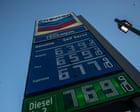
US Fuel Prices Remain High Despite Ongoing Iran War
Coveragetap to expand ▾Spectrum: Mixed🌍US: 5 · Other: 3 · Europe: 2 · Asia: 2
- The national average gasoline price is at $4.55 as of May 22, 2026, up roughly $1.50 from before the US and Israel attacked Iran in late February (per The Guardian).
- Trump has pledged to suspend the federal gas tax to alleviate pressure on Americans facing high fuel prices due to the Iran war (per news.google.com).
- Experts suggest that the rise in fuel prices is linked to the ongoing conflict and broader inflationary pressures, not solely the war itself (per The Guardian).
- The Iran war has entered its third month, with drivers expressing frustration over rising gas prices (per The Guardian).
- Trump's administration is exploring measures to mitigate the impact of high fuel prices on American consumers (per news.google.com).
- The conflict has contributed to a significant increase in fuel prices, marking the highest levels seen in four years (per news.google.com).
- Even if a peace deal were reached, experts warn that fuel prices are unlikely to normalize quickly due to existing economic conditions (per The Guardian).
As the Iran war continues, US fuel prices have surged to a four-year high, with the national average gasoline price reaching $4.55 as of May 22, 2026. This increase is attributed to the ongoing conflict, which has exacerbated inflation and market instability.
President Donald Trump has responded to the rising prices by pledging to suspend the federal gas tax, aiming to provide relief to American consumers struggling with high fuel costs.
Experts indicate that even if the conflict were to end immediately, prices are unlikely to return to pre-war levels this year due to persistent inflationary pressures and the complexities of the global oil market. The war, which has now entered its third month, has left many drivers frustrated as they face escalating costs at the pump.
Analysts emphasize that the situation is not solely a result of the war but also reflects broader economic challenges. As the Biden administration navigates these issues, the impact on American households remains a critical concern, with many feeling the strain of increased fuel prices amid an already challenging economic landscape.
- American drivers face increased fuel costs, with prices reaching $4.55 per gallon, significantly impacting household budgets (per The Guardian).
- The suspension of the federal gas tax proposed by Trump aims to alleviate financial pressure on consumers amid rising inflation (per news.google.com).
- The ongoing conflict in Iran is a key factor contributing to the highest fuel prices seen in four years, affecting millions of Americans (per news.google.com).
- Whether Trump implements the suspension of the federal gas tax in response to rising fuel prices amid the Iran war.
- Any changes in the national average gasoline price as the conflict continues and economic conditions evolve.
- The potential impact of inflation on consumer behavior and spending as fuel prices remain high.
Left- and right-leaning outlets are covering this story differently — in which facts to emphasize, which context to include, and how to frame causes and consequences.
1 specific area where coverage diverges — see below.
- The Guardian emphasizes the broader economic context of inflation affecting fuel prices, while other outlets focus primarily on the direct impact of the Iran war.